
1250 Mesh Feldspar Grinding Mill: Price, Process & Equipment Selection
We provide a wide range of mills — including Raymond mill, trapezoidal mill, vertical mill, ultrafine mill, and ball mill, obtained ISO9001 international quality certification, EU CE certification, and Customs Union CU-TR certification. Suitable for processing minerals such as limestone, phosphate, quicklime, kaolin, talc, barite, bentonite, calcium carbonate, dolomite, coal, gypsum, clay, carbon black, slag, cement raw materials, cement clinker, and more.
The discharge range of these mills can be adjusted to meet specific processing needs, typically from 80-400 mesh, 600-3250 mesh, and can achieve the finest particle size of up to 6000 mesh(D50).
If you are looking for a reliable grinding solution to turn stone or minerals into fine powder, please feel free to contact our online customer service.
Navigating the Path to Ultra-Fine Feldspar Powder
Producing high-quality feldspar powder at 1250 mesh (approximately 10-13 microns) is a demanding task that requires precision engineering, robust process design, and the right equipment selection. This fineness is critical for applications in ceramics, glass, paints, and polymers, where particle size directly influences product performance, gloss, and chemical reactivity. The journey from raw feldspar lumps to ultra-fine powder involves careful consideration of grinding technology, energy efficiency, and total operational cost.
The Grinding Process: From Crushing to Classification
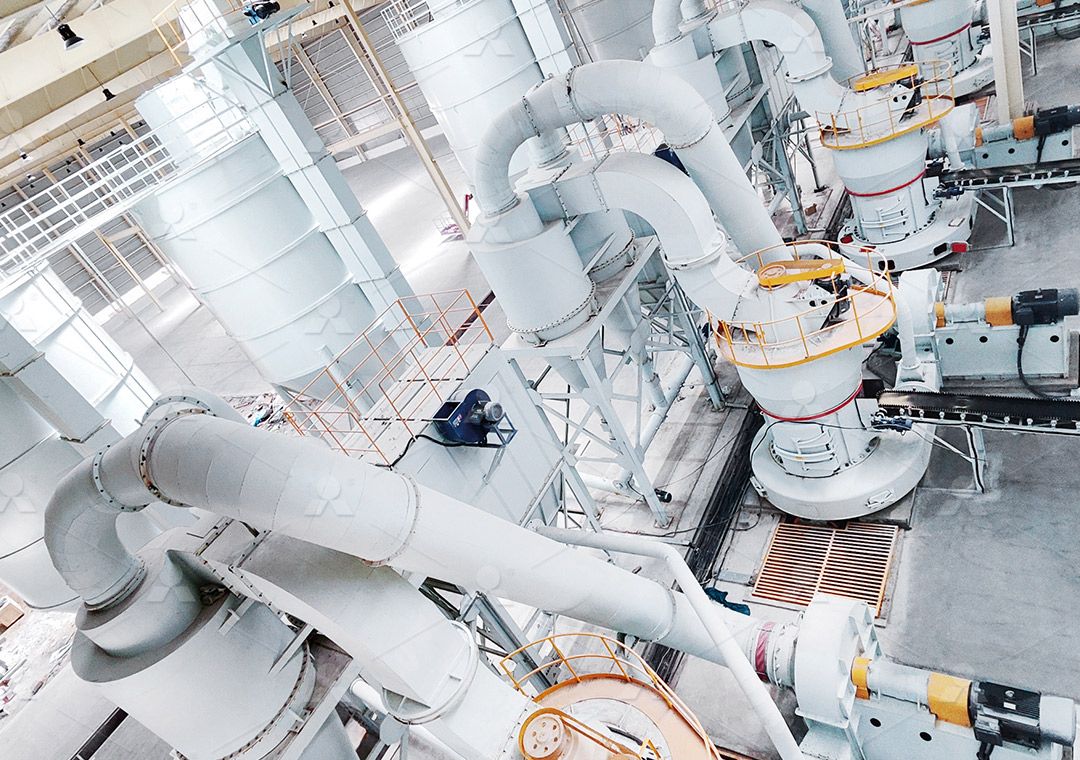
The production of 1250-mesh feldspar is a multi-stage process. It begins with primary crushing to reduce large rocks to a manageable size, typically below 20mm. This is followed by drying, if the moisture content is high. The core of the operation is the grinding and simultaneous classification. At this ultra-fine level, traditional ball mills become highly inefficient, suffering from high energy consumption, excessive wear, and poor control over particle size distribution. The modern approach utilizes centrifugal grinding mills with integrated high-efficiency classifiers. These systems grind material between rollers and a stationary ring or table, while an internal airflow carries the powder to a dynamic separator. The separator acts as a precision gatekeeper, allowing only particles that meet the 1250-mesh specification to pass through as final product, while coarse particles are recirculated for further grinding. This closed-circuit system is key to achieving consistent fineness and high yield.
Critical Factors in Equipment Selection
Choosing the right mill for 1250-mesh feldspar is not just about achieving the target size; it’s about doing so economically and reliably. Key selection criteria include:
- Grinding Efficiency & Energy Consumption: The mill should offer a high size-reduction ratio per unit of energy. Systems that integrate grinding and classification typically consume 30-50% less power than traditional ball mill systems for the same output.
- Precision of Particle Size Control: The classifier technology is paramount. Look for multi-head cage-type or rotor-type separators that offer precise cut-point control and easy adjustment to switch between different fineness requirements.
- Wear Resistance & Maintenance: Feldspar is abrasive. Grinding components made from high-performance alloys significantly extend service life. Furthermore, designs that allow easy access to wear parts and external lubrication reduce downtime and maintenance costs.
- Environmental & Operational Stability: The entire system should operate under negative pressure with efficient pulse-jet dust collectors to ensure a dust-free workshop. Features like elastic damping bases and advanced control systems contribute to smooth, low-noise, and automated operation.
Recommended Solution: The MW Ultrafine Grinding Mill
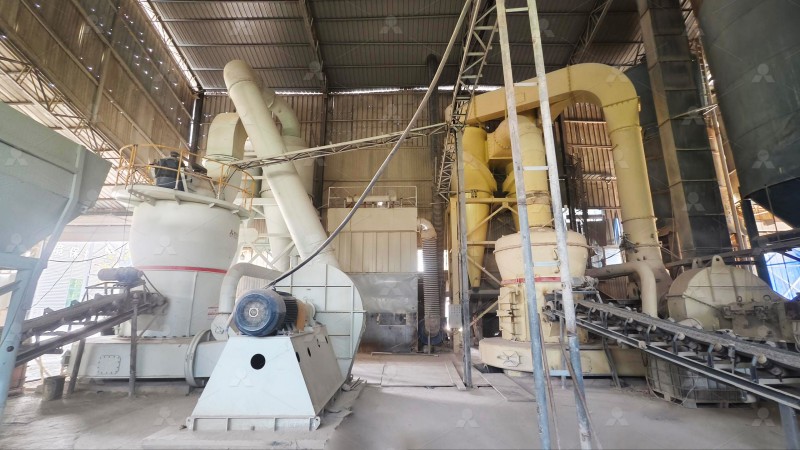
For producers targeting the 1250-mesh feldspar market with an emphasis on high efficiency and operational simplicity, the MW Ultrafine Grinding Mill presents an outstanding solution. Engineered specifically for ultra-fine powder production between 325-2500 meshes, it addresses the core challenges head-on. Its newly designed grinding curves for the roller and ring enhance grinding efficiency, yielding up to 40% higher capacity than jet mills for the same power input. The German-technology, cage-type powder selector ensures precise classification at 1250 mesh, achieving a screening rate of d97≤5μm in a single pass.
A standout feature for maintenance teams is the elimination of rolling bearings and screws within the grinding chamber. This design philosophy removes common failure points, preventing issues related to bearing seizure or loose components. The lubricating device is externally mounted, allowing for lubrication without shutdown, supporting continuous 24/7 production cycles—a crucial factor for meeting high-volume demands. Coupled with its efficient pulse dust collector and muffler, the MW Mill delivers an environmentally friendly operation that aligns with stringent national standards.
Considering Higher Volume Demands: The LUM Ultrafine Vertical Mill
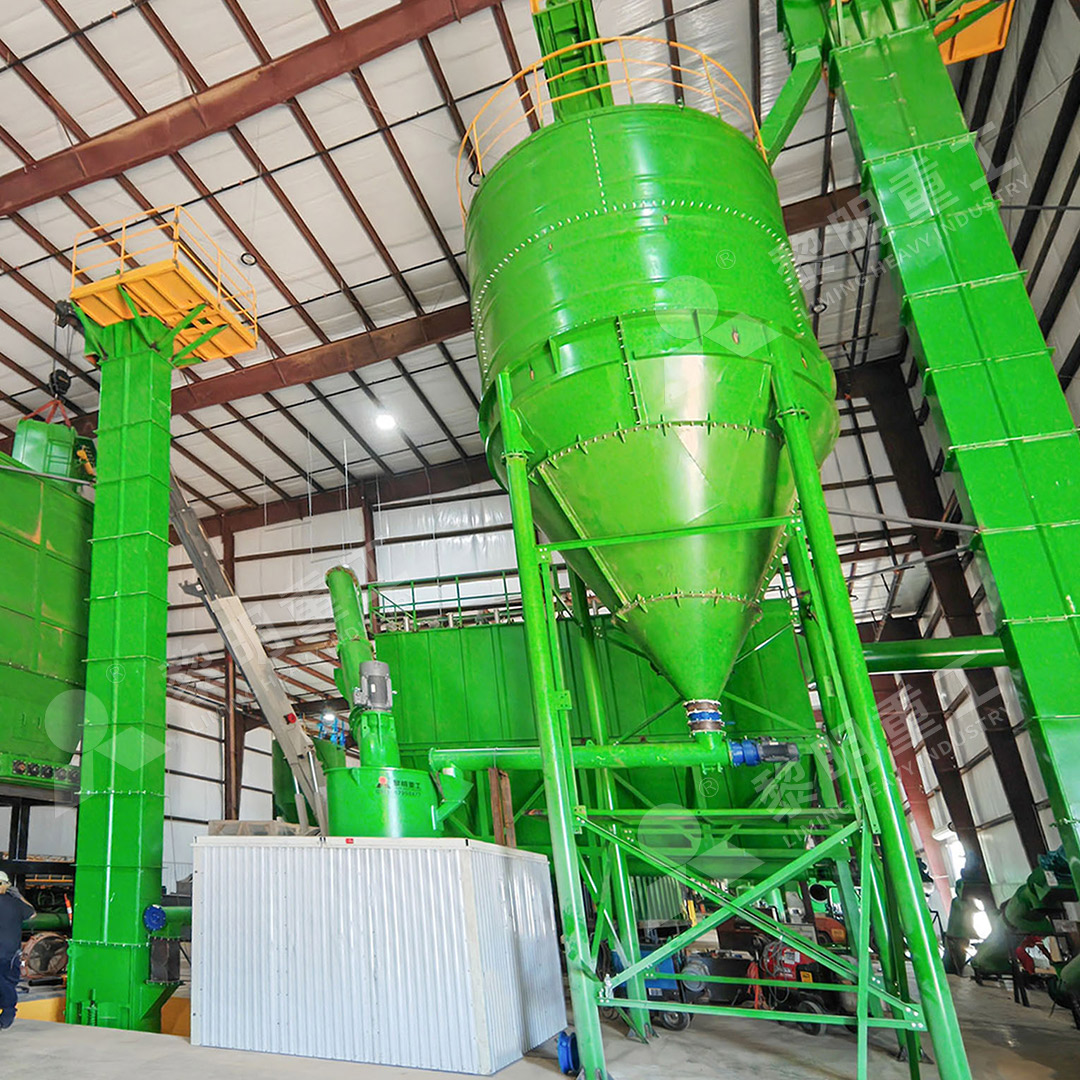
For larger-scale operations or projects requiring exceptional product whiteness and cleanliness, the LUM Ultrafine Vertical Grinding Mill is a superior choice. Integrating the latest grinding roller and powder separating technologies, it excels in processing non-metallic minerals like feldspar. Its unique roller shell and lining plate grinding curve promotes stable material bed formation, enabling a high rate of once-through milling. This not only boosts efficiency but also minimizes over-grinding and iron contamination, preserving the natural color of the feldspar.
The LUM mill incorporates PLC control and multi-head powder separating technology, allowing exact control over grinding parameters and reducing energy consumption by 30%-50%. Its double position-limiting technology provides exceptional operational stability, protecting the mill from vibrational shocks. Furthermore, the reversible grinding roller structure, enabled by a hydraulic system, allows rollers to be easily swung out for inspection or liner replacement, dramatically simplifying maintenance and minimizing production losses.
Understanding Cost: Beyond the Initial Price Tag
The “price” of a 1250-mesh feldspar grinding system is a composite of capital expenditure (CAPEX) and operational expenditure (OPEX). While initial machine costs are a factor, the long-term OPEX—dominated by energy consumption, wear part replacement, and maintenance labor—often dictates total profitability. Advanced mills like the MW and LUM series are designed to minimize OPEX through higher energy efficiency, longer-lasting wear parts, and easier maintenance access. When evaluating quotes, insist on a detailed analysis of specific power consumption (kWh/ton), expected wear part life, and projected annual maintenance hours. A slightly higher initial investment in a more advanced, efficient mill almost always yields a significantly lower cost per ton over the equipment’s lifetime, ensuring a stronger return on investment and enhanced market competitiveness.
Frequently Asked Questions (FAQ)
1. What is the typical power consumption for grinding feldspar to 1250 mesh?
Power consumption varies based on the hardness of the feldspar and the efficiency of the grinding system. Modern vertical roller mills or ultra-fine grinding mills like the MW series can achieve specific energy consumption in the range of 50-90 kWh per ton for producing 1250-mesh powder, which is significantly lower than the 100-150+ kWh/ton often required by traditional ball mill systems.
2. How do you control iron contamination during the ultra-fine grinding process?
Iron contamination is controlled through several means: using high-chromium or ceramic wear-resistant liners in the grinding zone, employing a non-contact grinding principle where rollers do not directly touch the grinding table/ring (as in the LUM mill), and installing magnetic separators at feed and product discharge points. Our MW and LUM mills are designed with these principles in mind to ensure minimal iron increase, often keeping it below 0.005%.
3. Can the same mill produce different fineness levels, like 800 mesh and 1250 mesh?
Yes, modern mills with advanced dynamic classifiers are highly flexible. By adjusting the speed of the classifier rotor (often via the PLC control system), the cut-point can be changed to produce different product fineness levels from the same machine. This allows producers to switch between product grades for different market demands without major equipment changes.
4. What is the required feed size for a 1250-mesh grinding mill?
For efficient operation, the feed material should typically be pre-crushed to below 20mm, and ideally below 10mm. Our MW Ultrafine Grinding Mill accepts a feed size of 0-20mm, while the LUM Vertical Mill handles 0-10mm. A consistent, properly sized feed is crucial for stable mill operation and optimal productivity.
5. How significant is the drying requirement for feldspar before grinding?
If the moisture content of the raw feldspar exceeds 1-2%, drying is usually necessary. Moisture causes material coating on grinding components and clogging in the classifier. Many modern vertical mills integrate a drying function, where hot gas (up to 350°C) is introduced into the grinding chamber alongside the feed, allowing simultaneous drying and grinding, which simplifies the process flow.
6. What are the key maintenance points for these ultra-fine mills?
Regular maintenance focuses on: 1) Monitoring and replacing grinding rollers and ring/table liners (wear parts), 2) Checking and lubricating the grinding roller bearings (externally accessible in our designs), 3) Inspecting classifier blades/rotors for wear, and 4) Ensuring the pulse-jet dust collector bags are clean and functional. Designs with reversible rollers and external lubrication, like our featured models, greatly simplify these tasks.