
5R Raymond Mill Power Consumption Analysis and Energy Saving Tips
We provide a wide range of mills — including Raymond mill, trapezoidal mill, vertical mill, ultrafine mill, and ball mill, obtained ISO9001 international quality certification, EU CE certification, and Customs Union CU-TR certification. Suitable for processing minerals such as limestone, phosphate, quicklime, kaolin, talc, barite, bentonite, calcium carbonate, dolomite, coal, gypsum, clay, carbon black, slag, cement raw materials, cement clinker, and more.
The discharge range of these mills can be adjusted to meet specific processing needs, typically from 80-400 mesh, 600-3250 mesh, and can achieve the finest particle size of up to 6000 mesh(D50).
If you are looking for a reliable grinding solution to turn stone or minerals into fine powder, please feel free to contact our online customer service.
5R Raymond Mill Power Consumption Analysis and Energy Saving Tips
For decades, the 5R Raymond mill has been a workhorse in medium-fine grinding applications across industries like mining, construction, and chemicals. Its reliability is unquestioned. However, in today’s market, where operational efficiency and sustainability are paramount, a critical examination of its power consumption is not just beneficial—it’s essential for maintaining competitiveness. This article delves into the key factors influencing the energy draw of a 5R Raymond mill and provides actionable strategies for optimization.
Understanding the Power Drains: Where Does the Energy Go?
The total power consumption of a 5R Raymond mill is primarily distributed across three core systems: the grinding mechanism, the classifier, and the air handling system.
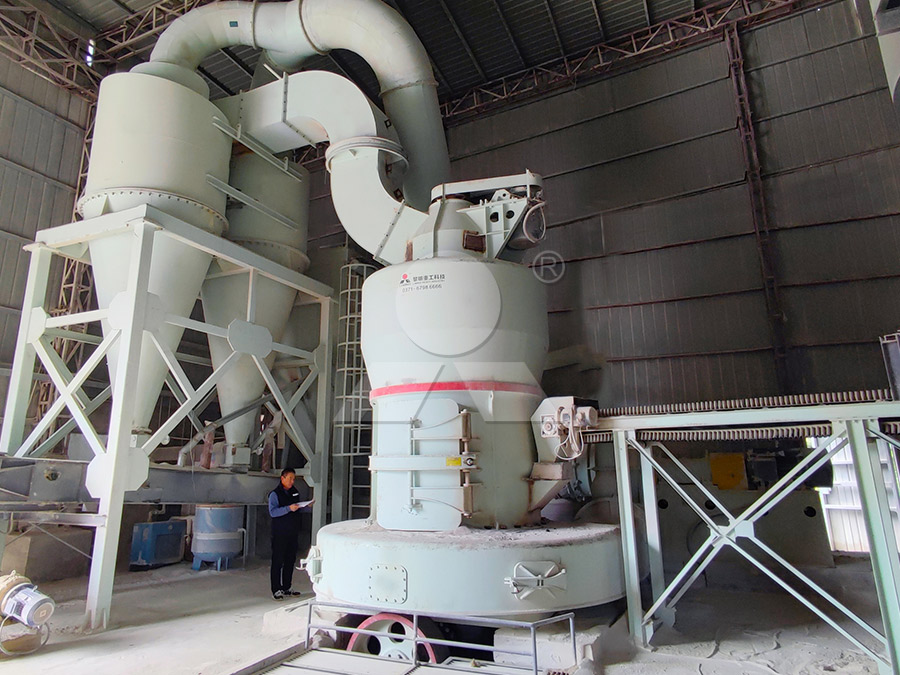
1. The Grinding Mechanism: This is the heart of the mill and typically the largest consumer. The motor drives the central shaft and grinding rollers, which apply pressure to the material against the bull ring. Inefficiencies here are often due to worn grinding rolls and rings, improper roller pressure, or feeding material that is too hard or too coarse for the mill’s design.
2. The Classifier (Powder Separator): The built-in dynamic classifier, responsible for ensuring product fineness, consumes a significant portion of energy. Its motor drives the rotating blades or cage. Higher fineness requirements (e.g., 400 mesh vs. 200 mesh) demand higher classifier speeds, directly increasing power use. An outdated or poorly maintained classifier can struggle to achieve cut points efficiently, leading to excessive recirculation of material and wasted energy.
3. The Air Circuit (Blower & Dust Collector): The high-pressure blower that creates the pneumatic conveying airflow is another major power user. System leaks, clogged pipes, or an over-sized blower operating against high system resistance (often from inefficient cyclones or bag filters) can cause this component to work much harder than necessary.
Practical Energy-Saving Strategies for Your 5R Raymond Mill
Implementing the following measures can lead to substantial reductions in your specific energy consumption (kWh/ton).
1. Optimize Feed Material Characteristics:
- Pre-Crushing: Ensure feed size is consistently within the mill’s optimal range (typically <25mm). Using a jaw crusher to pre-reduce oversized material drastically lowers the grinding energy required inside the Raymond mill.
- Moisture Control: High moisture content forces the mill to act as a dryer, consuming extra energy. Pre-drying wet materials, even partially, can yield dramatic savings.
- Feed Rate Stability: Implement a consistent and automated feeding system. Fluctuations cause the grinding force to vary constantly, preventing the mill from operating at its most efficient equilibrium point.
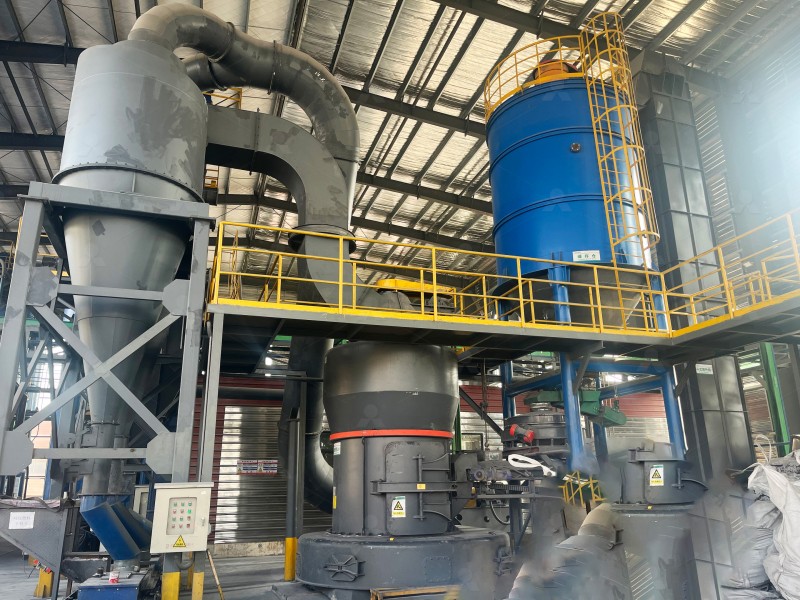
2. Proactive Maintenance is Non-Negotiable:
- Wear Parts Monitoring: Regularly inspect and replace grinding rolls, rings, and shovel blades. Worn parts reduce grinding efficiency, forcing the mill to run longer or harder to achieve the same output.
- Classifier Tuning: Keep classifier blades clean and balanced. Precisely adjust the speed to meet—but not exceed—the required product fineness. Every unnecessary RPM increase costs money.
- Seal the System: Conduct routine checks for air leaks in ducts, connections, and the grinding chamber. Leaks reduce airflow efficiency, forcing the blower to compensate.
3. Consider a Technological Upgrade: For operations requiring higher capacity, finer products, or dealing with increasingly hard materials, the inherent design limitations of the traditional Raymond mill become a bottleneck. Modern grinding technology offers far superior energy efficiency.
This is where considering an upgrade to a next-generation mill becomes a strategic investment. For instance, our MW Ultrafine Grinding Mill represents a leap forward. Its newly designed grinding curves for the roller and ring enhance efficiency significantly. Comparative data shows that with the same fineness and motor power, its production capacity can be 40% higher than jet mills or stirred mills, and its system energy consumption can be as low as 30% of a traditional jet mill. Furthermore, its advanced cage-type powder selector allows precise fineness adjustment from 325 to 2500 meshes with high screening accuracy (d97≤5μm), eliminating the need for excessive recirculation.
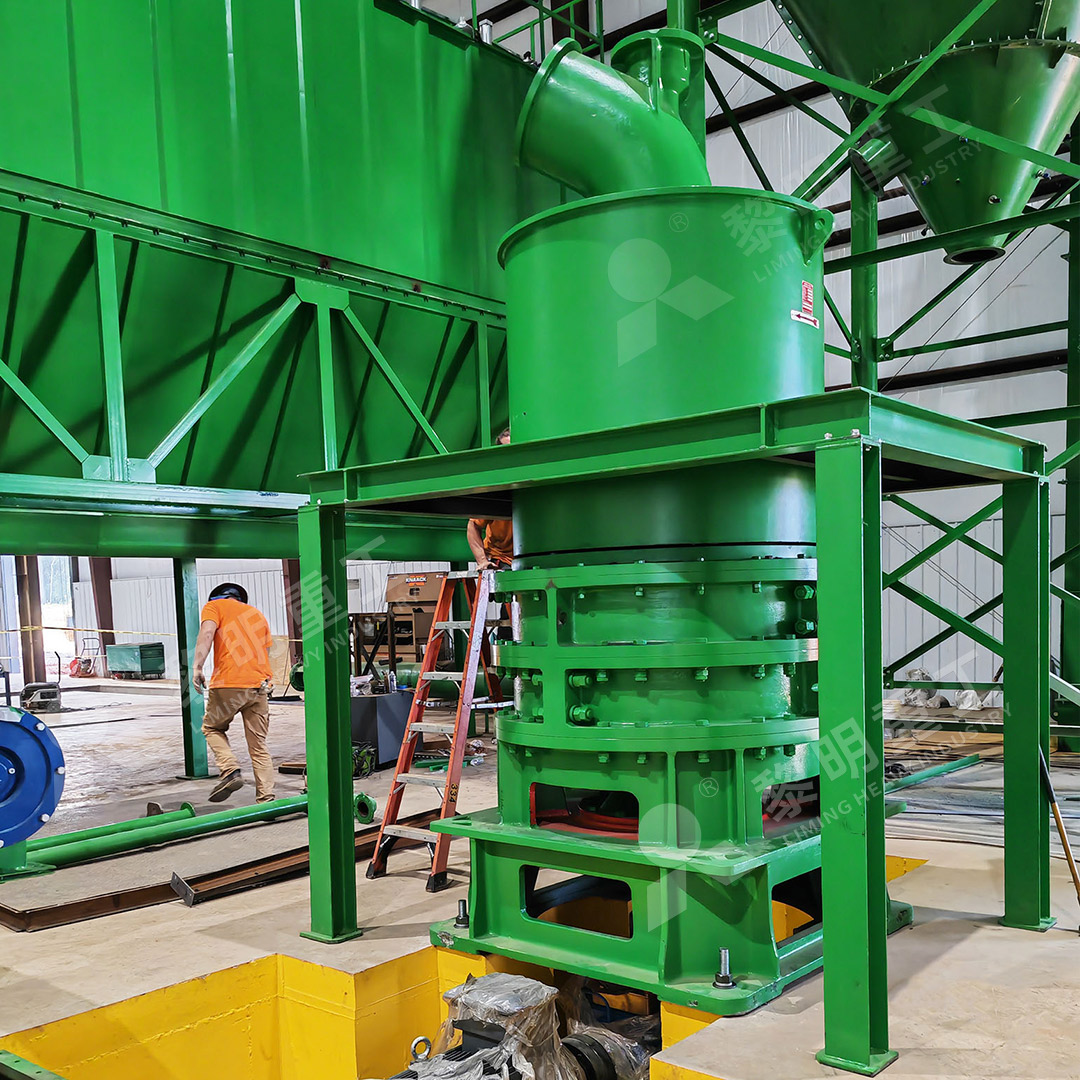
For larger scale projects requiring robust vertical integration, our LM Vertical Grinding Mill is another excellent high-efficiency alternative. It integrates crushing, drying, grinding, and classifying in a single unit. Its compact design reduces the footprint by about 50% compared to a ball mill system, while simultaneously saving 30%-40% in energy consumption. The material’s short residence time minimizes over-grinding, directly translating to lower kWh per ton.
Conclusion: Efficiency as a Continuous Journey
Maximizing the energy efficiency of a 5R Raymond mill is not a one-time fix but a continuous process involving diligent operation, disciplined maintenance, and strategic planning. By systematically addressing feed stock, wear, and system integrity, operators can extract significant savings from existing equipment. However, when demands evolve, investing in modern grinding technology like the MW Ultrafine Grinding Mill or LM Vertical Mill can be the most decisive step toward achieving long-term operational excellence, reduced environmental impact, and a stronger bottom line.
Frequently Asked Questions (FAQs)
- Q: What is the single biggest factor affecting my 5R Raymond mill’s power consumption?
A: While multiple factors contribute, improper feed size is often the primary culprit. Feeding material that is too coarse forces the grinding rollers to work excessively hard, causing a direct and substantial spike in amperage draw on the main motor. - Q: Can I retrofit a more efficient classifier onto my older 5R Raymond mill?
A: In some cases, yes. Upgrading to a modern, high-efficiency cage-type classifier (like the technology used in our MW Mill) can improve separation accuracy and reduce recirculation load. However, a full engineering assessment is needed to ensure compatibility with your mill’s airflow and housing. - Q: How often should I check and replace grinding rolls and rings?
A: There’s no universal interval; it depends on material abrasiveness and throughput. Monitor mill current draw and product fineness weekly. A gradual increase in amperage to maintain output or a loss of fineness control are clear indicators that wear parts need inspection and likely replacement. - Q: My mill’s blower seems to run constantly at high power. What could be wrong?
A: This often points to high system resistance. Check for clogged bag filters in the dust collector, blockages in the piping, or leaks that the blower is trying to overcome. Also, ensure the damper controls are functioning correctly and not stuck in a high-flow position. - Q: When should I consider replacing my 5R Raymond mill with a newer model like the MW Ultrafine Grinding Mill?
A: Consider an upgrade if you: 1) Need to produce powder finer than 400 mesh consistently, 2) Require a capacity increase beyond the mill’s design, 3) Face consistently high energy bills where grinding is a major cost center, or 4) Process materials where lower iron contamination or higher whiteness is critical (the MW Mill’s design minimizes mechanical wear and iron ingress).