
Raymond Mill for 1500 Mesh Powder Processing: A Modern Perspective
We provide a wide range of mills — including Raymond mill, trapezoidal mill, vertical mill, ultrafine mill, and ball mill, obtained ISO9001 international quality certification, EU CE certification, and Customs Union CU-TR certification. Suitable for processing minerals such as limestone, phosphate, quicklime, kaolin, talc, barite, bentonite, calcium carbonate, dolomite, coal, gypsum, clay, carbon black, slag, cement raw materials, cement clinker, and more.
The discharge range of these mills can be adjusted to meet specific processing needs, typically from 80-400 mesh, 600-3250 mesh, and can achieve the finest particle size of up to 6000 mesh(D50).
If you are looking for a reliable grinding solution to turn stone or minerals into fine powder, please feel free to contact our online customer service.
Raymond Mill for 1500 Mesh Powder Processing: A Modern Perspective
For decades, the name “Raymond Mill” has been synonymous with reliable, efficient powder processing in industries ranging from mining and construction to chemicals and pigments. The traditional Raymond mill design, characterized by its central shaft, grinding rollers, and classifier, has served as a workhorse for producing fine powders up to approximately 400 mesh. However, the evolving demands of modern industry—particularly the need for ultra-fine powders in the 1500 mesh range and beyond—have pushed the boundaries of conventional technology. Processing materials to such extreme fineness requires more than just incremental improvements; it demands a fundamental rethinking of grinding dynamics, classification precision, and system integration.
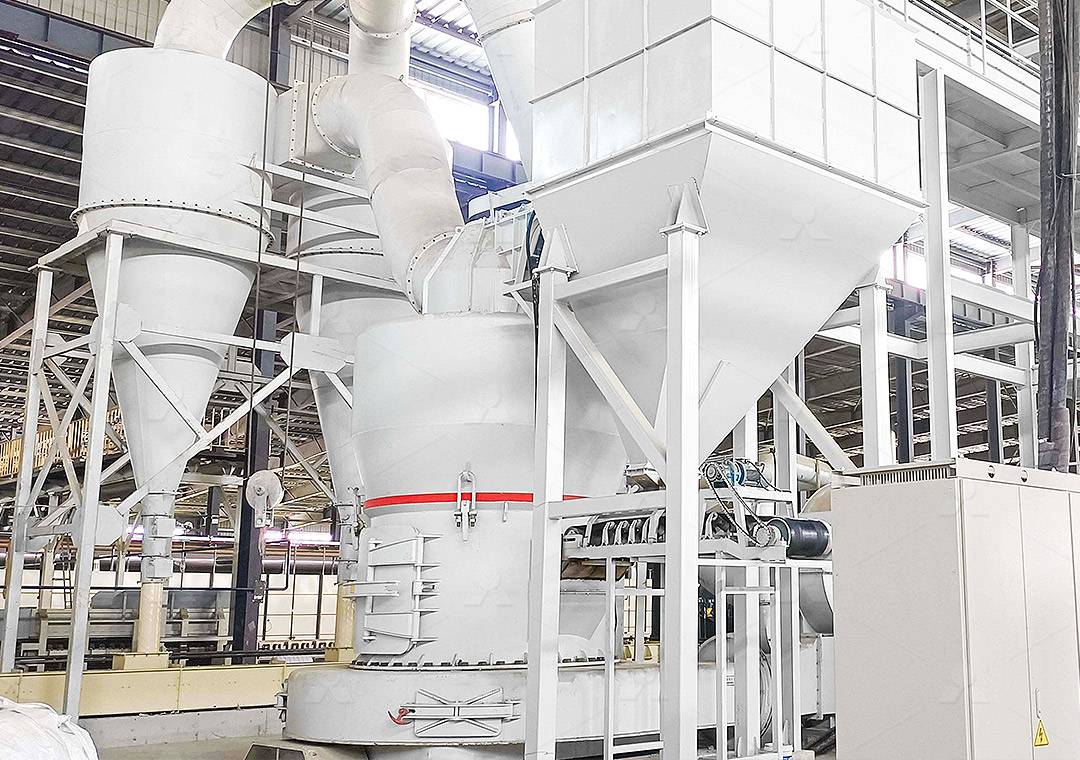
The challenge of achieving a consistent 1500 mesh product (approximately 10 microns) involves overcoming significant hurdles. Traditional pendulum-style mills often struggle with energy efficiency at this fineness, as increased grinding cycles lead to higher power consumption and excessive heat generation. Furthermore, the classifier technology must be exceptionally precise to ensure a narrow particle size distribution; any coarse particles can compromise the quality of the final product. Noise, dust emission, and the mechanical wear of internal components like bearings and screws under continuous high-load operation also become critical concerns for operational stability and environmental compliance.
Beyond Traditional Design: The Evolution to Ultrafine Grinding
To meet the stringent requirements of 1500 mesh processing, the industry has moved towards advanced grinding mill architectures. The key lies in integrating high-efficiency grinding mechanisms with state-of-the-art classification systems. Modern mills designed for this purpose often employ multiple grinding zones, optimized grinding curves for rollers and rings, and highly efficient, multi-head cage-type powder selectors. These selectors, often incorporating German or other advanced technologies, allow for precise “cut points,” enabling operators to dial in the exact fineness required, from 325 mesh up to 2500 mesh, with a high screening rate of d97 ≤ 5μm in a single pass.
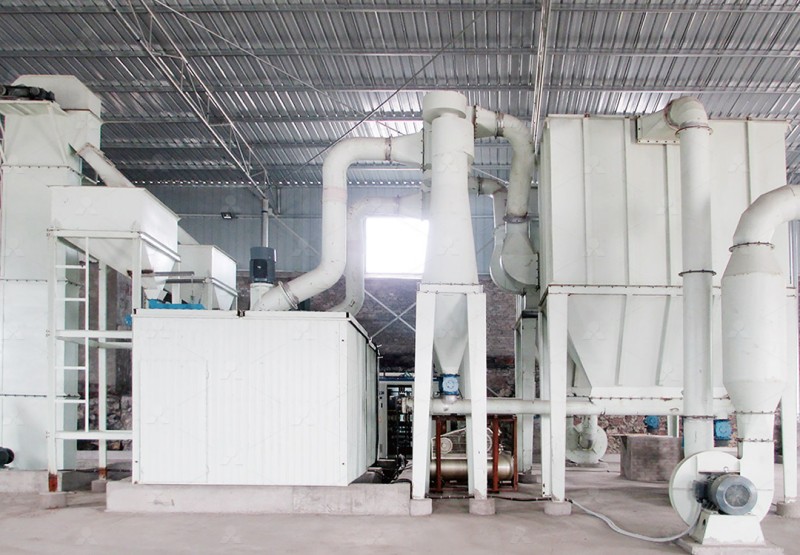
One standout solution engineered specifically for this ultra-fine frontier is our MW Ultrafine Grinding Mill. This machine is built from the ground up for customers who need to make ultra-fine powder efficiently and cleanly. It accepts a feed size of 0-20 mm and offers a capacity range of 0.5-25 tph, making it suitable for both pilot-scale projects and full-scale production. Its newly designed grinding curves for the roller and ring enhance efficiency dramatically. In fact, with the same fineness and power, its production capacity is 40% higher than jet mills and stirred mills, and double that of a ball mill, while system energy consumption is just 30% of a jet mill’s. A critical design advantage is the absence of rolling bearings and screws in the grinding chamber, eliminating common failure points and concerns about loose components causing damage. For operations targeting 1500 mesh, its adjustable fineness range of 325-2500 mesh is perfectly aligned.
System Integration for Performance and Sustainability
Producing ultra-fine powder is not solely about the grinding mechanism. A successful 1500 mesh processing line must be a cohesive system where feeding, grinding, classifying, and collecting work in perfect harmony under stable, controlled conditions. Advanced mills are now digitalized, with core components manufactured on CNC machine tools for high precision, ensuring consistent performance and longevity. Furthermore, environmental stewardship is no longer an afterthought but a core design principle.
This is where system-level features become paramount. The MW Ultrafine Grinding Mill, for instance, is equipped with an efficient pulse dust collector and muffler as integral parts of the system. This ensures that no dust pollution is generated during operation, and noise levels are significantly reduced, allowing production to fully comply with national environmental protection standards. The lubricating device is externally mounted, allowing for lubrication without shutdown, supporting continuous 24-hour operation—a vital feature for maintaining productivity in high-demand applications.
Choosing the Right Tool for the Application
While the MW series excels in the ultra-fine domain, other mill configurations offer optimized solutions for different stages of size reduction or specific material characteristics. For operations that require processing slightly larger feed stocks or value a vertical grinding approach with exceptional stability, the LUM Ultrafine Vertical Grinding Mill presents a compelling alternative. With an input size of 0-10 mm and a capacity of 5-18 tph, the LUM mill integrates the latest grinding roller and powder separating technology. Its unique roller shell and lining plate grinding curve promote easier material layer formation and high once-through powder milling rates. Features like double position-limiting technology protect against destructive vibration, and a reversible structure with a hydraulic system allows grinding rollers to be easily moved out for maintenance, minimizing downtime.
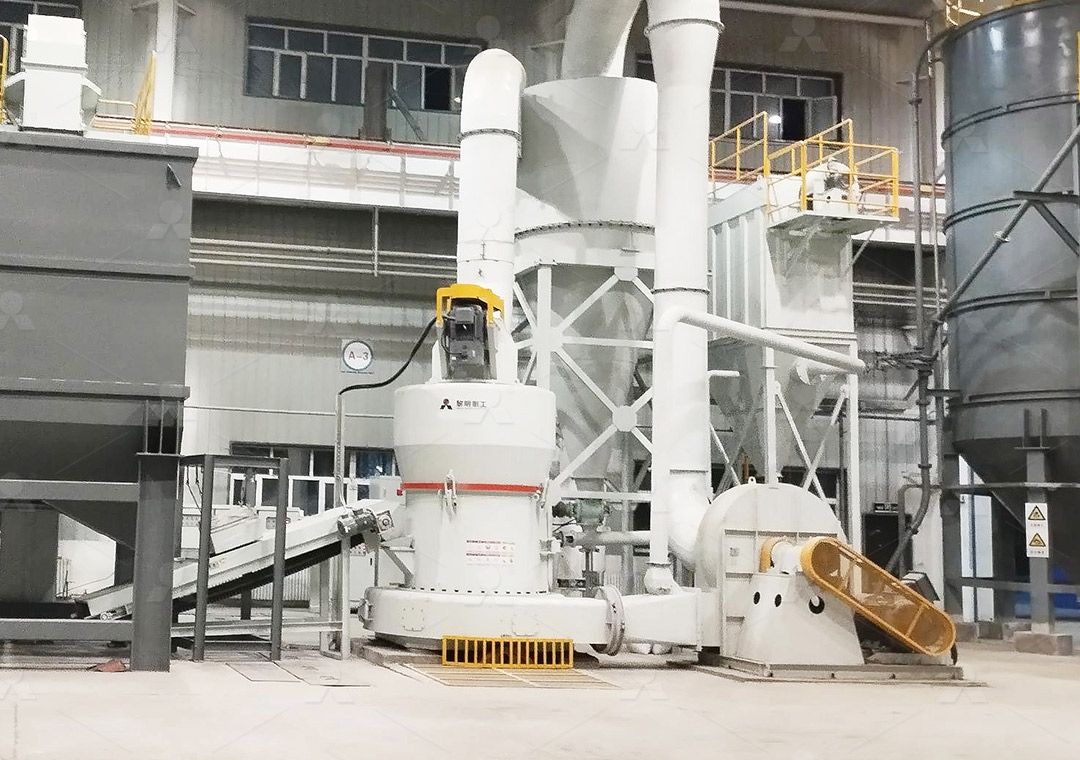
Both the MW and LUM mills exemplify the shift towards intelligent, eco-friendly, and highly reliable powder processing. They move beyond the legacy constraints of early Raymond mill designs, offering digitalized processing, higher precision components, and comprehensive after-sales support with original spare parts to ensure worry-free, long-term operation.
Conclusion
The quest for 1500 mesh powder processing has fundamentally transformed milling technology. Today’s solutions are defined by their precision, efficiency, and cleanliness. By leveraging advanced grinding dynamics, intelligent classification, and integrated environmental controls, modern mills like the MW Ultrafine Grinding Mill and LUM Ultrafine Vertical Grinding Mill deliver the consistent, high-quality ultra-fine powders that advanced industries depend on, all while operating in a sustainable and economically viable manner. The evolution from the traditional Raymond mill to these advanced platforms marks a new era in powder processing technology.
Frequently Asked Questions (FAQ)
- Can a traditional Raymond mill produce 1500 mesh powder?
While some high-end traditional Raymond mills may approach this fineness, they are often inefficient and inconsistent at this level. Dedicated ultrafine grinding mills (like the MW series) with advanced classifiers are specifically engineered for reliable and energy-efficient production in the 1500-2500 mesh range. - What are the main advantages of the “no rolling bearing in the chamber” design?
This design, as seen in the MW Ultrafine Mill, eliminates a major potential failure point. It removes worries about bearing seal damage or lubrication issues in the high-dust, high-wear grinding environment, significantly improving operational reliability and reducing maintenance costs. - How important is the powder selector (classifier) for achieving 1500 mesh?
It is absolutely critical. The classifier determines the final particle size distribution. Advanced multi-head cage-type selectors, like those used in our MW and LUM mills, provide precise cutting diameters and fast adjustment to different fineness requirements, ensuring a consistent, high-quality product at 1500 mesh. - What materials are suitable for processing to 1500 mesh with these mills?
Common materials include limestone, calcite, dolomite, talc, barite, marble, gypsum, and certain chemical products. They are widely used in high-value industries like paints, coatings, plastics, cosmetics, and advanced ceramics where extreme fineness is required for performance. - How does the energy consumption compare to a jet mill for ultra-fine grinding?
According to our data, the MW Ultrafine Grinding Mill system consumes only about 30% of the energy of a comparable jet milling system while offering higher yield, making it a much more cost-effective solution for high-volume ultra-fine powder production. - Is the system truly dust-free and environmentally friendly?
Yes, when configured as a complete system with its integrated pulse dust collector and silencer, the milling process operates under negative pressure. This ensures no dust spills into the workshop, and exhaust meets strict environmental standards, making it a clean and operator-friendly installation.