
Raymond Mill and Dryer Price Guide for Industrial Grinding Equipment
We provide a wide range of mills — including Raymond mill, trapezoidal mill, vertical mill, ultrafine mill, and ball mill, obtained ISO9001 international quality certification, EU CE certification, and Customs Union CU-TR certification. Suitable for processing minerals such as limestone, phosphate, quicklime, kaolin, talc, barite, bentonite, calcium carbonate, dolomite, coal, gypsum, clay, carbon black, slag, cement raw materials, cement clinker, and more.
The discharge range of these mills can be adjusted to meet specific processing needs, typically from 80-400 mesh, 600-3250 mesh, and can achieve the finest particle size of up to 6000 mesh(D50).
If you are looking for a reliable grinding solution to turn stone or minerals into fine powder, please feel free to contact our online customer service.
Raymond Mill and Dryer Price Guide for Industrial Grinding Equipment
Navigating the industrial grinding equipment market requires a clear understanding of both performance capabilities and cost considerations. For operations ranging from mineral processing to chemical production, selecting the right mill is a critical capital investment decision. This guide aims to demystify the pricing factors for key equipment like Raymond mills and associated drying systems, providing a framework for informed procurement.
Understanding the Cost Drivers
The price of a grinding mill is never a simple sticker figure. It is a composite of multiple variables, each significantly impacting the final investment. Primary factors include:
- Capacity & Throughput: This is the most direct cost multiplier. A system rated for 25 tons per hour (tph) commands a higher base price than one rated for 5 tph, due to larger components, more robust construction, and greater motor power requirements.
- Material & Construction: The abrasiveness and hardness of the target material dictate the wear resistance needed. Mills processing highly abrasive substances like quartz or slag require premium alloy steel for grinding rollers and rings, increasing cost. Conversely, mills for softer materials like limestone or talc can utilize more standard materials.
- Fineness Requirements: Achieving ultra-fine powders (e.g., 1250 mesh and above) necessitates advanced, high-precision internal classifiers (powder separators) and often more sophisticated grinding mechanics, which adds to the engineering and manufacturing cost.
- Level of Automation & Integration: A basic mill with manual controls is less expensive than one with a fully automated PLC system that integrates grinding, drying, classifying, and conveying. Automation boosts initial cost but often delivers substantial long-term savings in labor and consistency.
- Ancillary Systems: The complete “grinding line” price includes far more than the mill itself. Essential ancillaries like jaw crushers for primary size reduction, bucket elevators, vibrating feeders, pulse jet dust collectors, silencers, piping, and electrical control cabinets must all be factored into the total project budget. The dust collection system alone can represent 15-25% of the auxiliary equipment cost.
The Raymond Mill: A Benchmark in Value
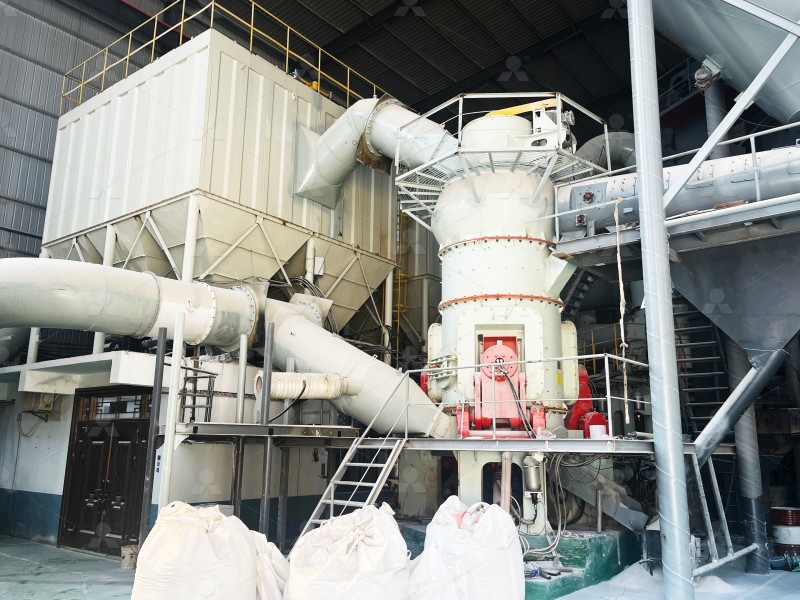
The R-series Raymond mill remains a cornerstone of the industry for good reason. It offers a compelling balance of performance and affordability for medium-fineness applications (typically up to 425 mesh). Its straightforward mechanical design—centrifugal grinding via rollers against a stationary ring—makes it relatively inexpensive to manufacture and maintain. For operations with consistent, non-abrasive materials and moderate output needs, a Raymond mill provides excellent return on investment. Prices scale predictably with capacity, but its compact footprint helps keep foundation and installation costs lower compared to bulkier systems.
Beyond Raymond: The Value of Advanced Technology
When project demands exceed the traditional scope of Raymond milling—requiring higher output, superior energy efficiency, or ultra-fine powder—modern vertical roller mills and enhanced trapezium mills present a higher initial but often lower lifetime cost. This is where evaluating Total Cost of Ownership (TCO) becomes crucial.
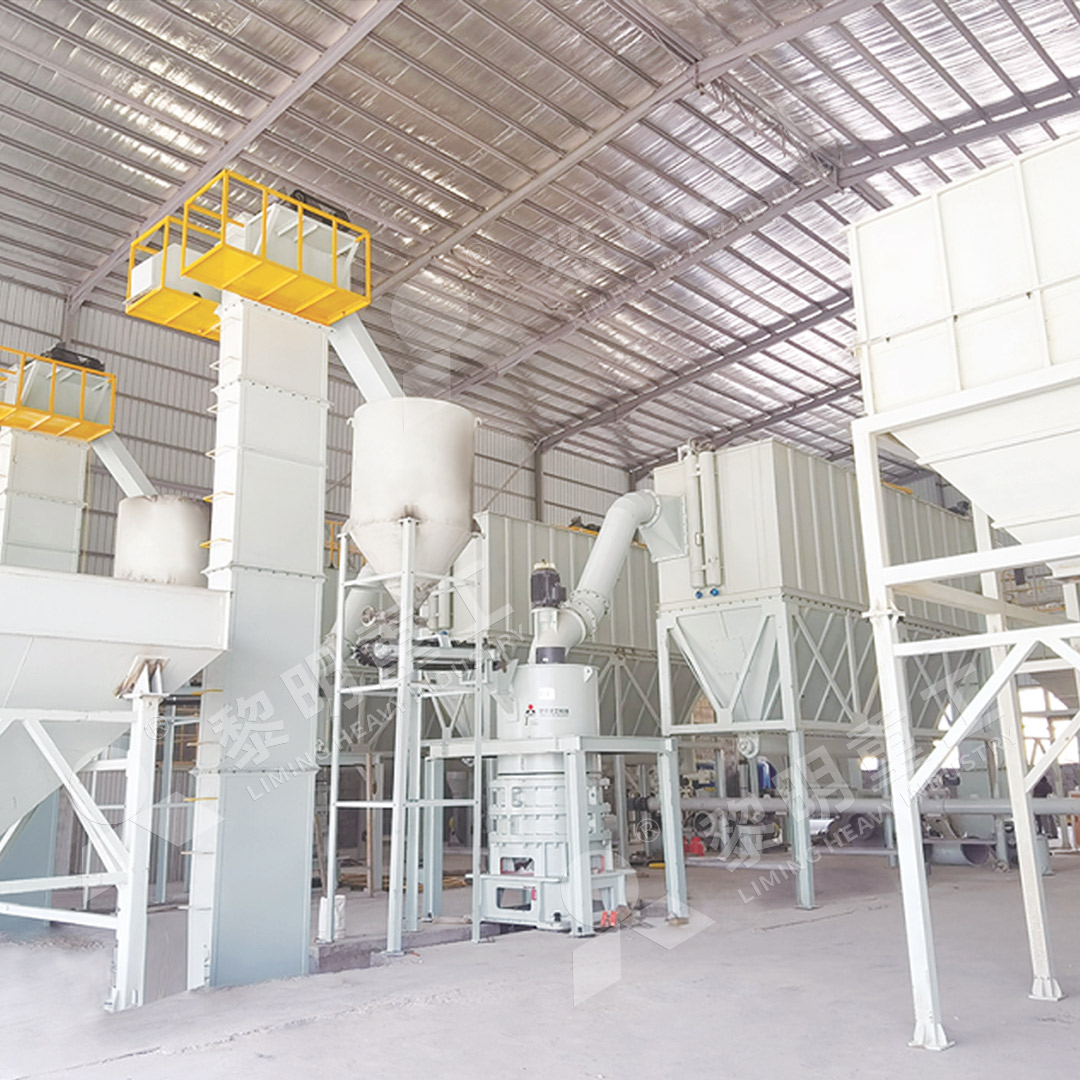
For instance, consider the MW Ultrafine Grinding Mill. Engineered for customers requiring ultra-fine powder between 325-2500 meshes, it represents a technological leap. Its innovative design eliminates rolling bearings and screws in the grinding chamber, virtually eradicating failures from bearing seizure or loose components—a common maintenance headache. The integration of a high-efficiency pulse dust collector and silencer ensures full environmental compliance. Most significantly, its grinding efficiency translates to a production capacity up to 40% higher than jet mills and double that of ball mills for the same power input. While its upfront price point is higher than a basic Raymond mill, the dramatic reduction in energy consumption (as low as 30% of a jet mill’s usage) and minimized downtime for maintenance deliver a vastly superior TCO for high-value fine powder production.
Integrated Drying: A Cost-Saving Synergy
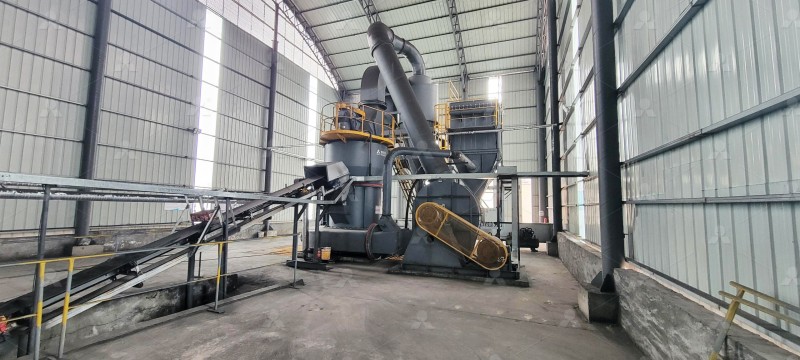
For moist feed materials, a separate dryer is a major capital and operational expense. This is where modern vertical mills like the LM Vertical Grinding Mill create immense value. By integrating hot air directly into the grinding chamber, they perform simultaneous drying and grinding. This eliminates the need for a standalone rotary or flash dryer, saving on equipment purchase, installation space, and, crucially, energy. The heat for grinding is used once for drying, whereas a two-step process requires separate energy inputs. When specifying equipment for materials like slag, coal, or limestone with inherent moisture, the price premium for an integrated drying-grinding system is quickly offset by the avoided cost of a separate dryer line and its associated fuel consumption.
Making the Right Investment Decision
Price shopping for industrial grinding equipment should extend far beyond comparing basic machine quotes. A professional evaluation must consider:
- Material Analysis: Conduct thorough tests on your specific material to determine grindability, abrasiveness, and moisture content.
- Total System Quote: Request detailed quotations that include all necessary ancillaries for a turnkey operation.
- Energy Consumption Projections: Calculate the operating cost difference between models. A 30-40% energy saving can justify a higher purchase price within a surprisingly short period.
- Spare Parts Strategy: Inquire about the availability and cost of high-wear parts. A reliable supplier offering original, reasonably priced spare parts is a critical component of long-term cost control.
Ultimately, the “best price” is the one that delivers the lowest cost per ton of correctly specified powder over the equipment’s lifespan. Investing in advanced, efficient technology from a reputable manufacturer like LIMING, which stands behind its products with comprehensive technical support and genuine spare parts, ensures not just a machine purchase, but a partnership for productive and profitable operation.
Frequently Asked Questions (FAQ)
Q1: What is the primary cost difference between a Raymond Mill and a more modern Vertical Roller Mill?
A: The primary difference lies in the technology and efficiency. A Raymond mill has a lower initial purchase price and is ideal for medium-fine grinding. A Vertical Roller Mill (like the LM or LUM series) typically has a higher upfront cost but offers significantly lower energy consumption (30-50% less), integrated drying capability, higher capacity, and better performance for ultra-fine grinding. The ROI is often realized through substantial operational savings.
Q2: Are the prices for grinding mills usually quoted for just the main machine or the whole system?
A: Reputable suppliers should provide two quotes: one for the main grinding mill and another for the complete system. The system quote is essential for budgeting, as it includes all necessary auxiliary equipment (crusher, feeder, elevator, dust collector, classifier, piping, electrical controls). Always clarify what is included in a quoted price to avoid unexpected costs.
Q3: How does material hardness affect the price of a grinding mill?
A: Material hardness directly impacts the wear on grinding components. Processing hard or abrasive materials requires the mill to be fitted with special wear-resistant alloys for rollers, rings, and liners. These high-performance materials increase the manufacturing cost of the machine and the future cost of spare parts, thus raising the overall price.
Q4: Can I get by with a used or refurbished mill to save money?
A: While a used mill has a lower initial cost, it carries risks: unknown wear history, potential lack of manufacturer support, obsolete technology with higher energy consumption, and difficulty sourcing correct spare parts. For critical, continuous production, a new mill from a reliable manufacturer with a warranty and service support usually provides better long-term value and reliability.
Q5: Why is the dust collection system such a significant part of the overall cost?
A: Modern industrial dust collectors, especially pulse-jet baghouse types, are complex pieces of engineering designed to achieve near-zero emissions. They involve high-quality filter media, precise solenoid valves, compressed air systems, and heavy-gauge steel construction. Their cost is significant because they are essential for meeting strict environmental regulations and protecting worker health.
Q6: Does higher automation always mean a much higher price?
A: Yes, automation (PLC controls, touchscreen HMIs, remote monitoring) adds to the initial capital cost. However, it is an investment that reduces long-term operational costs by minimizing human error, optimizing energy use, allowing for precise product quality control, and enabling one operator to manage multiple processes. The price premium often pays for itself through improved efficiency and consistency.