
Raymond Mill Startup Procedure and Operating Principles
We provide a wide range of mills — including Raymond mill, trapezoidal mill, vertical mill, ultrafine mill, and ball mill, obtained ISO9001 international quality certification, EU CE certification, and Customs Union CU-TR certification. Suitable for processing minerals such as limestone, phosphate, quicklime, kaolin, talc, barite, bentonite, calcium carbonate, dolomite, coal, gypsum, clay, carbon black, slag, cement raw materials, cement clinker, and more.
The discharge range of these mills can be adjusted to meet specific processing needs, typically from 80-400 mesh, 600-3250 mesh, and can achieve the finest particle size of up to 6000 mesh(D50).
If you are looking for a reliable grinding solution to turn stone or minerals into fine powder, please feel free to contact our online customer service.
Raymond Mill Startup Procedure and Operating Principles
For over a century, the Raymond mill has been a cornerstone of fine powder processing across numerous industries. Its enduring popularity stems from a robust design, operational simplicity, and reliable performance. However, to unlock its full potential and ensure longevity, a disciplined startup procedure and a deep understanding of its operating principles are non-negotiable. This guide distills essential knowledge for operators and plant managers.
Pre-Startup Checklist: The Foundation of Safe Operation
Never rush the startup. A thorough pre-operational inspection is your first line of defense against premature wear and catastrophic failure. This process should feel methodical, almost ritualistic, for the seasoned technician.
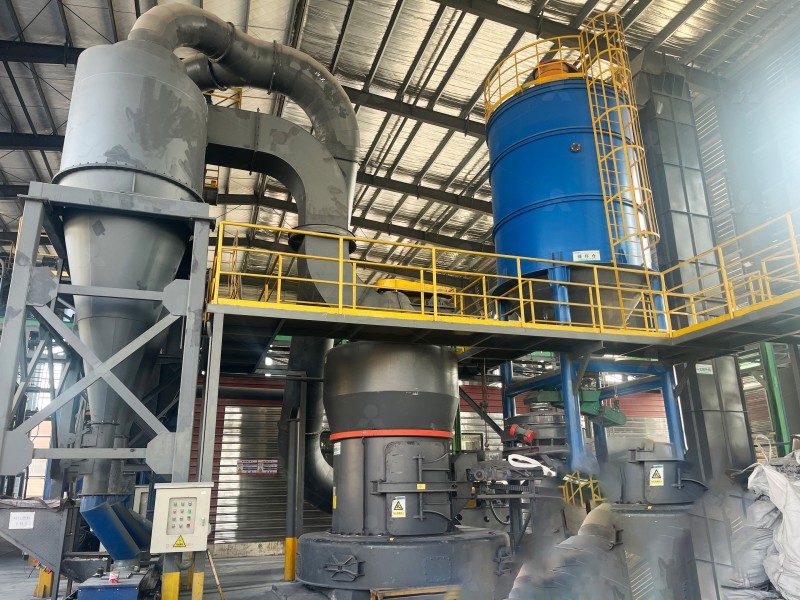
Begin with a visual and physical inspection of all access points. Ensure the grinding chamber is clean and free of foreign material or residual buildup from the last run. Manually rotate the main shaft to confirm free movement—any grinding or catching sensation indicates a problem. Next, verify the condition and tension of drive belts or couplings. Check all lubrication points meticulously; the main shaft bearing and grinding roller hubs must have the correct grade and level of oil or grease. A dry start is a death sentence for bearings.
Inspect the classifier blades or cage for damage and ensure they rotate freely. Examine the feeder mechanism for obstructions and confirm its variable speed drive is functional. Finally, walk the system: check connections on the cyclone collector, baghouse, and piping for leaks or loose bolts. Ensure the main motor and fan ammeters are zeroed and ready.
The Sequential Startup Procedure
Once the checklist is satisfied, proceed with this sequence. The golden rule is to start components from the discharge point backward to the feed point, ensuring material has a clear path through the system.
- Auxiliary Systems: Activate the dust collection system first. This establishes negative pressure in the mill, preventing dust escape when material begins to flow.
- Main Fan: Start the system’s induced draft fan. This creates the necessary airflow for material transport and classification.
- Classifier: Engage the classifier motor. Set its speed to a preliminary setting based on your target fineness.
- Grinding Main Unit: Now, start the main motor driving the grinding rolls and central shaft. Listen for unusual noises—a steady hum is good; knocking or screeching is not.
- Feeder: Finally, start the vibrating or screw feeder. Begin feeding material at a very low rate, no more than 25-30% of the mill’s rated capacity. This “warm-up” phase is crucial to allow the grinding rolls to settle and form a stable grinding bed.
Allow the system to run under this light load for 15-30 minutes. Monitor motor amperage closely. The main motor current should stabilize, indicating the grinding bed is established. Only then should you gradually increase the feed rate to the desired operating level, always keeping a watchful eye on the amperage to avoid overloading.
Core Operating Principles: More Than Just Crushing
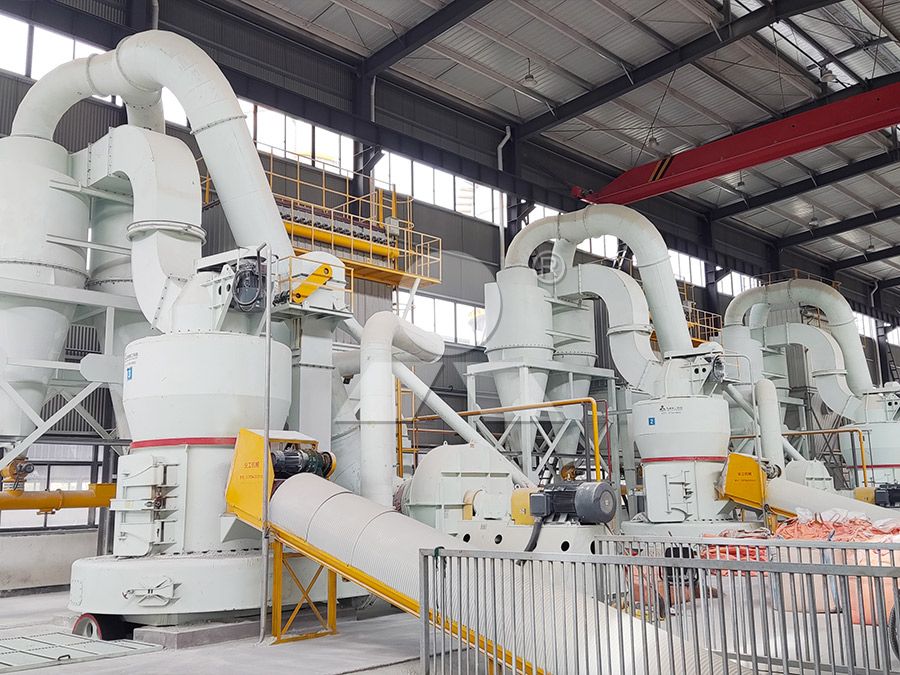
Understanding how the mill works informs better operation. The Raymond mill is a mechanical air-swept mill. Material is fed centrally, falls onto a rotating grinding ring, and is pulverized by spring-loaded rollers. The process is a combination of compression and shear.
The ground material is carried upward by the air stream generated by the fan. This is where classification happens. In the integral separator (whizzer), centrifugal force throws coarse particles back onto the grinding ring for further size reduction. Fine particles, light enough to overcome this force, pass through and are conveyed to the product collector. Adjusting the separator speed directly controls product fineness: higher speed rejects more particles, resulting in a finer product.
The system operates under a slight negative pressure, which contains dust and ensures smooth material flow. The balance between feed rate, grinding pressure, air volume, and classifier speed defines the mill’s efficiency and product quality. An overloaded mill (excessive feed) will cause high amperage and coarse product. Insufficient feed leads to metal-to-metal contact between rollers and ring, causing wear, sparking, and poor efficiency.
Modern Alternatives for Demanding Applications
While the classic Raymond mill is a workhorse, modern mineral processing often demands higher efficiency, finer outputs, and lower energy consumption. For applications requiring ultra-fine powders in the range of 325 to 2500 meshes, traditional designs can be limiting. This is where advanced, next-generation grinding technology shines.
For instance, our MW Ultrafine Grinding Mill represents a significant leap forward. Engineered for customers dedicated to producing ultra-fine powder, it addresses key Raymond mill limitations. Its design eliminates rolling bearings and screws inside the grinding chamber, removing common failure points and concerns about seal damage or loose components. The cage-type powder selector, incorporating German technology, allows precise fineness adjustment between 325-2500 meshes with high screening efficiency (d97≤5μm). Furthermore, with a higher yield and 40% greater production capacity compared to jet mills at the same power, alongside a system energy consumption that is only 30% of a jet mill’s, the MW series offers a compelling upgrade path for operations focused on fine and ultra-fine powders for chemicals, paints, cosmetics, and high-value fillers.
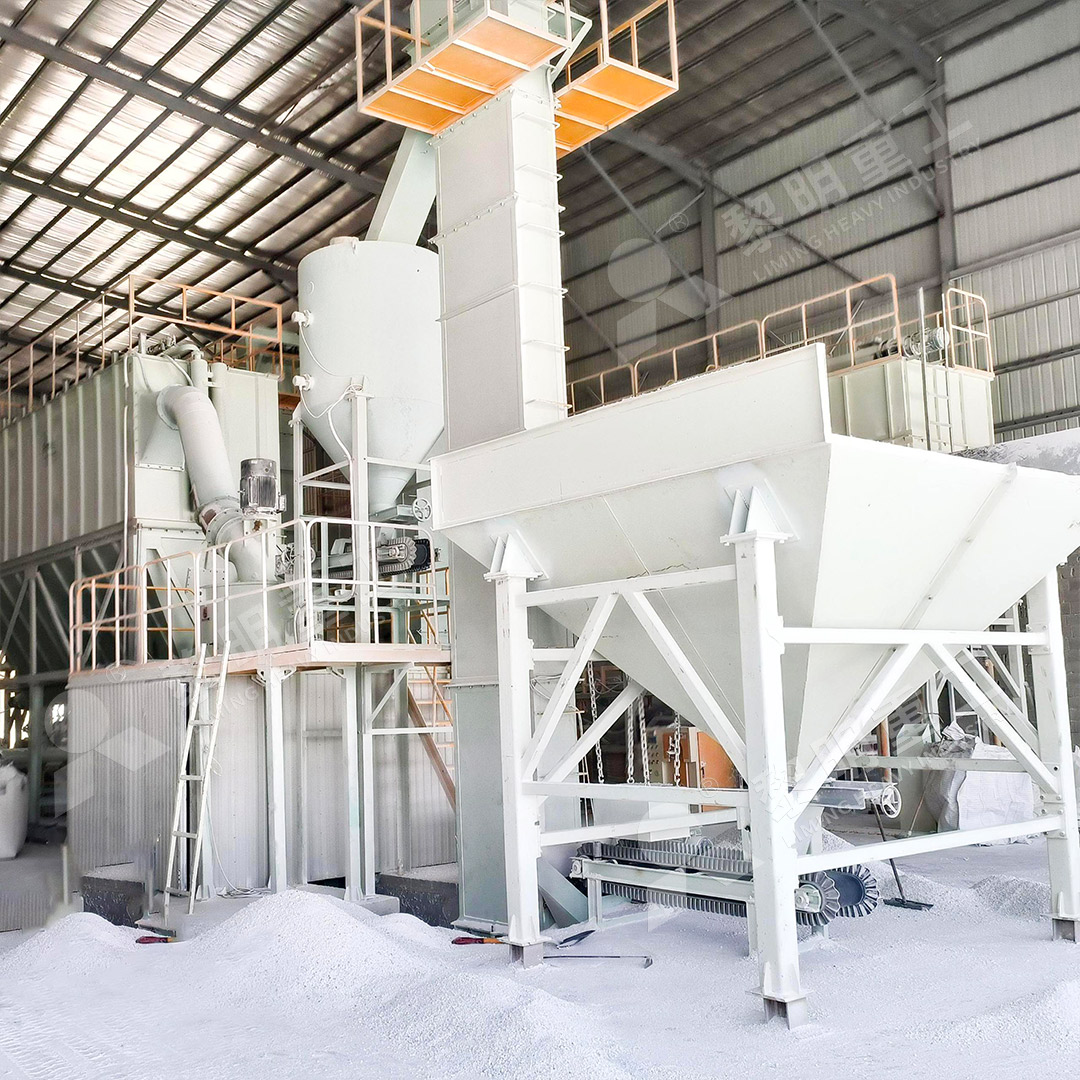
Similarly, for operations seeking vertical integration and large-scale efficiency, the LUM Ultrafine Vertical Grinding Mill integrates grinding, classifying, and transporting. Its unique roller and lining plate curve promotes stable material layer formation, enabling high single-pass yields. Features like multi-head powder separating technology and reversible roller structures for easier maintenance make it a robust, energy-saving choice for high-volume production of non-metallic mineral powders.
Shutdown and Best Practices
A proper shutdown is as important as the startup. First, stop the feeder and allow the mill to run empty for 3-5 minutes to clear most of the material from the chamber. This prevents material from setting up and hardening during downtime. Then, stop the main grinding unit, followed by the classifier, the main fan, and finally, the dust collection system. Always follow the reverse order of startup. Conduct a brief post-operation inspection while the event is fresh, noting any leaks, sounds, or issues for the maintenance log.
Adherence to these procedures—rooted in a mechanical understanding of the machine’s heart—transforms operation from a routine task into a practice that maximizes uptime, product consistency, and the return on your grinding investment.
Frequently Asked Questions (FAQ)
- Q: What is the most common cause of low output or coarse product from my Raymond mill?
A: The most likely triad of causes is: 1) Worn grinding rolls and/or ring, 2) Incorrect or inconsistent feed rate (either too high or too low), and 3) Improper classifier speed setting for the desired fineness. Check wear parts first, then stabilize and calibrate your feeder, and finally fine-tune the classifier. - Q: How often should I lubricate the main shaft bearing, and what type of lubricant should I use?
A: Refer strictly to the manufacturer’s manual for your specific model. As a general rule, high-temperature, high-quality extreme pressure (EP) grease is used. Intervals can range from every 8 hours of operation for some older models to several hundred hours for mills with advanced circulating oil systems. Never guess—over-greasing can be as harmful as under-greasing. - Q: My mill motor amperage fluctuates wildly during operation. What does this indicate?
A: Severe amperage fluctuation typically points to an unstable grinding bed. This is most often caused by an inconsistent feed rate—check your feeder for bridging, clogging, or mechanical issues. It can also be caused by varying material hardness or moisture content if the feedstock isn’t homogenized. - Q: Can I use my Raymond mill for grinding moist materials?
A: Standard Raymond mills are designed for dry grinding. Moisture can cause material to adhere to the grinding components, clog the classifier, and plug the baghouse. If your material has high moisture, it must be dried before grinding, or you should consider a mill designed for simultaneous drying and grinding, like a vertical roller mill. - Q: When considering an upgrade for finer powder production, what are the key advantages of the MW Ultrafine Grinding Mill over a modified Raymond mill?
A: The MW Mill is engineered from the ground up for ultra-fine applications. Key advantages include its internal design without bearings or screws in the grinding zone (enhancing reliability), a highly precise German-technology cage classifier for sharp particle cuts, and significantly better energy efficiency—consuming only about 30% of the energy of a jet mill for similar output. It represents a dedicated technological solution rather than an adaptation of a coarser-grinding design.