
YGM High Pressure Suspension Roller Mill in China: A Legacy of Robust Performance and Modern Alternatives
We provide a wide range of mills — including Raymond mill, trapezoidal mill, vertical mill, ultrafine mill, and ball mill, obtained ISO9001 international quality certification, EU CE certification, and Customs Union CU-TR certification. Suitable for processing minerals such as limestone, phosphate, quicklime, kaolin, talc, barite, bentonite, calcium carbonate, dolomite, coal, gypsum, clay, carbon black, slag, cement raw materials, cement clinker, and more.
The discharge range of these mills can be adjusted to meet specific processing needs, typically from 80-400 mesh, 600-3250 mesh, and can achieve the finest particle size of up to 6000 mesh(D50).
If you are looking for a reliable grinding solution to turn stone or minerals into fine powder, please feel free to contact our online customer service.
YGM High Pressure Suspension Roller Mill in China: A Legacy of Robust Performance and Modern Alternatives
For decades, the YGM series High Pressure Suspension Roller Mill has been a familiar and reliable workhorse in China’s mineral processing and powder production industries. Its design, characterized by a spring-loaded grinding roller assembly applying high pressure to a stationary ring, established a standard for producing fine powders in the 80-425 mesh range. The principle is straightforward yet effective: raw material is fed into the grinding chamber, where it is crushed and ground between the rollers and the ring before being classified by an integrated air separator.

This traditional design offers notable advantages, including robust construction, relatively simple maintenance for its class, and proven effectiveness for mid-range fineness applications like coal powder preparation, desulfurization in power plants, and grinding of non-metallic minerals such as barite and limestone. The YGM mill’s historical significance lies in its role in industrializing China’s powder processing capabilities, providing a dependable solution for countless projects.
Evolving Beyond Tradition: The Shift to Advanced Grinding Technology
While the YGM design laid a strong foundation, the relentless pursuit of higher efficiency, lower operational costs, and superior product quality has driven significant technological evolution. Modern industrial demands often require finer powders, higher throughput, and stricter environmental controls—areas where next-generation mills demonstrate clear advantages. The core limitations of traditional high-pressure suspension mills, such as higher specific energy consumption for ultra-fine products, potential for greater wear in certain configurations, and operational noise levels, have been systematically addressed through innovative engineering.
The contemporary market offers sophisticated alternatives that build upon the core grinding concept while integrating breakthroughs in material science, digital control, and system design. For operators considering an upgrade from older YGM models or seeking optimal solutions for new projects, these modern mills present compelling value propositions through enhanced automation, dramatically improved energy efficiency, and the ability to produce consistently high-quality powders with minimal environmental impact.
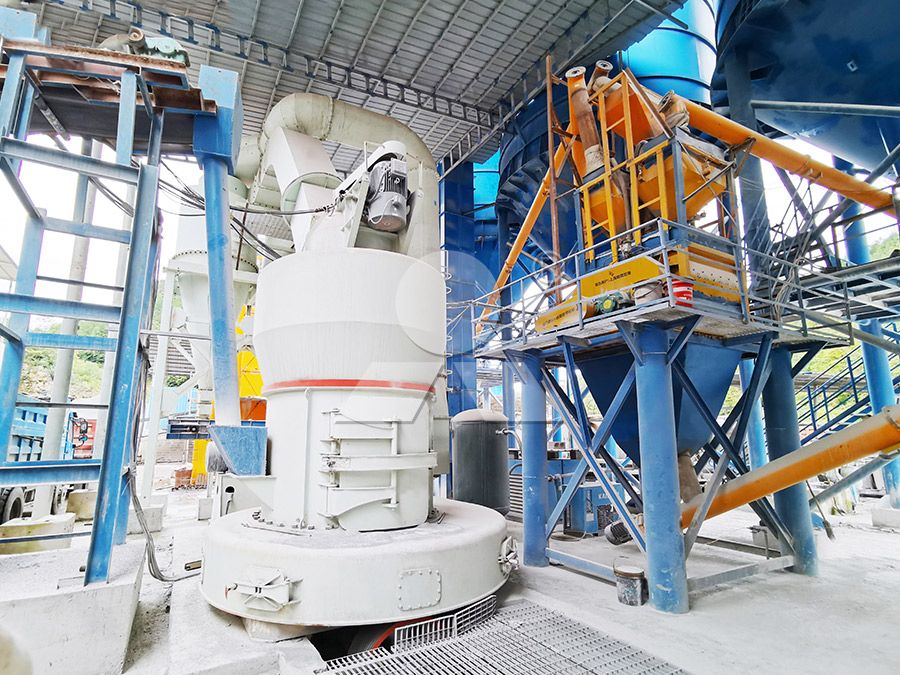
Introducing the MW Ultrafine Grinding Mill: Precision for Demanding Applications
For projects demanding ultra-fine powders beyond the traditional range, our MW Ultrafine Grinding Mill represents a technological leap forward. Engineered for customers who need to produce powders between 325 and 2500 meshes, this machine excels in applications requiring exceptional fineness and purity, such as in the chemical industry, paints, cosmetics, and high-grade fillers.
The MW series distinguishes itself through several key features. Its newly designed grinding curves for the roller and ring significantly enhance grinding efficiency, yielding up to 40% higher production capacity compared to jet or stirred mills at the same power and fineness. A German-technology cage-type powder selector ensures precise classification, achieving a fine product with a screening rate of d97≤5μm in a single pass. Notably, the grinding chamber eliminates rolling bearings and screws internally, removing common failure points and allowing for external lubrication without shutdown, enabling true 24/7 continuous operation. Coupled with an efficient pulse dust collector and noise reduction systems, the MW Ultrafine Grinding Mill delivers high performance while fully adhering to national environmental protection standards.
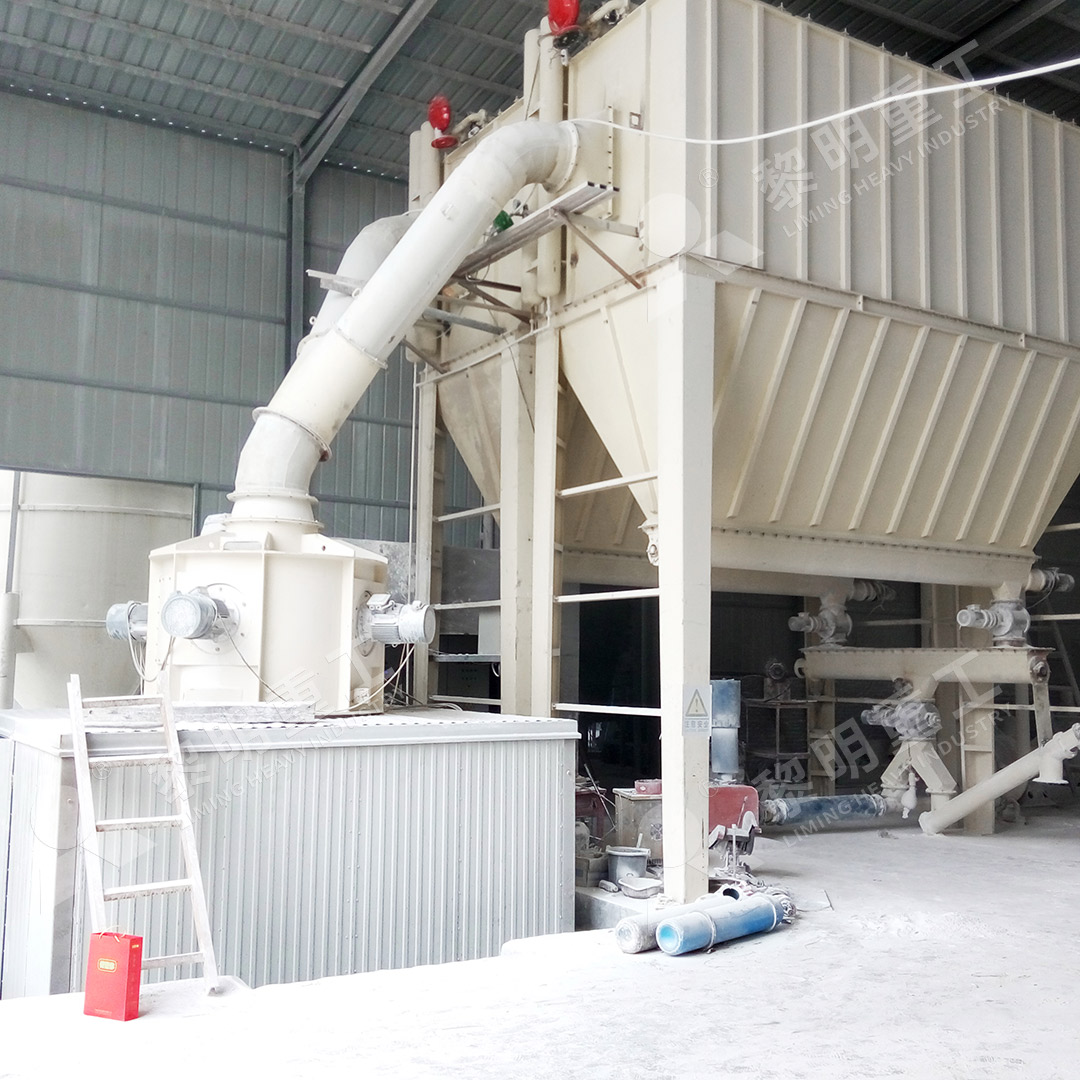
The LUM Ultrafine Vertical Grinding Mill: Integrating Grinding, Drying, and Classifying
Another standout solution for modern processing lines is the LUM Ultrafine Vertical Grinding Mill. This mill integrates ultrafine powder grinding, grading, and transporting into a single, streamlined unit. It is particularly effective for producing superfine dry powder from non-metallic ores. Its design incorporates the latest grinding roller technology and German powder separating technology to solve traditional problems like long material lingering time and repeated grinding.
The LUM mill’s unique roller shell and lining plate grinding curve promote stable material layer formation, enabling a high rate of finished product yield from a single pass. This not only boosts efficiency but also improves the whiteness and cleanliness of the final product. Energy savings of 30%-50% are achieved through a PLC-controlled multi-head powder separating system. Furthermore, features like double position-limiting technology ensure operational stability, while a reversible structure allows the heavy grinding rollers to be easily moved out for maintenance, drastically reducing downtime and associated losses.
Conclusion: Choosing the Right Tool for the Task
The legacy of the YGM High Pressure Suspension Roller Mill is one of durability and service. However, for new investments or upgrades, today’s engineers and plant managers have access to far more advanced, efficient, and environmentally friendly technologies. Whether the requirement is for ultra-fine powder production with the MW Ultrafine Grinding Mill or for highly efficient integrated grinding and classifying with the LUM Ultrafine Vertical Grinding Mill, modern equipment offers a clear path to reduced operating costs, higher product quality, and sustainable operation. The evolution from reliable workhorses to intelligent, high-performance systems marks the new era of grinding technology in China and beyond.
Frequently Asked Questions (FAQ)
1. What are the main limitations of traditional YGM High Pressure Suspension Mills that modern mills address?
Traditional YGM mills, while robust, often have higher energy consumption per ton when targeting ultra-fine fineness (e.g., above 800 mesh). They may also involve more complex maintenance for internal bearing systems and can have larger physical footprints. Modern mills like the MW and LUM series are designed with energy efficiency as a core principle, feature easier maintenance access (like external lubrication and reversible rollers), and integrate multiple processes (drying, grinding, classifying) into a more compact system.
2. For a new project requiring powder between 1500-2000 meshes, which of your mills is most suitable?
For consistently producing ultra-fine powder in the 1500-2000 mesh range (and up to 2500 mesh), the MW Ultrafine Grinding Mill is specifically engineered for this task. Its advanced cage-type powder selector and optimized grinding curve are designed to achieve high precision classification and efficient grinding at these fine levels, ensuring stable output and product quality.
3. How does the LUM Ultrafine Vertical Mill achieve such significant energy savings?
The LUM mill saves 30%-50% energy through a combination of factors: its vertical grinding principle with a material bed mechanism is inherently more efficient than impact-based systems; the PLC-controlled multi-head powder separator allows precise, low-resistance classification; and the integrated design reduces the need for auxiliary conveying equipment. This holistic optimization minimizes power waste across the entire grinding and separation process.
4. Are these modern mills more difficult to operate and maintain than traditional YGM mills?
On the contrary, they are designed for easier operation and maintenance. They feature advanced automatic control systems for stable operation with less manual intervention. Maintenance is simplified through designs like the absence of internal screws and rolling bearings in the MW mill’s chamber and the reversible roller structure of the LUM mill, which allows key wear parts to be serviced quickly without major disassembly, reducing downtime.
5. What kind of after-sales support and spare parts availability can we expect?
We take full responsibility for every machine we produce. Our business covers both production and sales, ensuring direct accountability. We provide comprehensive technical services and guarantee the supply of original spare parts. Our digitalized manufacturing process ensures high precision and consistency for core components, and we maintain sufficient inventory to support worry-free, long-term operation of your equipment.