
Direct Sale Raymond Mill Equipment for Industrial Powder Processing
We provide a wide range of mills — including Raymond mill, trapezoidal mill, vertical mill, ultrafine mill, and ball mill, obtained ISO9001 international quality certification, EU CE certification, and Customs Union CU-TR certification. Suitable for processing minerals such as limestone, phosphate, quicklime, kaolin, talc, barite, bentonite, calcium carbonate, dolomite, coal, gypsum, clay, carbon black, slag, cement raw materials, cement clinker, and more.
The discharge range of these mills can be adjusted to meet specific processing needs, typically from 80-400 mesh, 600-3250 mesh, and can achieve the finest particle size of up to 6000 mesh(D50).
If you are looking for a reliable grinding solution to turn stone or minerals into fine powder, please feel free to contact our online customer service.
Direct Sale Raymond Mill Equipment for Industrial Powder Processing
In the demanding world of industrial mineral and chemical processing, achieving consistent, high-quality powder fineness is paramount. For decades, Raymond mill technology has served as a cornerstone for grinding applications across sectors like mining, construction materials, ceramics, and chemicals. However, as production demands evolve towards higher efficiency, stricter environmental standards, and greater operational flexibility, the need for advanced, reliable grinding solutions has never been more critical. This article explores the enduring value of direct-sale Raymond mill equipment and highlights modern innovations that address contemporary industrial challenges.
The Evolution of Grinding Technology: Beyond Traditional Limits
The classic Raymond mill design, known for its robust construction and effective grinding of medium-hard materials, laid a strong foundation. Its principle of grinding via spring-loaded rollers against a rotating ring remains effective. Yet, modern processing requires more: higher yields, ultra-fine capabilities, energy efficiency, and seamless integration with digital controls. Today’s leading manufacturers have responded by engineering next-generation mills that retain the reliability of the Raymond concept while incorporating breakthrough technologies.

Key advancements include sophisticated powder classifiers for precise particle size control, innovative grinding curve designs for enhanced material-layer formation, and integrated pulse-jet dust collectors that ensure environmentally clean operation. The shift from manual adjustments to PLC-based automation allows for precise control over grinding pressure, separator speed, and feed rates, enabling operators to fine-tune production for optimal results with minimal waste.
Core Considerations for Selecting Your Mill
Choosing the right grinding equipment is a strategic decision impacting your plant’s productivity and bottom line. Several factors must be evaluated:
- Material Characteristics: Hardness, moisture content, abrasiveness, and desired final fineness (mesh size).
- Production Capacity: Required throughput in tons per hour (tph) across your target fineness range.
- System Integration: How the mill will integrate with existing crushing, drying, feeding, and product collection systems.
- Total Cost of Ownership: Looking beyond the initial purchase price to consider energy consumption, wear part longevity, maintenance downtime, and spare parts availability.
- Environmental & Operational Compliance: Meeting noise and dust emission standards is non-negotiable in most regions.
Recommended Solutions for Advanced Powder Processing
Based on extensive engineering and field experience, we recommend two standout models for operations seeking superior performance in ultra-fine and high-capacity grinding applications.
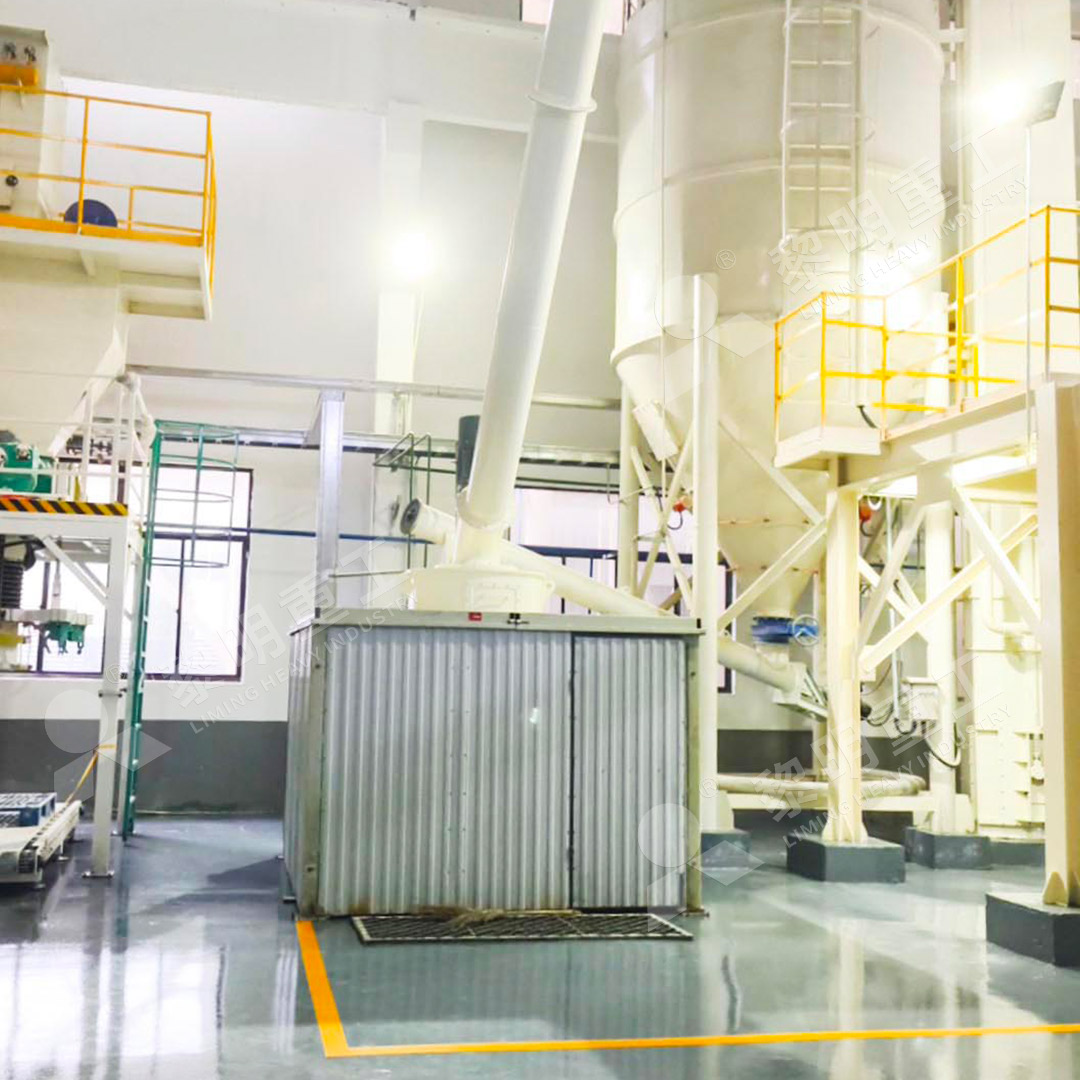
For operations requiring ultra-fine powders between 325 and 2500 meshes, the MW Series Ultrafine Grinding Mill represents a significant leap forward. It is specifically engineered for customers dedicated to producing high-purity, superfine powders. A key feature is its German-technology, cage-type powder selector, which ensures exceptional separation precision, achieving a screening rate of d97≤5μm in a single pass. The mill’s design eliminates rolling bearings and screws within the grinding chamber, removing common failure points and concerns about loose components. With an efficient pulse dust collector and muffler system, it operates with remarkably low dust and noise. The MW Series offers higher yield and lower energy consumption—production capacity is up to 40% higher than jet or stirred mills at the same fineness and power, while system energy use is only about 30% of a jet mill’s. It handles materials like limestone, calcite, dolomite, talc, and specialized chemicals with ease.
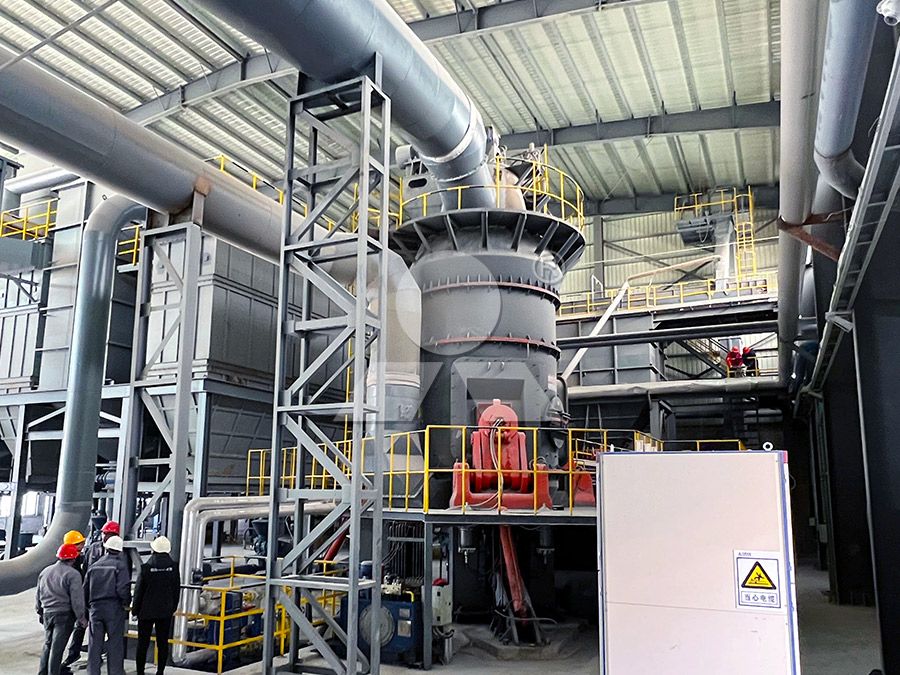
For high-volume processing of non-metallic minerals, coal, and slag, the LM Vertical Grinding Mill is an industry workhorse. Its integrated design combines crushing, drying, grinding, classifying, and conveying into a single, compact unit, reducing the footprint by approximately 50% compared to a traditional ball mill system. This integration also translates to energy savings of 30%-40%. The material’s short residence time minimizes over-grinding and reduces iron contamination, ensuring high product whiteness. Its fully sealed, negative-pressure operation prevents dust spillage, and the automated control system allows for simple, labor-efficient management. With a capacity range of 3-340 tph, it is exceptionally versatile for large-scale production in cement, power plant desulfurization, and metallurgy.
The Direct Sale Advantage: Partnership and Support
Procuring such critical equipment directly from a manufacturer like LIMING Heavy Industry offers distinct benefits. It ensures access to original spare parts, direct technical support from the engineers familiar with the machine’s design, and comprehensive after-sales service. Our commitment to digitalized, high-precision manufacturing for core components guarantees machine reliability and longevity. Furthermore, our product philosophy emphasizes “worry-free operation,” backed by a sufficient supply of genuine spare parts and lifecycle technical services.
Investing in modern Raymond mill technology is an investment in the consistency, quality, and sustainability of your powder production. By selecting equipment designed with advanced features for efficiency, environmental protection, and ease of maintenance, you secure a competitive edge in an increasingly demanding market.
Frequently Asked Questions (FAQs)
- What is the main difference between a traditional Raymond mill and your newer models like the MW Series?
While based on the proven roller-grinding principle, the MW Series incorporates advanced technologies like a high-precision cage classifier for ultra-fine powder (up to 2500 mesh), a chamber design without internal bearings or screws for higher reliability, and integrated eco-friendly systems that drastically reduce energy consumption and environmental impact compared to first-generation designs. - Can your mills handle moist materials, or is pre-drying required?
Models like the LM Vertical Grinding Mill are specifically designed with integrated drying capabilities. Hot air can be introduced into the mill during grinding, allowing it to process materials with certain moisture content simultaneously. For extremely wet materials, a separate dryer might be recommended; our technical team can advise based on your specific material analysis. - How do you ensure consistent powder fineness, and can it be adjusted easily?
Consistent fineness is achieved through advanced, multi-head powder separating technology (like in the MW and LUM mills). The fineness is primarily adjusted by changing the rotational speed of the classifier rotor via the PLC control system, allowing for quick and precise changes without stopping the mill. - What is the typical lead time for delivery and installation?
Lead times vary based on the model complexity and current production schedule. Standard mills may have shorter lead times, while fully customized systems require more detailed engineering. We provide estimated timelines upon project confirmation and support with installation planning and commissioning. - Are spare parts readily available, and how is maintenance handled?
Yes, as a manufacturer, we maintain a sufficient supply of original spare parts. Our design prioritizes easier maintenance—for example, the LUM mill features a reversible roller structure for quick inspection and part replacement. We also provide detailed manuals, remote support, and on-site service options to ensure worry-free operation. - What kind of after-sales support do you offer?
Our support covers the entire machine lifecycle: installation guidance, operator training, routine maintenance planning, troubleshooting assistance (remote or on-site), and guaranteed supply of original wear parts like grinding rollers and rings to maintain optimal performance.