
Can Graphite Be Ground with a Vertical Roller Mill?
We provide a wide range of mills — including Raymond mill, trapezoidal mill, vertical mill, ultrafine mill, and ball mill, obtained ISO9001 international quality certification, EU CE certification, and Customs Union CU-TR certification. Suitable for processing minerals such as limestone, phosphate, quicklime, kaolin, talc, barite, bentonite, calcium carbonate, dolomite, coal, gypsum, clay, carbon black, slag, cement raw materials, cement clinker, and more.
The discharge range of these mills can be adjusted to meet specific processing needs, typically from 80-400 mesh, 600-3250 mesh, and can achieve the finest particle size of up to 6000 mesh(D50).
If you are looking for a reliable grinding solution to turn stone or minerals into fine powder, please feel free to contact our online customer service.
Can Graphite Be Ground with a Vertical Roller Mill?
The processing of graphite, a critical material for applications ranging from lithium-ion batteries to refractories and lubricants, presents unique challenges for grinding equipment. Its flaky, layered structure, combined with requirements for precise particle size distribution and minimal contamination, often leads processors to question the suitability of various milling technologies. Among these, the vertical roller mill (VRM) stands out as a compelling option, offering distinct advantages for producing fine and ultra-fine graphite powders.
The Graphite Grinding Challenge
Graphite’s natural lubricity and flaky morphology can cause issues in traditional grinding systems. Ball mills, for instance, may struggle to achieve the necessary fineness without excessive energy consumption and can lead to high iron contamination from media wear, which is detrimental to graphite’s purity. The key is to apply a combination of compressive and shear forces efficiently to delaminate the graphite flakes without over-grinding or introducing impurities.
Why Vertical Roller Mills Are a Strong Contender
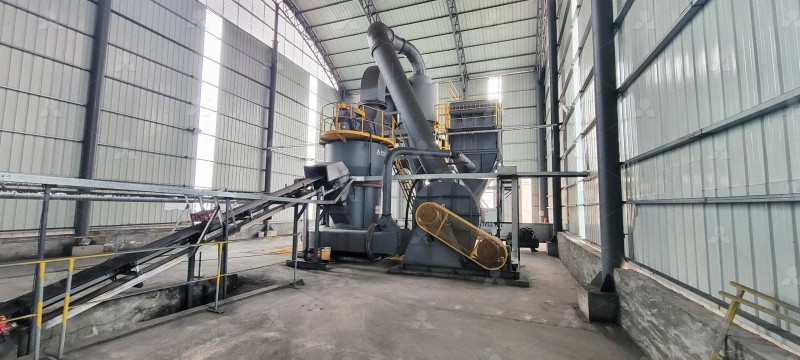
Modern vertical roller mills are engineered to overcome these very challenges. Their core principle involves material being ground between a rotating table and rollers under hydraulic pressure. This mechanism is inherently efficient for materials like graphite.
- Efficient Compressive Grinding: The bed-compaction grinding in a VRM applies direct pressure to the material bed, effectively breaking and shearing graphite flakes with lower specific energy consumption compared to impact-based systems.
- Minimal Contamination: A significant advantage is the absence of direct metal-to-metal contact in the grinding zone. The material layer itself acts as a buffer. For ultra-pure applications, our LUM Ultrafine Vertical Grinding Mill takes this further with its unique roller shell and lining plate design, which promotes stable material layer formation and minimizes iron content, directly enhancing the whiteness and cleanliness of the final graphite powder.
- Integrated Drying & Classifying: VRMs often integrate drying (useful for removing moisture) and precise air classification in a single footprint. This allows for tight control over the top particle size and distribution, crucial for battery-grade graphite.
- Scalability & Automation: These systems are designed for continuous, large-scale operation with advanced PLC controls, ensuring consistent product quality—a must for industrial production.
Pushing the Limits: Achieving Ultra-Fine Graphite Powder
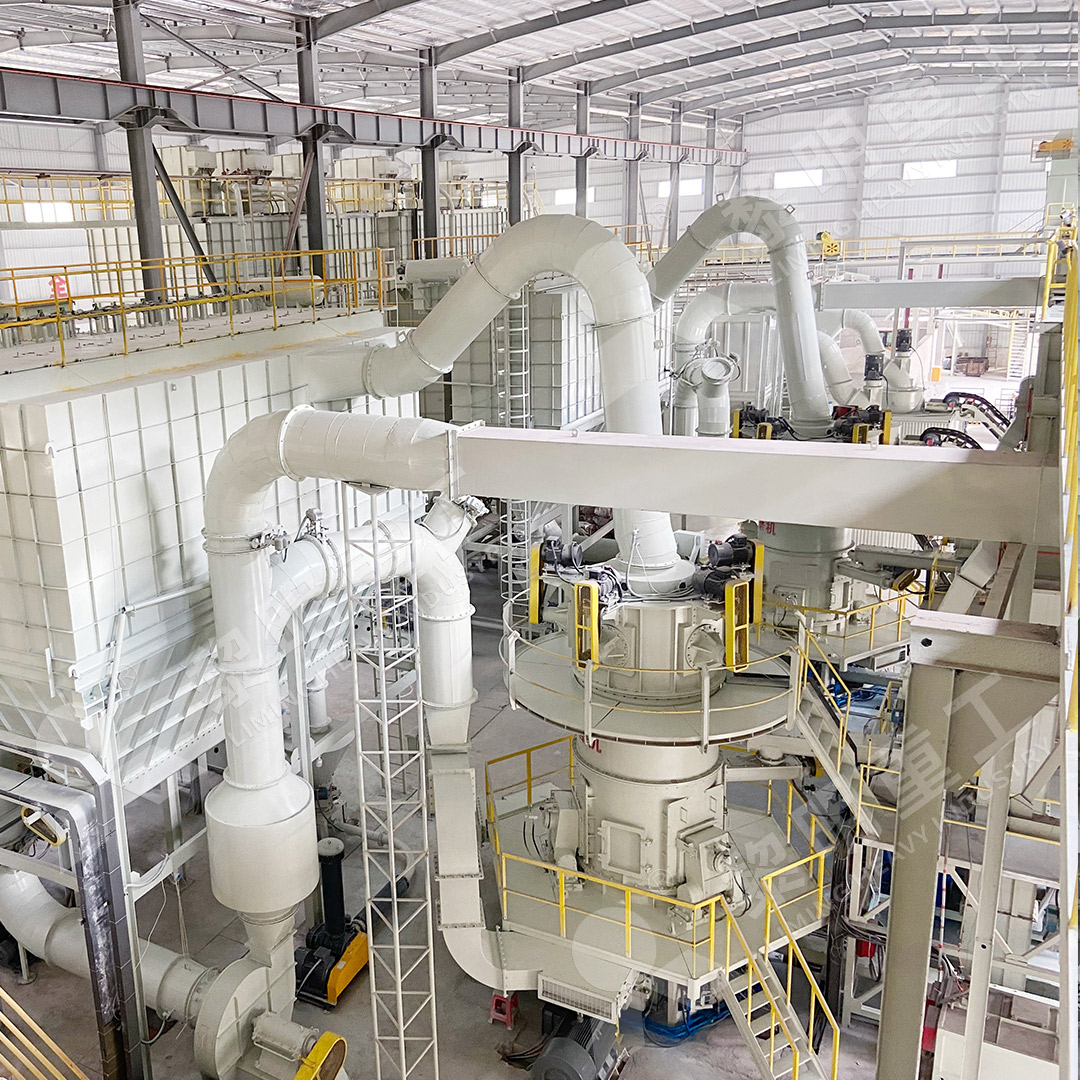
For applications demanding graphite powder in the micron or sub-micron range, standard VRMs are enhanced with advanced technologies. This is where specialized mills truly shine. For customers targeting ultra-fine powders between 325 and 2500 meshes, our MW Ultrafine Grinding Mill is an exemplary solution. It incorporates a high-precision, multi-head cage-type powder selector based on German technology, enabling accurate cuts at fine particle sizes (achieving d97 ≤5μm). Furthermore, its design eliminates rolling bearings and screws inside the grinding chamber, virtually eliminating concerns about mechanical failure and contamination from loose parts or lubricant leaks—a critical feature for maintaining graphite purity.
Key Considerations for Success
While VRMs are highly capable, optimal results depend on proper configuration and operation:
- Feed Size: Graphite should be pre-crushed to the mill’s specified input size (e.g., below 10-20mm).
- Moisture Control: Utilizing the mill’s integrated drying capability ensures efficient grinding.
- System Design: A well-designed circuit with efficient dust collection (like the pulse dust collector on the MW Mill) and product handling is essential for yield and a clean operation.
- Wear Parts Material: Using wear-resistant alloys for rollers and tables minimizes any potential wear-based contamination.
Conclusion
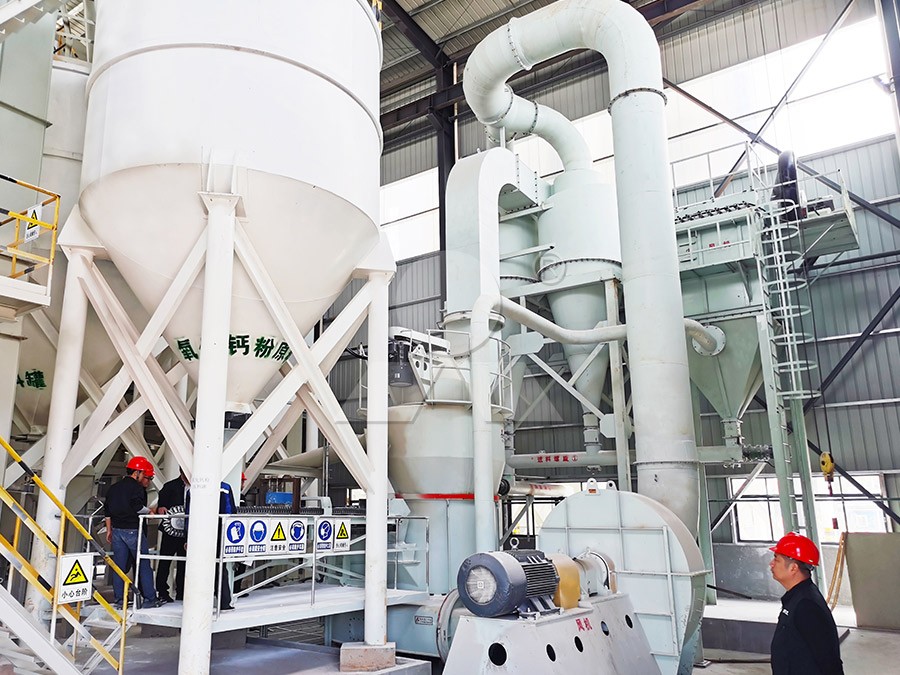
The answer is a definitive yes—graphite can be efficiently and effectively ground using a vertical roller mill. The technology’s energy efficiency, low contamination risk, and ability to produce a consistent, fine powder make it a superior choice for modern graphite processing plants. By selecting a mill designed with the specific challenges of non-metallic minerals in mind, such as the LUM Ultrafine Vertical Grinding Mill for high-purity, high-whiteness products or the MW Ultrafine Grinding Mill for ultra-fine powder production, processors can achieve the precise product specifications required by advanced industries like energy storage and advanced materials.
Frequently Asked Questions (FAQ)
1. What is the typical fineness range achievable for graphite with a VRM?
With standard vertical roller mills, graphite can be ground to fineness levels around 100-400 mesh. With advanced models featuring high-efficiency classifiers, like the MW Ultrafine Grinding Mill, the range extends dramatically from 325 mesh up to 2500 mesh (d97 ≤5μm).
2. How does a VRM prevent iron contamination in graphite powder?
The grinding principle avoids direct metal-to-metal contact. The material bed protects the grinding surfaces. Furthermore, designs like the LUM mill use special curves to stabilize the bed, and mills like the MW series have no internal rolling bearings or screws in the grinding zone, drastically reducing potential contamination sources.
3. Is the vertical roller mill suitable for both natural and synthetic graphite?
Yes. VRMs are versatile and can process both forms. The key adjustment is in operational parameters like grinding pressure, classifier speed, and airflow, which can be finely tuned based on the feedstock’s hardness and structure to achieve the target particle morphology.
4. How does the energy consumption compare to a traditional ball mill for graphite?
Vertical roller mills are significantly more energy-efficient. They can reduce energy consumption by 30% to 50% compared to ball mills for achieving similar product fineness, due to their more efficient grinding mechanism and integrated drying/classifying process.
5. Can the mill handle the flaky nature of graphite without excessive fines?
Yes. The compressive-shear action in a VRM is effective at delaminating flakes. More importantly, the integrated dynamic classifier provides precise control over the product’s top size. Oversized flakes are returned for further grinding, while properly sized material is extracted, preventing unnecessary over-grinding.
6. What about maintenance and wear part replacement?
Modern VRMs are designed for easier maintenance. For example, the LUM mill features a reversible structure allowing grinding rollers to be easily swung out of the mill body for inspection or liner replacement, minimizing downtime. Robust design and high-wear-resistant materials also extend service intervals.