
Starting a Stone Mill Flour Business in Hometown: Profitability and Guide
We provide a wide range of mills — including Raymond mill, trapezoidal mill, vertical mill, ultrafine mill, and ball mill, obtained ISO9001 international quality certification, EU CE certification, and Customs Union CU-TR certification. Suitable for processing minerals such as limestone, phosphate, quicklime, kaolin, talc, barite, bentonite, calcium carbonate, dolomite, coal, gypsum, clay, carbon black, slag, cement raw materials, cement clinker, and more.
The discharge range of these mills can be adjusted to meet specific processing needs, typically from 80-400 mesh, 600-3250 mesh, and can achieve the finest particle size of up to 6000 mesh(D50).
If you are looking for a reliable grinding solution to turn stone or minerals into fine powder, please feel free to contact our online customer service.
Starting a Stone Mill Flour Business in Hometown: Profitability and Guide
There’s a quiet revolution happening in local food systems. Consumers are increasingly seeking authentic, traceable, and minimally processed staples, turning away from mass-produced, commoditized flours. This trend presents a golden opportunity for entrepreneurs to revive a timeless craft: the stone mill flour business. Operating from your hometown isn’t just a nostalgic dream; it’s a viable, profitable venture that connects you directly to your community and the land. This guide will walk you through the essentials of profitability and setup, focusing on the modern technology that makes small-scale, high-quality milling achievable.
The Market Case: Why Stone-Milled Flour?
Stone milling, unlike industrial steel-roller milling, crushes grains between two slowly turning stones. This ancient technique preserves the wheat germ and bran, retaining natural oils, vitamins, and flavor. The result is a nutrient-dense, flavorful flour that commands a premium price. Your target market includes local bakeries, health-conscious consumers, restaurants focusing on farm-to-table cuisine, and home bakers. By sourcing grains from regional farmers, you create a compelling “local terroir” story, further enhancing your product’s value and strengthening the local economy.
Core Components of Your Milling Operation
Success hinges on three pillars: quality grain sourcing, efficient processing, and effective marketing.
- Grain Sourcing & Storage: Forge relationships with local organic or sustainable grain farmers. You’ll need clean, dry storage (silos or bins) to hold grain before milling.
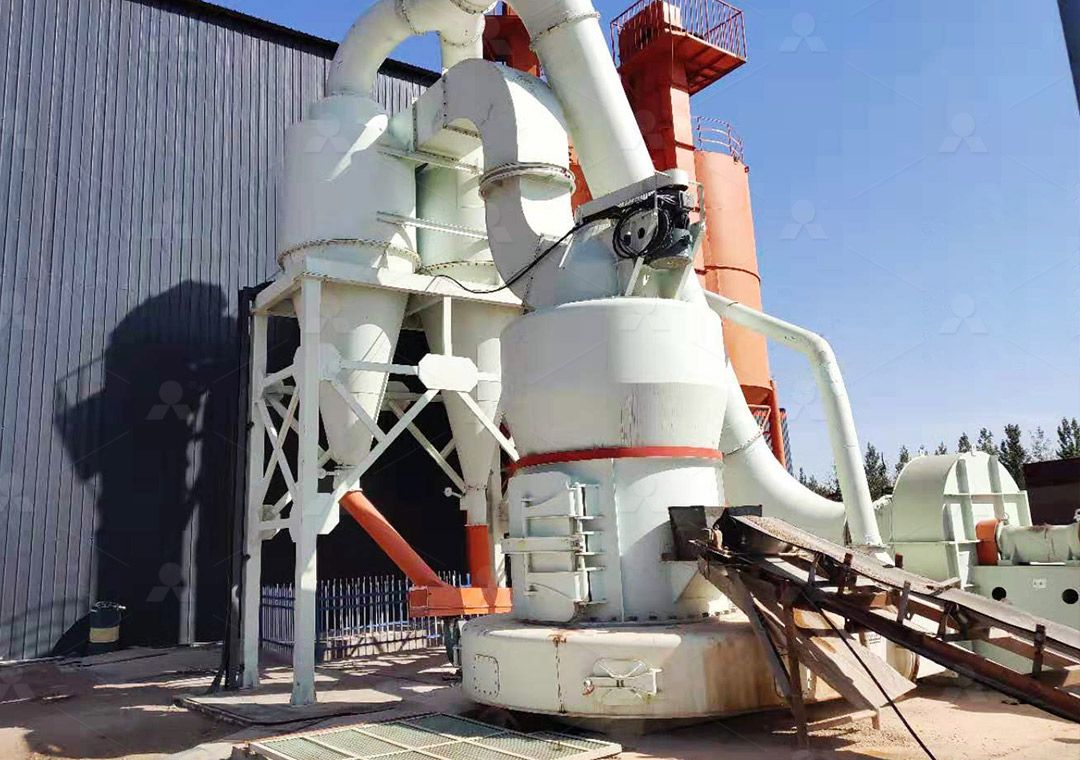
- The Milling Heart: This is your most critical investment. A modern stone mill setup is far from the rustic waterwheels of the past. Today’s advanced grinding systems integrate precision engineering, dust control, and energy efficiency.
- Packaging & Distribution: Invest in high-quality, airtight packaging (e.g., resealable kraft bags with windows) to preserve freshness. Develop a local delivery route and consider e-commerce for wider reach.
Choosing the Right Mill: The Engine of Your Business
The mill is not just equipment; it’s the core of your product quality and operational efficiency. For a hometown business aiming for premium, ultra-fine whole grain flours, you need a machine that balances high yield with gentle processing to preserve nutritional integrity.
This is where advanced grinding technology becomes indispensable. For instance, the MW Ultrafine Grinding Mill is engineered precisely for operations like yours. Designed for customers who need to make ultra-fine powder, it handles a versatile input size of 0-20 mm with a capacity ranging from 0.5 to 25 tph, perfect for scaling from boutique to small commercial output. Its key advantage lies in its design: higher yielding at lower energy consumption. With newly designed grinding curves, its production capacity can be 40% higher than jet mills while using only 30% of the energy. Crucially, it allows you to produce flour with adjustable fineness between 325-2500 meshes, giving you incredible control over texture—from fine pastry flour to coarser whole meal.
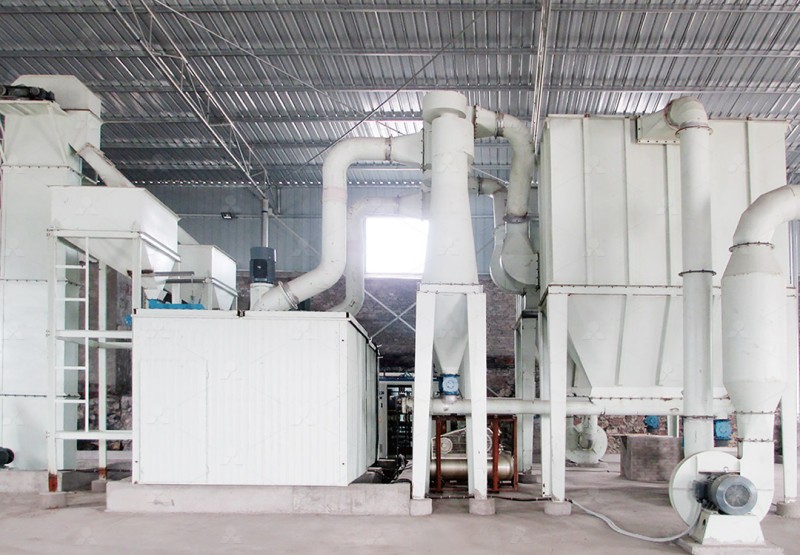
Furthermore, its pulse dust collector and muffler ensure your production meets strict environmental and workplace safety standards, keeping your operation clean and community-friendly—a vital consideration for a hometown business. The absence of rolling bearings and screws in the grinding chamber also translates to less maintenance and more worry-free, continuous operation.
Calculating Profitability
Let’s break down a simplified model. Assume you purchase organic wheat at $15 per bushel (60 lbs). A bushel yields approximately 42 lbs of whole wheat flour. Using an efficient mill like the MW series, your processing cost (energy, maintenance, packaging) might be $0.30 per pound. Your total cost per pound is roughly $0.66. Premium stone-ground, local organic flour can retail for $3.00 to $5.00 per pound. Even at a conservative wholesale price of $2.00/lb to local bakeries, your gross margin is significant. At a 2 tph (≈4,400 lbs/hr) operational scale, the numbers quickly become compelling, especially when you factor in value-added products like custom blends for bakers or pre-mixed baking blends.
Building Your Brand and Community Presence
Your story is your strongest marketing tool. Host open-house tours at your mill, participate in farmers’ markets, and collaborate with local chefs. Use social media to showcase the journey from field to flour. Transparency about your process and your investment in technology like the MW Ultrafine Grinding Mill—which guarantees consistent, high-quality fineness—builds trust and justifies your premium.
Final Thoughts
Starting a stone mill flour business in your hometown is a journey back to the future—combining an ancient craft with modern, efficient technology to meet contemporary demand. It’s a business model built on authenticity, quality, and community. By carefully selecting your grain partners and investing in the right milling technology, you can build a sustainable, profitable enterprise that nourishes your community in every sense of the word. The mill you choose is the cornerstone; opting for a reliable, efficient, and precise system like the MW Ultrafine Grinding Mill sets the foundation for quality and growth from day one.
Frequently Asked Questions (FAQ)
- What’s the main difference between stone-milled and regular store-bought flour?
Stone-milled flour retains the entire wheat kernel (bran, germ, endosperm), making it more nutritious and flavorful. Commercial roller-milled flour typically removes the germ and bran for longer shelf life, resulting in less nutritious white flour. - Do I need a large space to start a stone mill business?
Not necessarily. Modern vertical grinding mills like the MW series have a compact footprint. A clean, well-ventilated space the size of a large garage or small warehouse can be sufficient for a start-up operation, including storage and packaging. - How do I ensure consistent fineness in my flour?
Consistency relies on a high-quality mill with a precise powder separation system. For example, mills featuring cage-type powder selectors (like the one in the MW Ultrafine Grinding Mill) allow accurate adjustment of fineness (e.g., from 325 to 2500 meshes) and ensure a uniform particle size in every batch. - Is the milling process very dusty and noisy?
It doesn’t have to be. Modern mills are designed with environmental controls. Look for models equipped with integrated pulse dust collectors and mufflers. These systems effectively contain dust and reduce noise, making the operation safe, clean, and suitable for a community setting. - Can I mill grains other than wheat?
Absolutely. A versatile mill can process a wide range of dry grains and legumes. The MW Ultrafine Grinding Mill, for instance, is suitable for limestone, calcite, and dolomite in industrial settings, but its gentle grinding action is also excellent for food-grade products like rye, spelt, oats, corn, and even dried chickpeas for bespoke flour blends. - What kind of power supply do I need for an industrial-grade mill?
Most small to mid-capacity mills for a business like this require a standard industrial three-phase electrical connection. It’s essential to consult with the equipment supplier and a local electrician to assess your facility’s power capacity before installation.