
Processing Marble with Grinding Mills: A Comprehensive Guide
We provide a wide range of mills — including Raymond mill, trapezoidal mill, vertical mill, ultrafine mill, and ball mill, obtained ISO9001 international quality certification, EU CE certification, and Customs Union CU-TR certification. Suitable for processing minerals such as limestone, phosphate, quicklime, kaolin, talc, barite, bentonite, calcium carbonate, dolomite, coal, gypsum, clay, carbon black, slag, cement raw materials, cement clinker, and more.
The discharge range of these mills can be adjusted to meet specific processing needs, typically from 80-400 mesh, 600-3250 mesh, and can achieve the finest particle size of up to 6000 mesh(D50).
If you are looking for a reliable grinding solution to turn stone or minerals into fine powder, please feel free to contact our online customer service.
Processing Marble with Grinding Mills: A Comprehensive Guide
Marble processing represents one of the most demanding applications in the mineral grinding industry. The transformation of raw marble blocks into fine powders requires precision engineering, careful material handling, and equipment specifically designed to preserve the material’s inherent qualities while achieving desired fineness levels. This comprehensive guide explores the technical considerations and optimal approaches for marble processing using modern grinding technology.
Understanding Marble’s Unique Characteristics
Marble, a metamorphic rock composed primarily of calcite or dolomite crystals, presents both opportunities and challenges for processors. Its relative softness (3-4 on the Mohs scale) makes it easier to grind than many other minerals, but its value often depends on maintaining brightness, purity, and consistent particle size distribution. Contamination from grinding media or excessive heat generation can significantly diminish the commercial value of marble powders used in plastics, paints, cosmetics, and other high-value applications.
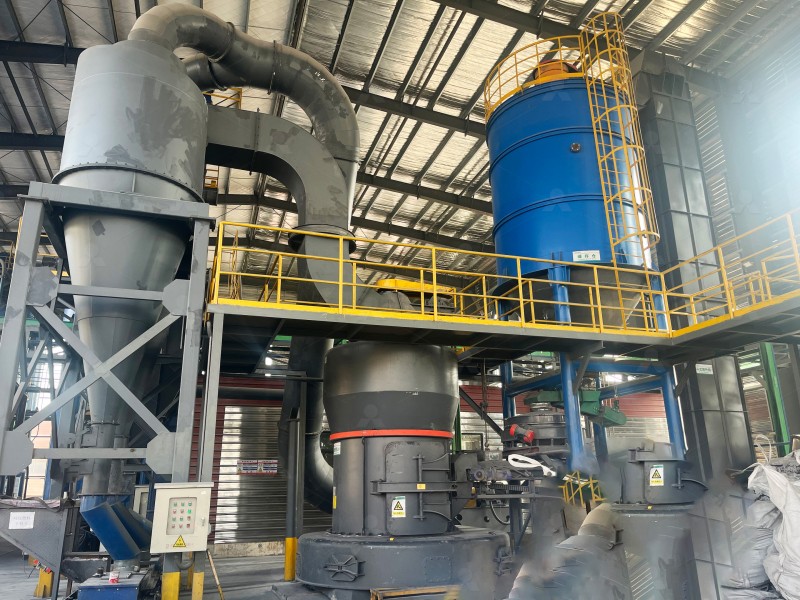
Selecting the Right Grinding Technology
The choice of grinding mill depends heavily on the target particle size, production capacity requirements, and the specific application of the final marble powder. Traditional ball mills, while capable of processing marble, often introduce iron contamination and operate with relatively low energy efficiency. Modern vertical mills and specialized ultrafine grinding systems have largely superseded these older technologies for high-value marble applications.
For standard construction-grade marble powders with fineness requirements between 80-400 mesh, vertical roller mills offer an excellent balance of production capacity and energy efficiency. These systems integrate drying, grinding, classification, and conveying in a single compact unit, reducing both footprint and operational complexity.
The Ultrafine Challenge: Achieving Superior Fineness
When targeting ultrafine marble powders (325-2500 mesh) for premium applications in plastics, paints, or cosmetics, specialized equipment becomes essential. At these fineness levels, conventional grinding systems struggle with efficiency, heat generation, and contamination control. The grinding process must achieve precise particle size distributions while maintaining the marble’s natural whiteness and chemical purity.
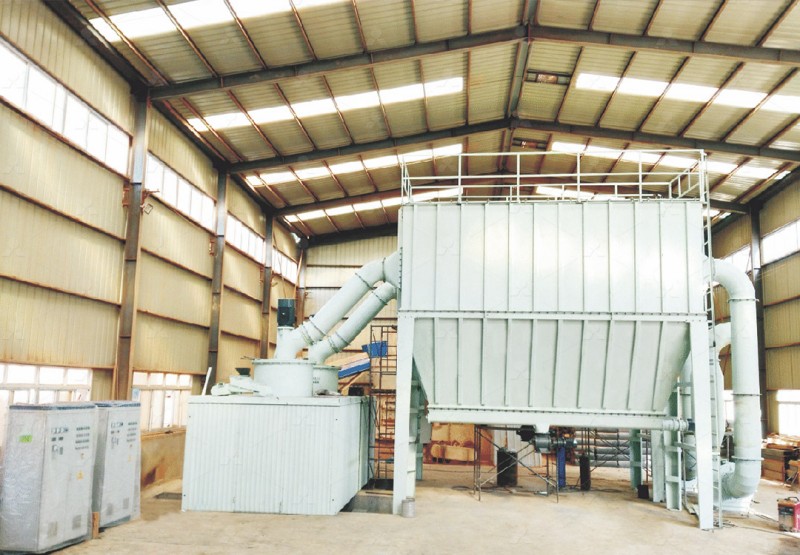
For operations requiring superior ultrafine marble powders, we specifically recommend our MW Ultrafine Grinding Mill. This advanced system represents a technological leap in fine powder processing, with an input size capability of 0-20 mm and production capacity ranging from 0.5 to 25 tph. The MW Mill is engineered specifically for customers who need to make ultra-fine powder without compromising on product quality or operational efficiency.
Key Advantages of Modern Marble Grinding Systems
Contemporary marble grinding mills incorporate several critical features that address the unique challenges of processing this valuable material:
Higher Yielding, Lower Energy Consumption
Newly designed grinding curves of grinding roller and grinding ring further enhance the grinding efficiency. With the same fineness and power, production capacity can be 40% higher than jet grinding mills and stirred grinding mills, while system energy consumption is only 30% of jet grinding mill systems.
Adjustable Fineness with Precision Classification
The ability to precisely control particle size distribution is crucial for marble processors serving multiple markets. Advanced cage-type powder selectors adopting German technologies effectively increase the precision of powder separation. Multi-head cage-type powder selectors can be configured according to specific requirements on yield, fineness, and sieving rate, with product fineness adjustable between 325-2500 meshes.

Contamination-Free Operation
For marble processing, the absence of rolling bearings and screws in the grinding chamber eliminates concerns about damage to bearing or sealing parts that could introduce contaminants. This design also prevents machine damage problems caused by loose screws, ensuring consistent product purity.
Environmental Compliance
Modern grinding systems address environmental concerns through integrated dust collection and noise reduction technologies. Efficient pulse dust collectors ensure no dust pollution generates during operation of the entire milling system, while silencers and noise elimination rooms reduce operational noise to comply with stringent environmental standards.
Operational Considerations for Marble Processing
Successful marble processing extends beyond equipment selection to encompass material handling, moisture control, and maintenance practices. Raw marble should be properly sized before entering the grinding system, with careful attention to removing potential contaminants that could affect final product quality or damage equipment.
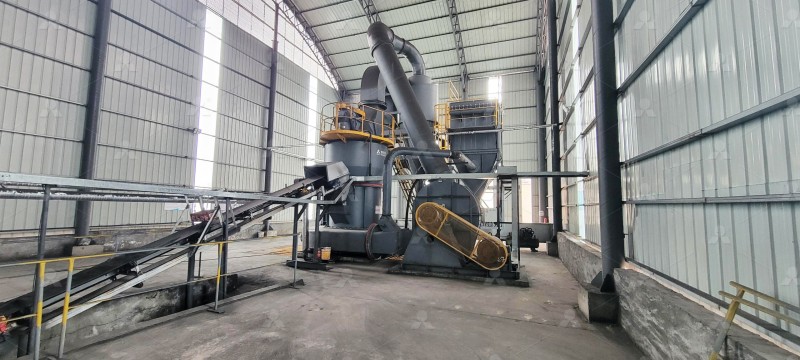
For operations requiring both high capacity and exceptional product quality, our LUM Ultrafine Vertical Grinding Mill offers an excellent alternative. Independently designed with years of grinding mill production experience, the LUM grinding mill adopts the latest Taiwan grinding roller technology and German powder separating technology. With an input size of 0-10 mm and capacity ranging from 5-18 tph, this system integrates ultrafine powder grinding, grading, and transporting into a comprehensive solution that has become a preferred choice in the ultrafine powder grinding industry.
Maximizing Return on Investment
The selection of appropriate grinding technology directly impacts operational costs and product marketability. Beyond the initial equipment investment, processors should consider energy consumption, maintenance requirements, spare parts availability, and the flexibility to produce different product grades for various market segments.
Modern grinding systems designed specifically for materials like marble provide not only technical superiority but also economic advantages through reduced downtime, lower energy costs, and the ability to command premium prices for high-quality, consistently graded marble powders.
Conclusion
The evolution of grinding technology has transformed marble processing from a simple size reduction operation to a precision manufacturing process. By selecting equipment specifically engineered for the unique characteristics of marble, processors can optimize production efficiency, product quality, and ultimately, profitability. The continued advancement of grinding systems ensures that marble processors have access to technologies that meet both current and future market demands.
Frequently Asked Questions
What is the optimal moisture content for marble before grinding?
For most grinding systems, marble should have a moisture content below 1-2% for optimal efficiency. Higher moisture levels can reduce grinding efficiency and may require integrated drying systems.
How does marble hardness affect grinding mill selection?
Marble’s relative softness (3-4 Mohs) allows for higher processing capacities compared to harder minerals, but requires careful selection of grinding media and speeds to prevent overgrinding and excessive heat generation.
What maintenance intervals are typical for marble grinding mills?
Maintenance requirements vary by mill type, but most modern systems designed for marble processing require major inspections at 4,000-8,000 operating hours, with routine maintenance performed quarterly.
Can the same grinding mill process different types of marble?
Yes, modern grinding mills with adjustable parameters can process various marble types, though settings may need optimization for each specific mineral composition to achieve consistent results.
What particle size distribution is achievable with ultrafine marble grinding?
Advanced systems like the MW Ultrafine Grinding Mill can achieve particle sizes ranging from 325 to 2500 meshes, with tight distribution curves suitable for premium applications.
How important is temperature control during marble grinding?
Temperature control is critical as excessive heat can degrade marble quality, affect chemical properties, and reduce brightness. Modern mills incorporate cooling systems to maintain optimal operating temperatures.
What safety features are incorporated in modern marble grinding mills?
Contemporary systems include multiple safety provisions including vibration monitoring, temperature sensors, pressure relief systems, and automated shutdown protocols to protect both equipment and operators.