
Ancient Stone Grinding Mills: Historical Images and Uses
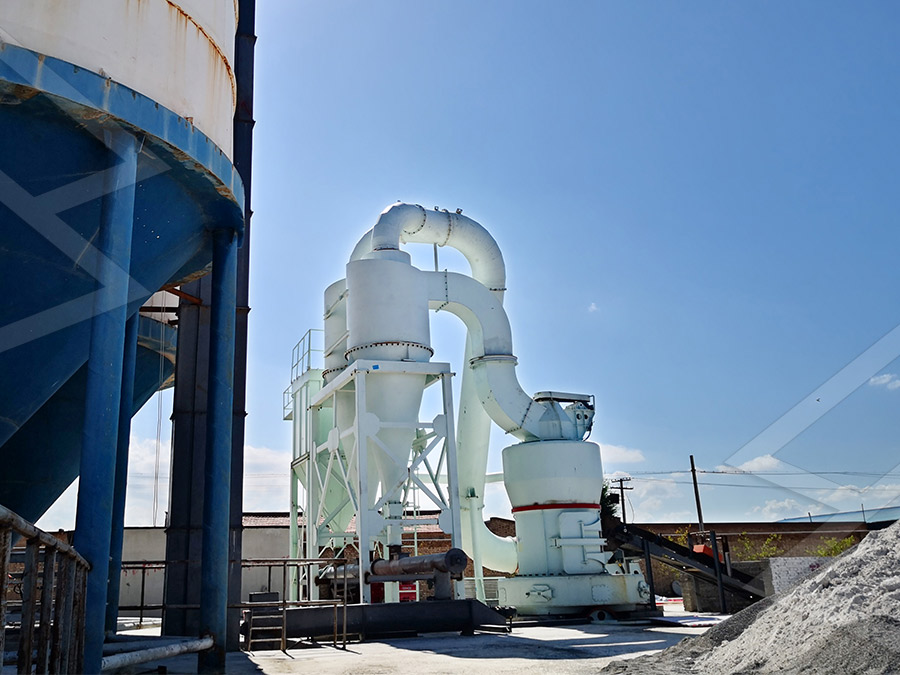
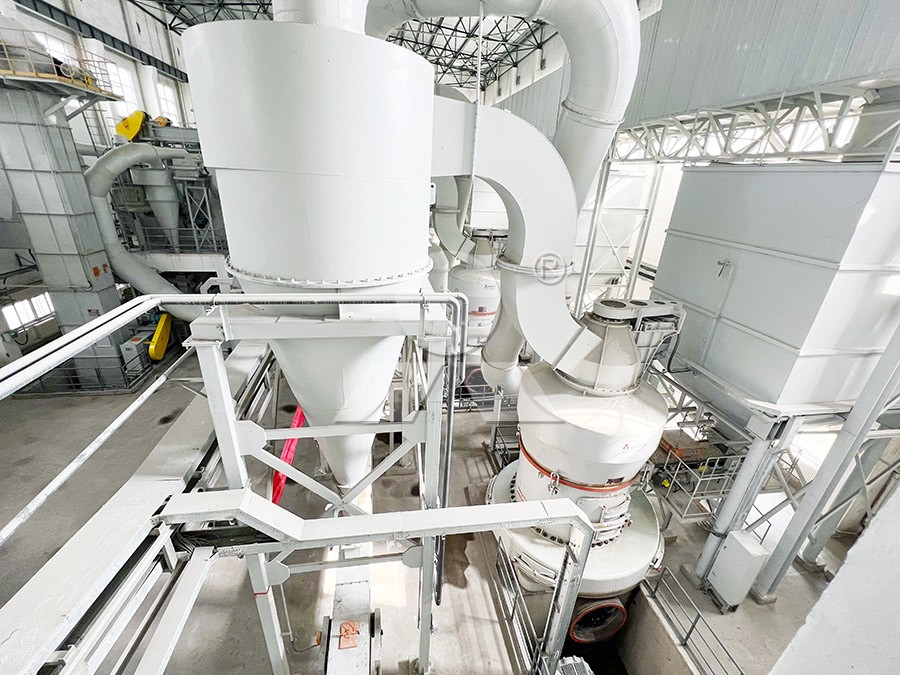
We provide a wide range of mills — including Raymond mill, trapezoidal mill, vertical mill, ultrafine mill, and ball mill, obtained ISO9001 international quality certification, EU CE certification, and Customs Union CU-TR certification. Suitable for processing minerals such as limestone, phosphate, quicklime, kaolin, talc, barite, bentonite, calcium carbonate, dolomite, coal, gypsum, clay, carbon black, slag, cement raw materials, cement clinker, and more.
The discharge range of these mills can be adjusted to meet specific processing needs, typically from 80-400 mesh, 600-3250 mesh, and can achieve the finest particle size of up to 6000 mesh(D50).
If you are looking for a reliable grinding solution to turn stone or minerals into fine powder, please feel free to contact our online customer service.
Ancient Stone Grinding Mills: Historical Images and Uses
For millennia, the rhythmic grinding of stone against stone signaled one of humanity’s most fundamental technological achievements: the transformation of raw grains into nourishing flour. Ancient stone grinding mills represent not merely tools for survival, but the very bedrock of agricultural society, enabling the shift from nomadic hunting and gathering to settled civilization. These simple yet profound machines laid the groundwork for all subsequent industrial processing.
The earliest forms, known as saddle querns, appeared in the Neolithic era. These consisted of a concave lower stone (the saddle) and a smaller, handheld upper stone (the rider). The operator would kneel before the quern, rocking the rider back and forth to crush the grain. This was labor-intensive work, primarily performed by women, requiring hours of effort to produce enough flour for a single family. The design evolved into the rotary quern, a significant leap forward featuring two circular stones—a stationary lower meta and a rotating upper catillus. This design, powered by a hand-operated lever, was markedly more efficient, allowing for continuous circular motion and greater output.
The Roman Innovation: Animal and Water Power
The Romans, master engineers, scaled this technology dramatically. They developed large, hourglass-shaped mills powered by donkeys or horses (the ‘molae asinariae’) and, most impressively, the water-powered mill (‘molae aquae’). Using geared mechanisms and vertical water wheels, they could operate multiple pairs of millstones simultaneously. The ruins of such complexes, like those at Barbegal in France, stand as testament to an ancient industrial revolution, capable of supplying flour to entire legions and growing urban populations.
The millstones themselves were carefully selected. The lower ‘bedstone’ remained stationary, while the upper ‘runner stone’ rotated. The faces of these stones were carved with a pattern of grooves called ‘furrows’ and ‘lands’. These patterns acted as channels to spread the grain evenly from the central eye to the periphery and to vent the heat generated by friction, a critical factor in preserving the quality of the flour. The skill of the millwright in ‘dressing’ these stones—re-cutting the patterns—was essential for maintaining a good grind.
From Grain to Powder: The Evolution of Milling Technology
The fundamental principle established by these ancient mills—the use of mechanical force to reduce materials to a fine powder—remains unchanged. What has evolved is the scale, precision, efficiency, and application. Today’s industrial processes demand ultrafine powders with specific particle sizes for use in advanced sectors like chemicals, pharmaceuticals, and advanced composites. While the stone mill achieved a coarse meal, modern industry requires fineness measured in microns.
This is where the legacy of ancient milling finds its contemporary expression. The challenges of dust control, energy consumption, and precise particle size distribution that were nascent in the smoky, dusty confines of a Roman mill are now addressed with digital precision and environmental consciousness. For operations requiring the production of ultra-fine powder from materials like limestone, calcite, or dolomite, the technological heir to these ancient systems is the modern ultrafine grinding mill.
The Modern Heir: Precision Engineering for Demanding Applications
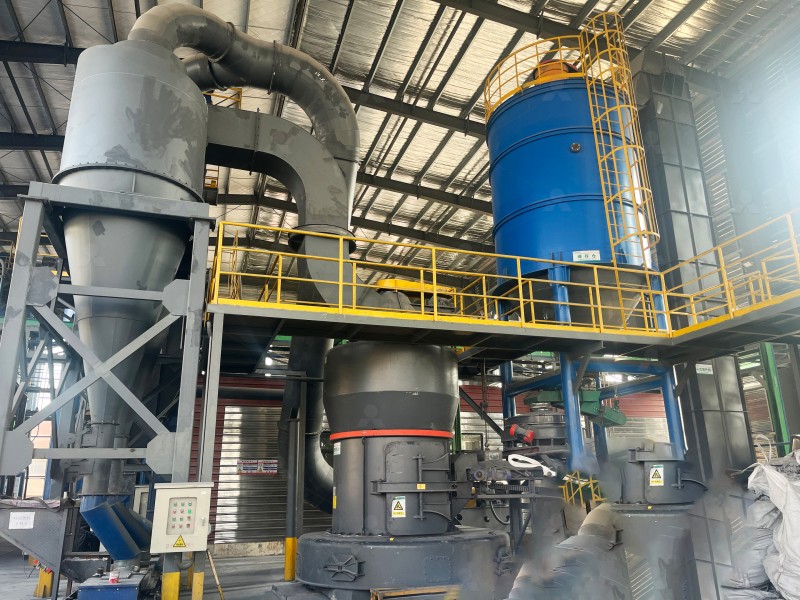
For customers seeking to produce ultra-fine powder with high efficiency and minimal environmental impact, the MW Ultrafine Grinding Mill represents the pinnacle of this evolutionary journey. This machine is specifically engineered to overcome the limitations of its historical predecessors. It handles an input size of 0-20 mm with a capacity ranging from 0.5 to 25 tons per hour, making it suitable for both specialized and medium-scale production.
Key features that set it apart include its significantly higher yielding and lower energy consumption, achieving 40% higher capacity than jet mills and double that of ball mills while using only 30% of the energy. Its cage-type powder selector allows for adjustable fineness between 325-2500 meshes, providing unparalleled control over the final product. Furthermore, its innovative design with no rolling bearings or screws in the grinding chamber eliminates common failure points, ensuring remarkable operational reliability. Crucially, it continues the modern mandate for cleaner production, with an efficient pulse dust collector and muffler ensuring the process is both dust and noise-pollution free.
For projects requiring a vertical design that integrates grinding, classifying, and transporting, the LUM Ultrafine Vertical Grinding Mill is another excellent choice. With an input size of 0-10 mm and a capacity of 5-18 tph, it incorporates the latest grinding roller and powder separating technology. Its design promotes easier material layer formation and features a reversible structure that drastically simplifies maintenance, allowing for easy access to grinding rollers for inspection and part replacement, thereby minimizing downtime.
Conclusion: An Enduring Legacy
From the simple saddle quern to the computerized industrial mill, the journey of grinding technology mirrors humanity’s own progress. The ancient stone mill was more than a machine; it was a center of community, a symbol of sustenance, and a catalyst for civilization. Today, that legacy continues in high-tech facilities where the same basic principles are applied with breathtaking sophistication to create the advanced materials that build our modern world. The goal remains the same: to transform raw matter into usable form, but now with a precision and scale that would astonish the millers of antiquity.
Frequently Asked Questions (FAQ)
1. What is the main difference between ancient quern stones and modern grinding mills?
While the fundamental crushing and shearing action is similar, modern mills use engineered alloys, precision machining, electric power, and automated control systems to achieve vastly higher outputs, consistent particle sizes down to the micron level, and integrated dust collection for environmental safety.
2. What materials were historically ground in these mills?
Primarily grains like wheat, barley, and millet for flour. They were also used for pulverizing pigments, minerals for ceramics, and even ores in early metallurgy.
3. How was the fineness of the flour controlled in a stone mill?
The miller controlled the gap between the stones and the sharpness of the carved furrows. Finer flour required closer settings and more frequent ‘dressing’ of the stone faces.
4. What are the key advantages of a modern ultrafine grinding mill like the MW series?
Key advantages include superior energy efficiency (30-40% less than older mill types), adjustable fineness (325-2500 mesh), high yield, minimal dust and noise pollution, and a robust design that eliminates common mechanical failures for worry-free operation.
5. Can modern grinding mills like the LUM Vertical Mill handle the same materials as ancient mills?
Yes, and many more. While they excel with non-metallic minerals like limestone, calcite, and talc (similar to ancient uses), they are also engineered for advanced applications in chemicals, paints, cosmetics, and pharmaceuticals, producing superfine dry powders with high whiteness and purity.
6. How important is environmental consideration in modern mill design?
It is paramount. Modern mills like the MW and LUM are designed with fully enclosed, negative-pressure systems, efficient pulse dust collectors, and noise reduction technologies to ensure full compliance with national environmental protection standards, a stark contrast to the dusty environments of historical mills.