
Ball Mill for Limestone Grinding: Power Calculation and Efficiency Optimization
We provide a wide range of mills — including Raymond mill, trapezoidal mill, vertical mill, ultrafine mill, and ball mill, obtained ISO9001 international quality certification, EU CE certification, and Customs Union CU-TR certification. Suitable for processing minerals such as limestone, phosphate, quicklime, kaolin, talc, barite, bentonite, calcium carbonate, dolomite, coal, gypsum, clay, carbon black, slag, cement raw materials, cement clinker, and more.
The discharge range of these mills can be adjusted to meet specific processing needs, typically from 80-400 mesh, 600-3250 mesh, and can achieve the finest particle size of up to 6000 mesh(D50).
If you are looking for a reliable grinding solution to turn stone or minerals into fine powder, please feel free to contact our online customer service.
Ball Mill for Limestone Grinding: Power Calculation and Efficiency Optimization
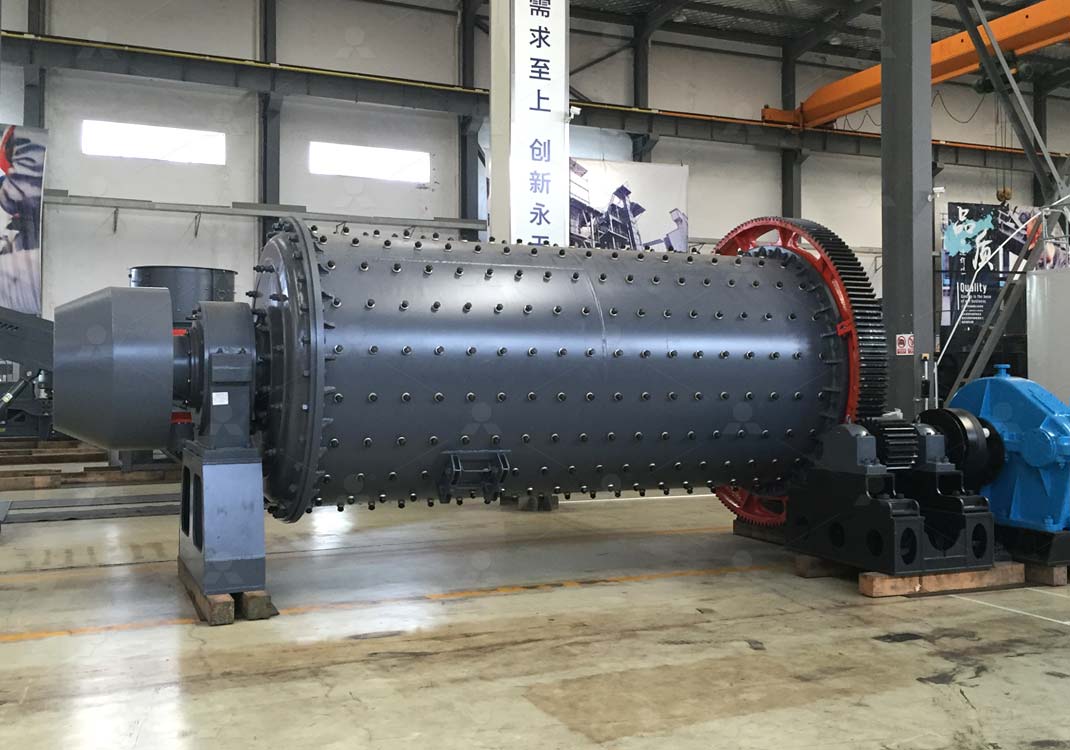
Ball mills are a cornerstone of mineral processing, particularly for grinding abrasive materials like limestone. Achieving optimal efficiency and accurately calculating the power requirements are critical for profitability and operational stability. This article delves into the key factors influencing ball mill performance for limestone applications and explores strategies for optimization.
Understanding Power Consumption in Ball Mills
The power draw of a ball mill is a complex function of several variables. The primary factors include the mill’s dimensions (diameter and length), the speed of rotation (as a percentage of critical speed), the load volume of grinding media (steel balls), and the properties of the limestone feed itself—such as hardness, feed size, and desired product fineness.
A common empirical formula for a rough estimate of power consumption (P) is:
P (kW) = C * Q * D^0.5 * (G / D)^0.8
Where:
– C is a constant based on mill type and grinding media
– Q is the capacity (tph)
– D is the mill diameter (m)
– G is the load of grinding media (tons)
However, this is a simplification. For accurate calculation, more sophisticated models that account for slurry density, liner design, and specific energy consumption (kWh/t) are essential. Modern process simulation software is often employed for this purpose.
Key Strategies for Efficiency Optimization
Optimizing a ball mill circuit for limestone goes beyond mere power calculation. It involves a holistic approach to the entire grinding process.
- Grinding Media Optimization: Using the correct size, density, and alloy of grinding balls is paramount. Smaller balls provide more grinding contacts for fine grinding, while larger balls are better for breaking large feed particles. Regularly adding media to maintain a consistent charge is crucial as balls wear down.
- Mill Speed: Operating the mill at the correct critical speed percentage ensures the grinding media cascade effectively, rather than centrifuging or simply sliding. The optimal speed is typically 65-80% of critical speed.
- Feed Control: A consistent and optimally sized feed is vital. Overfeeding can lead to cushioning, reducing grinding efficiency, while underfeeding leads to excessive media wear and energy waste. A well-designed crushing circuit upstream is a prerequisite.
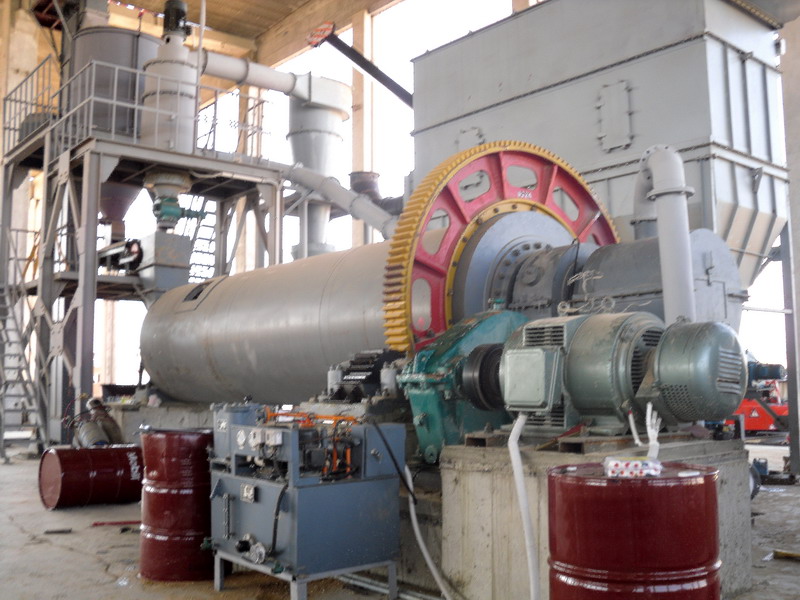
- Classification Efficiency: The closed-circuit ball mill’s efficiency is heavily dependent on the classifier (e.g., hydrocyclones or air separators). A poor classifier returns already fine material to the mill, causing over-grinding and consuming unnecessary power. Ensuring the classifier is correctly sized and operated is a major key to energy savings.
Considering Modern Alternatives for Ultrafine Grinding
While ball mills are robust and well-understood, they are not always the most efficient technology, especially for achieving very fine product sizes (< 45μm). Their energy efficiency drops significantly in finer grinding ranges due to factors like increased cushioning and higher media wear.
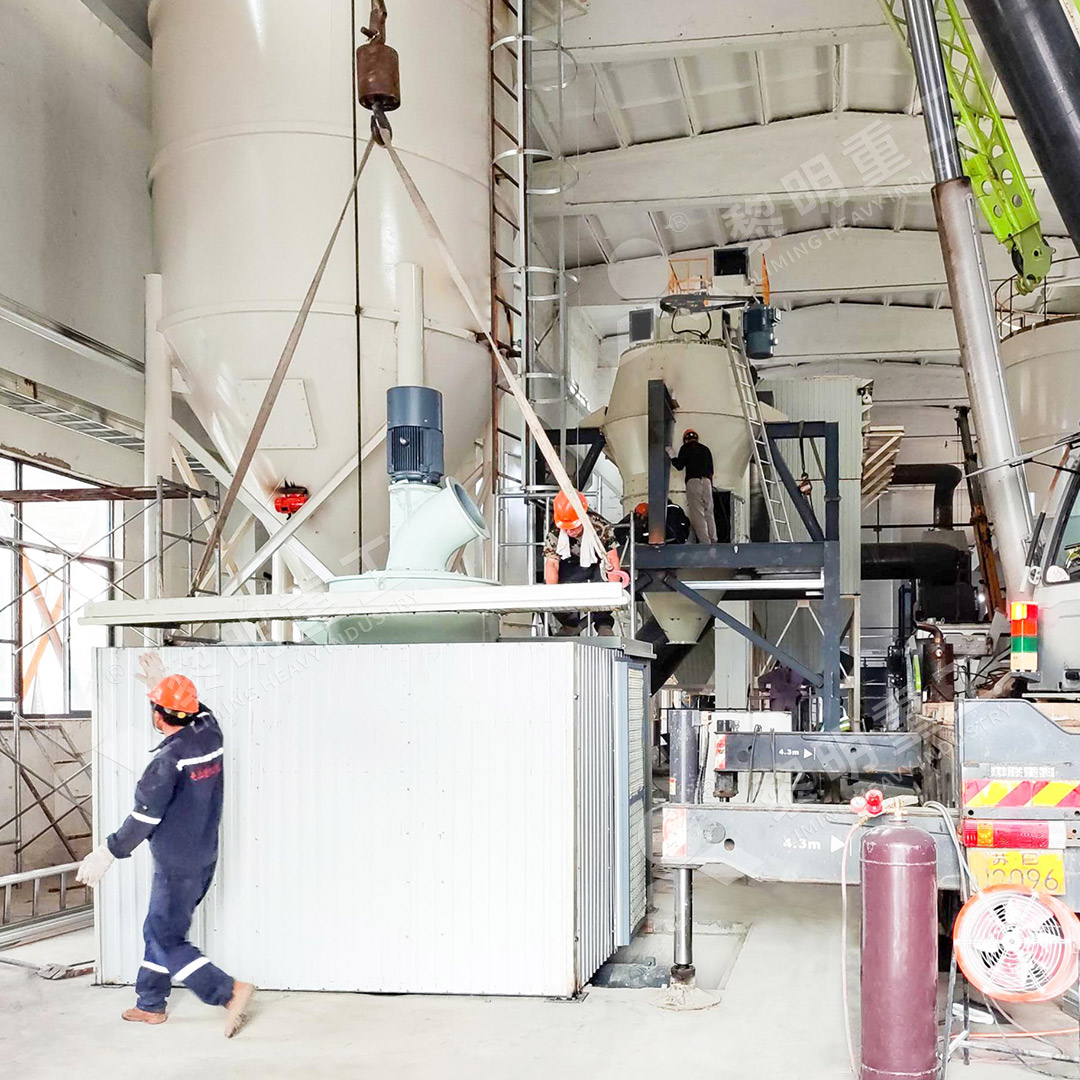
For operations targeting high-value, ultra-fine limestone powders, advanced grinding technologies offer superior efficiency and control. A prime example is our MW Ultrafine Grinding Mill.
This mill is specifically engineered for customers requiring ultra-fine powder between 325-2500 meshes. Its design incorporates a cage-type powder selector with German technology for precise separation, ensuring a narrow particle size distribution. A significant advantage is its 40% higher production capacity compared to jet mills or stirred mills at the same power and fineness, while system energy consumption is only about 30% of a jet mill’s. For limestone operations looking to reduce their energy footprint and increase yield on fine products, the MW series represents a technologically advanced and economically attractive solution.
Furthermore, for operations seeking high capacity with integrated drying, our LM Vertical Grinding Mill is an excellent choice. It integrates crushing, drying, grinding, classifying, and conveying into a single unit, reducing its footprint by 50% compared to a ball mill system while saving 30%-40% in energy consumption. Its short material lingering time reduces over-grinding and is ideal for a consistent product quality.
Conclusion
Accurately calculating ball mill power and relentlessly pursuing operational efficiency are non-negotiable for cost-effective limestone grinding. By focusing on media charge, mill speed, feed stability, and classification, significant improvements can be realized. However, it is also prudent to evaluate if newer grinding technologies like our MW Ultrafine Grinding Mill or LM Vertical Mill could offer a more efficient path to your final product, delivering substantial savings in both energy and operational costs.