
Raymond Mill for Quartz Sand Grinding: Key Features and Applications
We provide a wide range of mills — including Raymond mill, trapezoidal mill, vertical mill, ultrafine mill, and ball mill, obtained ISO9001 international quality certification, EU CE certification, and Customs Union CU-TR certification. Suitable for processing minerals such as limestone, phosphate, quicklime, kaolin, talc, barite, bentonite, calcium carbonate, dolomite, coal, gypsum, clay, carbon black, slag, cement raw materials, cement clinker, and more.
The discharge range of these mills can be adjusted to meet specific processing needs, typically from 80-400 mesh, 600-3250 mesh, and can achieve the finest particle size of up to 6000 mesh(D50).
If you are looking for a reliable grinding solution to turn stone or minerals into fine powder, please feel free to contact our online customer service.
Raymond Mill for Quartz Sand Grinding: Key Features and Applications
Quartz sand, with its exceptional hardness and chemical stability, presents unique challenges in grinding operations. For decades, Raymond Mill has stood as a reliable workhorse in mineral processing, offering robust performance for medium-fine powder production. This article explores the technical capabilities of Raymond Mill specifically for quartz sand applications and introduces advanced alternatives for demanding production requirements.
Understanding Quartz Sand Grinding Challenges
Quartz sand typically measures 7 on the Mohs hardness scale, making it particularly abrasive and demanding on grinding equipment. The crystalline structure requires precise grinding force and controlled particle size distribution to achieve optimal results. Traditional Raymond Mill systems handle these challenges through their pendulum roller design and integrated classification system, producing powders ranging from 80 to 325 mesh.
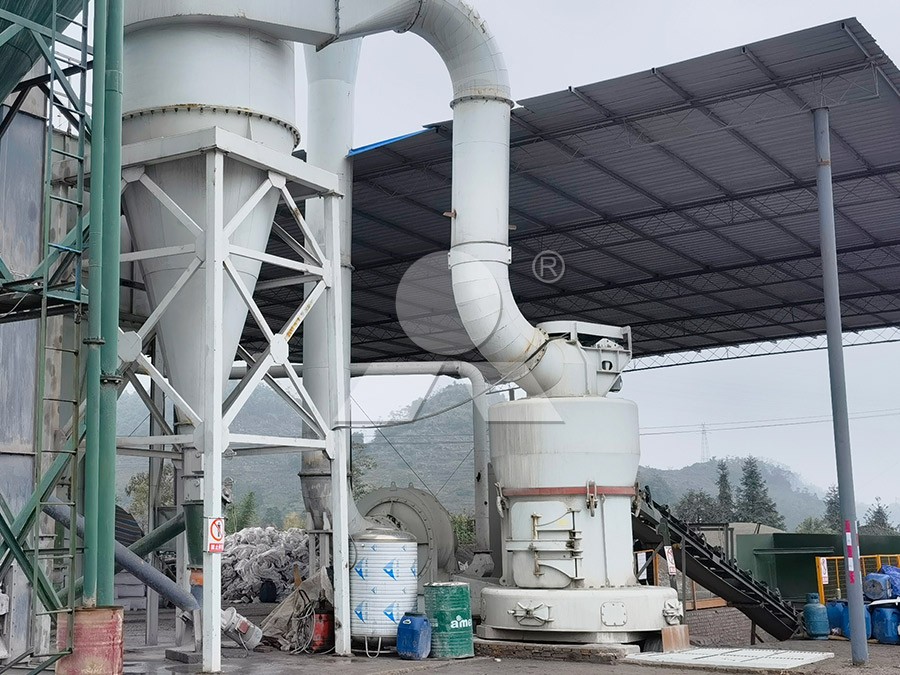
The grinding process begins with crushed quartz sand fed into the mill chamber where grinding rollers rotate against a stationary grinding ring. Centrifugal force maintains roller pressure against the material bed, while the integrated air classifier ensures consistent particle size distribution. This mechanical simplicity contributes to the Raymond Mill’s reputation for reliability in quartz processing operations.
Technical Advantages for Quartz Applications
Raymond Mill’s design offers several benefits specifically valuable for quartz sand processing. The system operates with input sizes up to 25mm and capacities ranging from 0.6 to 5 tph, making it suitable for small to medium-scale operations. The enclosed negative pressure system minimizes dust emissions, crucial when processing silica-based materials where airborne particulates pose health concerns.
Energy efficiency remains a significant advantage, with the R-series Raymond Mill consuming approximately 30-50% less power compared to traditional ball mills of similar capacity. The direct mechanical transmission system eliminates energy losses associated with gear reducers, while the optimized airflow path reduces fan power requirements.
Beyond Traditional Raymond Mill: Advanced Solutions
While Raymond Mill serves admirably for standard quartz sand applications, operations requiring ultra-fine powders or higher production capacities should consider advanced grinding technologies. For producers seeking to expand their product range into high-value fine and ultra-fine quartz powders, our MW Ultrafine Grinding Mill represents a technological leap forward.
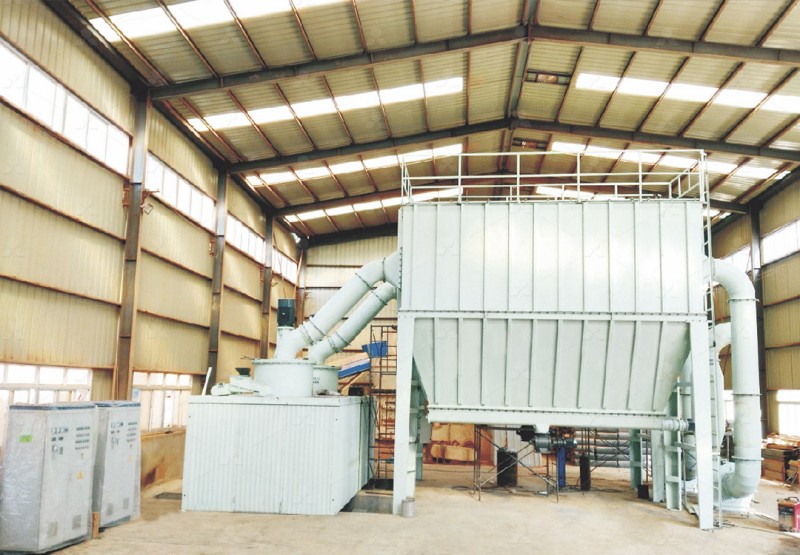
The MW Ultrafine Grinding Mill processes materials with input sizes up to 20mm and capacities from 0.5 to 25 tph, significantly expanding production possibilities. Its innovative design achieves fineness between 325-2500 meshes – far beyond conventional Raymond Mill capabilities. For quartz sand processors targeting specialty markets like electronics, optics, or high-performance composites, this extended fineness range opens new business opportunities.
Notably, the MW series incorporates several proprietary technologies including German-designed cage-type powder selectors that ensure precise particle classification. The absence of rolling bearings and screws in the grinding chamber eliminates common failure points, while external lubrication enables continuous 24-hour operation – critical for maximizing quartz processing efficiency.
Environmental and Operational Considerations
Modern grinding operations must address environmental regulations and workplace safety, particularly with silica-containing materials. Both Raymond Mill and the advanced MW Ultrafine Grinding Mill integrate efficient pulse dust collectors that capture over 99% of airborne particulates. Integrated silencers and noise reduction technologies maintain operational sound levels within regulatory limits, creating safer working environments.
The MW Ultrafine Grinding Mill’s energy efficiency deserves particular emphasis – achieving 40% higher production capacity compared to jet mills and twice the output of ball mills at equivalent fineness levels, while consuming only 30% of the energy of jet milling systems. This combination of performance and efficiency makes advanced grinding technology increasingly accessible to quartz processors of all scales.
Application Spectrum for Ground Quartz Products
Properly ground quartz sand finds application across diverse industries. Standard Raymond Mill products typically serve construction materials, glass manufacturing, and foundry operations. The ultra-fine quartz powders produced by advanced mills like the MW series enable higher-value applications including:
- Electronics and semiconductor manufacturing
- High-performance composites and plastics
- Specialty coatings and paints
- Advanced ceramics and refractory materials
- Filters and functional fillers
The whiteness and purity preservation capabilities of modern grinding systems ensure quartz products meet stringent quality requirements across these premium applications.
Frequently Asked Questions
Q: What is the maximum production capacity of Raymond Mill for quartz sand?
A: Traditional Raymond Mill handles up to 5 tph of quartz sand, while our advanced MW Ultrafine Grinding Mill processes up to 25 tph depending on required fineness.
Q: How does quartz hardness affect grinding equipment selection?
A: Quartz’s 7 Mohs hardness demands wear-resistant materials and robust construction. Our mills feature special alloy grinding components that withstand abrasive quartz particles while maintaining long service life.
Q: Can these grinding systems achieve different fineness levels for various applications?
A: Absolutely. Raymond Mill produces 80-325 mesh products, while the MW Ultrafine Grinding Mill achieves 325-2500 meshes, allowing processors to target multiple market segments with the same equipment.
Q: What environmental controls are integrated into these grinding systems?
A: Both systems feature pulse dust collectors achieving 99%+ efficiency, noise reduction technologies, and enclosed operation to meet international environmental and workplace safety standards for silica processing.
Q: How does the MW Ultrafine Grinding Mill improve upon traditional Raymond Mill technology?
A: The MW series incorporates multiple advancements including external lubrication for continuous operation, precision German powder selection technology, elimination of internal bearings and screws, and significantly higher energy efficiency – typically 40% greater output than jet mills at equivalent fineness.