
Optimizing Limestone Grinding: Energy-Saving Techniques for Efficient Pulverizing Operations
We provide a wide range of mills — including Raymond mill, trapezoidal mill, vertical mill, ultrafine mill, and ball mill, obtained ISO9001 international quality certification, EU CE certification, and Customs Union CU-TR certification. Suitable for processing minerals such as limestone, phosphate, quicklime, kaolin, talc, barite, bentonite, calcium carbonate, dolomite, coal, gypsum, clay, carbon black, slag, cement raw materials, cement clinker, and more.
The discharge range of these mills can be adjusted to meet specific processing needs, typically from 80-400 mesh, 600-3250 mesh, and can achieve the finest particle size of up to 6000 mesh(D50).
If you are looking for a reliable grinding solution to turn stone or minerals into fine powder, please feel free to contact our online customer service.
Optimizing Limestone Grinding: Energy-Saving Techniques for Efficient Pulverizing Operations
In the mineral processing industry, limestone grinding plays a pivotal role in numerous applications ranging from construction materials to industrial additives. However, traditional grinding methods often suffer from high energy consumption, excessive wear, and environmental concerns. This article explores advanced techniques and equipment to optimize limestone grinding operations while reducing energy costs.
The Challenges of Traditional Limestone Grinding
Conventional ball mills and Raymond mills, while widely used, frequently exhibit inefficiencies such as:
- High specific energy consumption (often exceeding 50 kWh/t)
- Excessive wear of grinding media and liners
- Limited fineness control (typically 200-400 mesh)
- Significant dust and noise pollution
Modern Solutions for Energy-Efficient Grinding
The industry has developed several technological advancements to address these challenges:
1. Vertical Roller Mill Technology
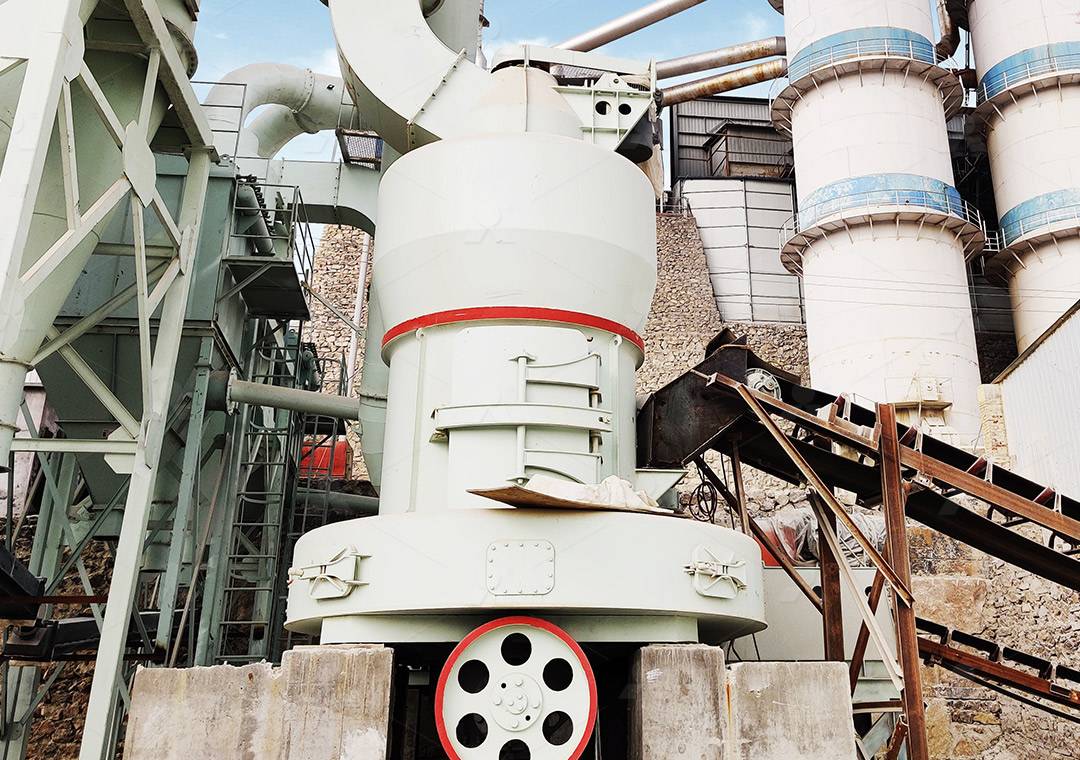
Vertical roller mills (VRM) have emerged as a superior alternative, offering:
- 30-50% lower energy consumption compared to ball mills
- Simultaneous drying and grinding capabilities
- Precise particle size distribution control
2. Advanced Classifier Systems
Modern dynamic classifiers enable:
- Real-time adjustment of product fineness
- Reduced overgrinding and energy waste
- Higher product quality consistency
Featured Solution: MW Ultrafine Grinding Mill
For operations requiring ultra-fine limestone powder (325-2500 mesh), the MW Ultrafine Grinding Mill represents a technological breakthrough:
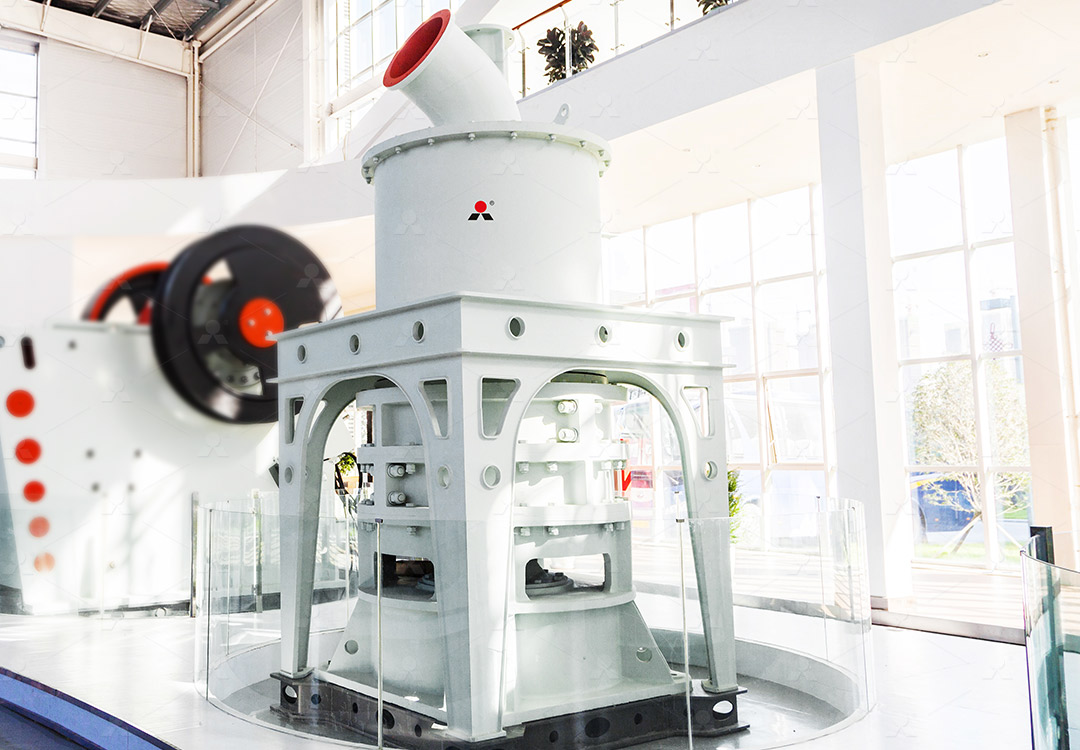
- Higher Yielding, Lower Energy Consumption: 40% higher capacity than jet mills with only 30% of their energy use
- Adjustable Fineness: Precise control between 325-2500 meshes with d97≤5μm achievable
- Maintenance-Free Design: No rolling bearings or screws in grinding chamber
- Eco-Friendly Operation: Integrated pulse dust collector and noise reduction systems
With an input size of 0-20 mm and capacity ranging from 0.5-25 tph, the MW series is particularly suitable for high-value limestone applications in industries such as:
- Paper and paint fillers
- Pharmaceutical excipients
- Food-grade calcium additives
- Advanced construction materials
Operational Best Practices
To maximize efficiency in limestone grinding operations:
- Implement predictive maintenance programs to minimize downtime
- Optimize feed size distribution through pre-crushing
- Utilize advanced process control systems for real-time optimization
- Regularly monitor wear patterns on grinding components
- Consider hybrid systems combining coarse and fine grinding technologies
Alternative Solution: LUM Ultrafine Vertical Grinding Mill
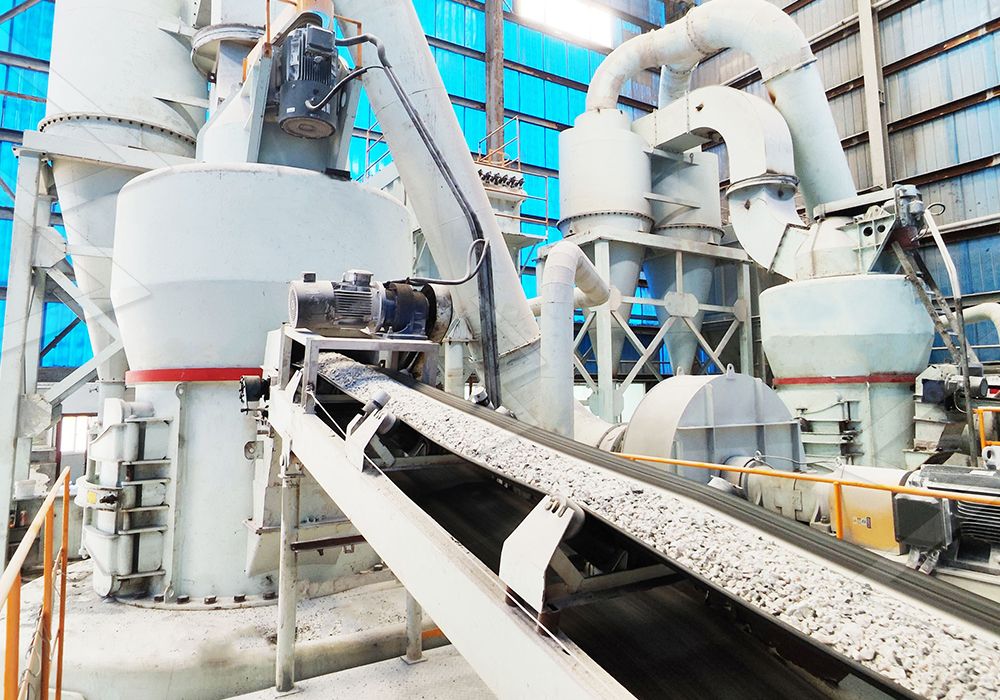
For operations requiring slightly different specifications (0-10 mm input size, 5-18 tph capacity), the LUM Ultrafine Vertical Grinding Mill offers:
- 30-50% energy reduction through multi-head powder separating technology
- Double position-limiting technology for enhanced stability
- Reversible structure for easier maintenance access
Conclusion
The transition to modern grinding technologies like the MW Ultrafine Grinding Mill can significantly improve limestone processing efficiency while reducing operational costs and environmental impact. By combining advanced equipment with optimized processes, operators can achieve superior product quality with substantially lower energy consumption.
For operations considering an upgrade, we recommend evaluating both the MW and LUM series to determine which solution best matches your specific production requirements and quality targets.