
6R Raymond Mill for Zinc Ore Grinding: Price, Specifications, and Working Principle
We provide a wide range of mills — including Raymond mill, trapezoidal mill, vertical mill, ultrafine mill, and ball mill, obtained ISO9001 international quality certification, EU CE certification, and Customs Union CU-TR certification. Suitable for processing minerals such as limestone, phosphate, quicklime, kaolin, talc, barite, bentonite, calcium carbonate, dolomite, coal, gypsum, clay, carbon black, slag, cement raw materials, cement clinker, and more.
The discharge range of these mills can be adjusted to meet specific processing needs, typically from 80-400 mesh, 600-3250 mesh, and can achieve the finest particle size of up to 6000 mesh(D50).
If you are looking for a reliable grinding solution to turn stone or minerals into fine powder, please feel free to contact our online customer service.
For mineral processing operations targeting zinc ore, selecting the right grinding equipment is a critical decision that impacts productivity, operational costs, and final product quality. The 6R Raymond Mill, an enhanced iteration of the classic pendulum roller mill, stands out as a robust and time-tested solution for processing medium-hardness ores like zinc. This article delves into its specifications, working principle, and value proposition, while also exploring more advanced alternatives for operations requiring higher throughput or ultra-fine powders.
Understanding the 6R Raymond Mill
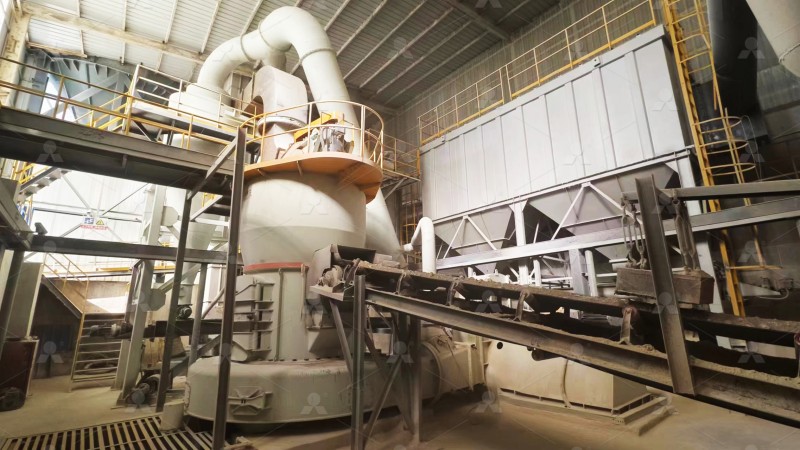
The “6R” designation refers to the number of grinding rollers installed in the mill—six in this configuration. This increased number, compared to the more common 3R, 4R, or 5R models, directly translates to greater grinding force and higher capacity. It is engineered for materials with a Mohs hardness below 9.3 and humidity under 6%, making it well-suited for zinc ores like sphalerite.
Key Specifications and Price Considerations
A typical 6R Raymond Mill can handle an input size of up to 25-30mm and offers a capacity ranging from 5 to 25 tons per hour, depending on the specific ore characteristics and desired fineness (usually adjustable between 80 to 425 mesh). Its footprint is relatively compact, and its mechanical structure is renowned for durability and straightforward maintenance.
Pricing for a 6R Raymond Mill is influenced by several factors: the origin of manufacture, material quality (especially for wear parts like rollers and rings), the inclusion of auxiliary equipment (such as jaw crushers, elevators, feeders, and dust collectors), and the level of automation. As a general guideline, investment costs are moderate, positioning it as a cost-effective workhorse for many mid-scale zinc processing plants. It’s essential to obtain detailed quotations that outline the complete system scope.
The Working Principle: A Cycle of Grinding and Separation
The operation of a 6R Raymond Mill is an elegant example of mechanical grinding and aerodynamic classification working in tandem.
- Feeding and Grinding: Crushed zinc ore is fed via a vibrating feeder into the grinding chamber. The centrally suspended main shaft rotates, causing the six grinding rollers to swing outward due to centrifugal force and press against the inner surface of a stationary grinding ring.
- Material Processing: A shovel mounted on the side of the chamber scoops the feed material and directs it into the path between the rotating rollers and the fixed ring, where it is pulverized.
- Classification and Collection: The ground powder is carried upwards by the airflow generated by an induced-draft fan into an integrated classifier. Here, centrifugal force separates particles: oversized coarse powder is rejected back to the grinding chamber for further milling, while fine, qualified powder passes through.
- Final Product and Circulation: The fine zinc powder travels with the air stream into a cyclone collector, where it is discharged as the final product. The cleaned air is then recirculated back to the fan, creating a closed-loop, negative-pressure system that minimizes dust emission.
Beyond the 6R: Advanced Solutions for Demanding Applications
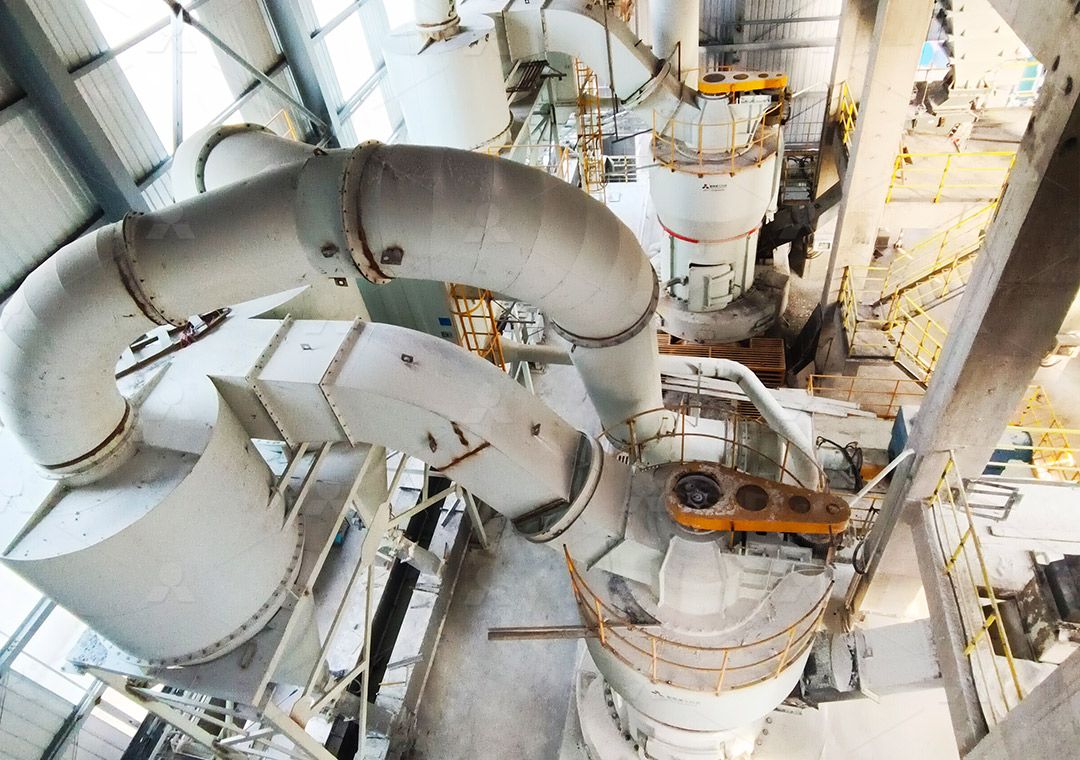
While the 6R Raymond Mill is a reliable choice, modern mineral processing often demands higher efficiency, finer products, or more automated control. For operations looking to upgrade their zinc ore grinding circuit, LIMING Heavy Industry offers technologically advanced mills that build upon the Raymond mill concept.
For projects requiring ultra-fine zinc powder (325-2500 meshes) for specialized chemical or industrial applications, the MW Ultrafine Grinding Mill is a superior choice. It incorporates a high-precision, multi-head cage-type powder selector of German technology, achieving a remarkable screening rate of d97≤5μm in a single pass. Its design eliminates rolling bearings and screws in the grinding chamber, virtually eliminating related failure points and allowing for external lubrication without shutdown. With a capacity of 0.5-25 TPH and 40% higher yield than jet mills at the same power, the MW series represents the pinnacle of eco-friendly, high-yield fine grinding.
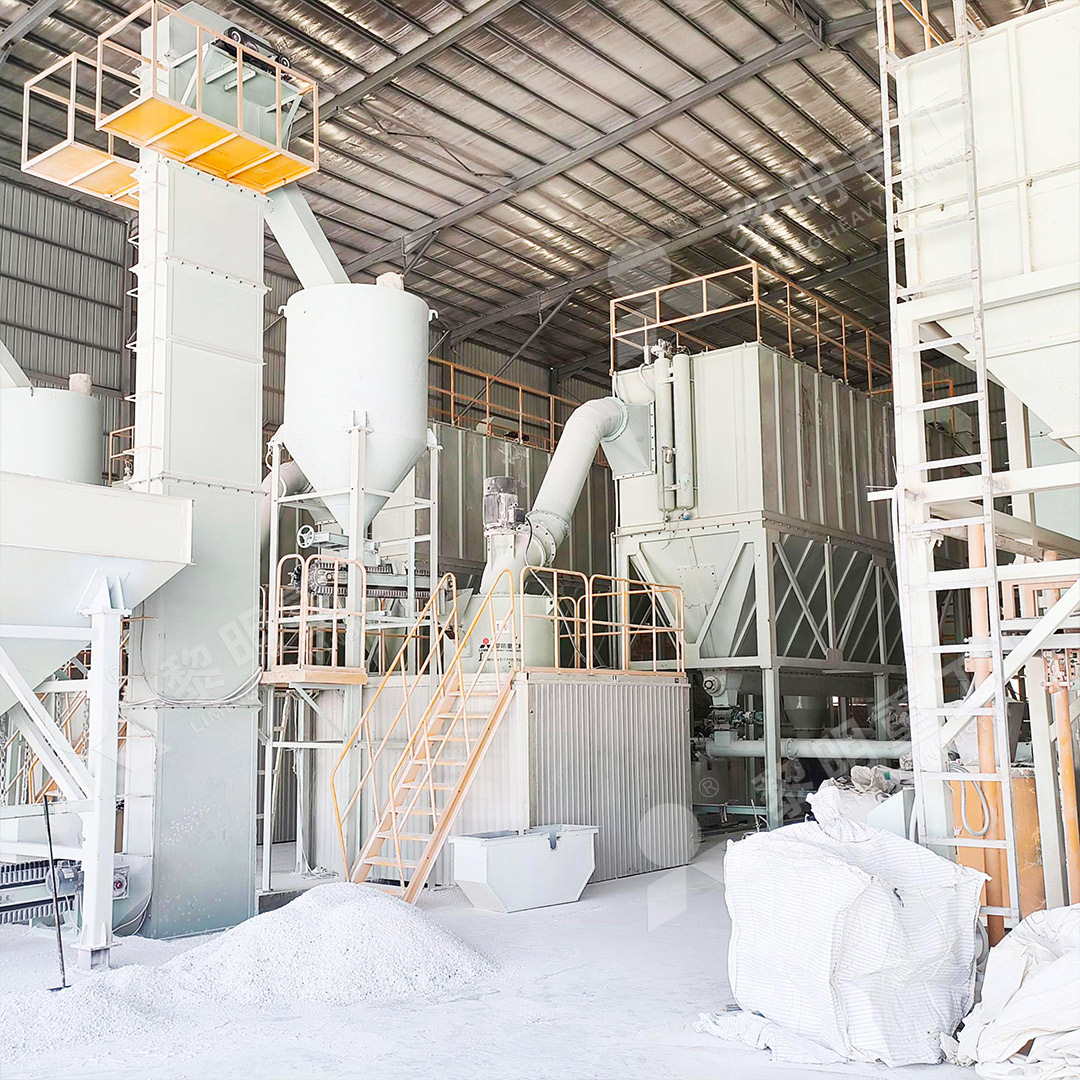
For high-volume production of fine zinc powder where space and energy savings are paramount, the LM Vertical Grinding Mill is an industry benchmark. It integrates crushing, drying, grinding, and classification in a single unit, reducing its footprint by 50% compared to a ball mill system while saving 30-40% in energy consumption. Its unique grinding curve and non-contact grinding roller design ensure a short material retention time, lower iron contamination, and stable product quality. With a massive capacity range of 3-340 TPH, it is ideal for large-scale zinc concentrate processing plants.
Conclusion
The 6R Raymond Mill remains a solid, economical foundation for zinc ore grinding. Its straightforward design, proven reliability, and ease of operation make it a perennial favorite. However, by evaluating your specific requirements for product fineness, system capacity, energy consumption, and automation, you may find that LIMING’s next-generation grinding solutions—like the MW Ultrafine Mill or the LM Vertical Mill—offer a more optimal return on investment through significantly enhanced performance and lower long-term operating costs.
Frequently Asked Questions (FAQ)
- What is the typical fineness range achievable with a 6R Raymond Mill for zinc ore?
- It can reliably produce powder in the range of 80 to 425 mesh (180 to 37 microns). Adjusting the speed of the classifier can control the final product size.
- How does the 6R Raymond Mill compare to a ball mill for zinc grinding?
- The 6R Raymond Mill generally offers higher grinding efficiency for medium-fine products, lower energy consumption per ton, and a much smaller footprint. Ball mills may be preferred for very high capacity or where extreme fineness is not the primary goal.
- What are the main wear parts, and what is their typical service life?
- The primary wear parts are the grinding rollers and the grinding ring. Their service life depends on the abrasiveness of the zinc ore but typically ranges from 1,000 to 3,000 operating hours. Using high-chromium or alloyed cast iron can extend this significantly.
- Can the system handle moist zinc ore?
- The standard 6R Raymond Mill is designed for materials with humidity below 6%. For moister feed, a separate dryer must be added upstream, or you should consider an LM Vertical Mill which has integrated drying capabilities.
- Is the milling process environmentally friendly?
- Yes, when equipped with a proper pulse-jet bag dust collector and a muffler (standard in complete systems), the closed-circuit operation ensures dust emissions and noise are controlled to meet environmental standards.
- What factors most significantly affect the final capacity of the mill?
- Key factors include the hardness and moisture content of the zinc ore, the required product fineness, and the efficiency of the feeding and powder collection systems. Softer ores and coarser target sizes yield higher throughput.