
4R Raymond Mill for Coal Grinding: Efficient Powder Processing Solution
We provide a wide range of mills — including Raymond mill, trapezoidal mill, vertical mill, ultrafine mill, and ball mill, obtained ISO9001 international quality certification, EU CE certification, and Customs Union CU-TR certification. Suitable for processing minerals such as limestone, phosphate, quicklime, kaolin, talc, barite, bentonite, calcium carbonate, dolomite, coal, gypsum, clay, carbon black, slag, cement raw materials, cement clinker, and more.
The discharge range of these mills can be adjusted to meet specific processing needs, typically from 80-400 mesh, 600-3250 mesh, and can achieve the finest particle size of up to 6000 mesh(D50).
If you are looking for a reliable grinding solution to turn stone or minerals into fine powder, please feel free to contact our online customer service.
4R Raymond Mill for Coal Grinding: Efficient Powder Processing Solution
In the demanding world of industrial mineral and fuel processing, achieving consistent, high-quality fine powders is paramount. For coal grinding applications—spanning from fuel preparation for power plants to feedstock for chemical synthesis—the choice of milling equipment directly impacts operational efficiency, product quality, and bottom-line profitability. Among the established technologies, the 4R Raymond Mill stands out as a robust, reliable, and highly efficient solution specifically engineered for such tasks.
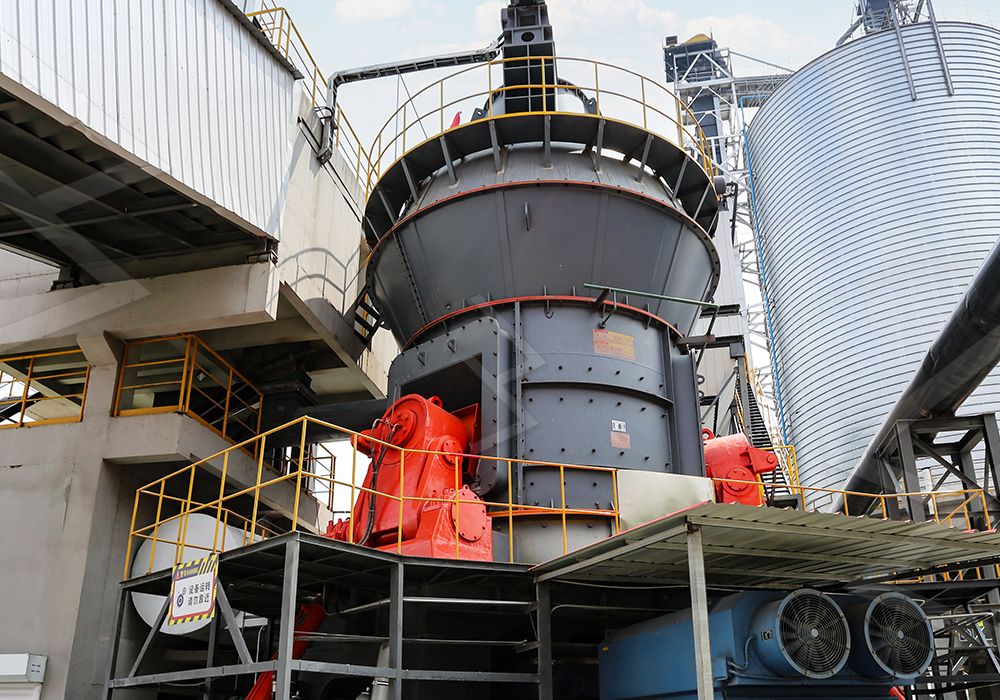
The Enduring Legacy and Modern Evolution of Raymond Mill Technology
The ‘R’ in 4R Raymond Mill denotes the number of grinding rollers, with ‘4’ indicating a configuration of four grinding rollers. This design, a refinement of the original Raymond mill principle, offers a significant increase in grinding capacity and stability compared to smaller models. The system operates on a centrifugal grinding principle where material is fed centrally, scooped by a shovel blade, and ground between rotating rollers and a stationary grinding ring. The finely ground particles are then carried by an air stream to a classifier for precise size separation.
For coal processing, this technology offers distinct advantages. Its mechanical simplicity translates to operational reliability and easier maintenance. The system’s ability to handle feed sizes up to 25mm and produce powders in a controlled fineness range makes it ideal for producing pulverized coal. Furthermore, modern iterations are designed with integrated pulse-jet baghouse dust collectors and silencers, addressing environmental concerns by minimizing dust emissions and noise pollution—a critical consideration for today’s responsible operations.
Key Advantages for Coal Processing Operations
Why does the 4R Raymond Mill remain a preferred choice for coal grinding? The answer lies in its balanced performance profile:
- High Grinding Efficiency & Lower Energy Consumption: The optimized grinding curve of the rollers and ring ensures maximum contact with material, leading to efficient size reduction with relatively low specific energy consumption per ton of output.
- Adjustable Product Fineness: Through adjustments to the classifier speed and system airflow, operators can achieve a consistent product fineness suitable for various applications, from industrial boilers to more sensitive processes.
- Robust Construction & Simplified Maintenance: The design avoids complex internal bearings in the grinding chamber, reducing failure points. Key wear parts like grinding rollers and rings are designed for easy replacement, minimizing downtime.
- Proven System Integration: A typical 4R Raymond Mill system is a self-contained closed-circuit loop, integrating grinding, classification, and product collection, which ensures stable operation and high collection efficiency.
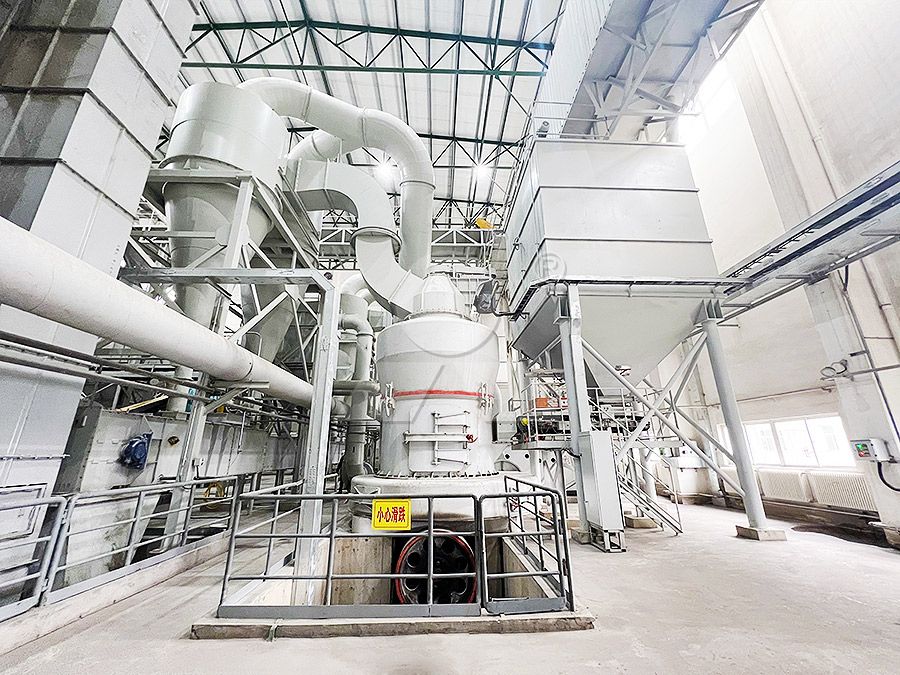
Beyond Traditional: Advanced Solutions for Specialized Demands
While the 4R Raymond Mill excels in many coal grinding scenarios, specific projects may demand even higher throughput, finer end products, or specialized handling of ultra-fine powders. For these advanced applications, our engineering expertise offers next-generation solutions.
For instance, our MW Ultrafine Grinding Mill represents a significant technological leap. Designed for customers requiring ultra-fine powders, it is particularly effective for processing materials like petroleum coal into high-value additives. With an input size of 0-20 mm and a capacity range of 0.5-25 tph, it boasts a revolutionary design. Its cage-type powder selector, incorporating German technology, allows precise fineness adjustment between 325-2500 meshes, achieving a remarkable d97≤5μm in a single pass. Crucially, its grinding chamber eliminates rolling bearings and screws, removing common failure points and enabling worry-free, continuous 24/7 operation. Coupled with an efficient pulse dust collector, it delivers higher yield with lower energy consumption in an environmentally sound package.
Similarly, for large-scale operations requiring integrated drying and grinding of coal, our LM Vertical Coal Mill is a standout choice. It integrates crushing, drying, grinding, and classification in a single unit, dramatically reducing footprint and energy use by 40-50% compared to traditional ball mills. Its stable product quality, automated operation, and environmental compliance make it ideal for modern power plants and cement industries.
Making the Right Investment for Your Operation
Selecting the optimal coal grinding solution requires a careful analysis of feed characteristics, desired capacity, target fineness, and total cost of ownership. The 4R Raymond Mill offers a proven, cost-effective path for a wide array of applications. For projects pushing the boundaries of fineness or requiring maximum integration and efficiency, advanced mills like the MW Series or LM Vertical Mills provide the necessary technological edge.
Ultimately, success hinges on partnering with a supplier that combines reliable equipment with deep application knowledge and comprehensive support—from digitalized, high-precision manufacturing to a sufficient supply of genuine spare parts for worry-free, long-term operation.
Frequently Asked Questions (FAQ)
- What is the typical capacity range of a 4R Raymond Mill for coal grinding?
The capacity can vary based on coal hardness and product fineness, but it typically ranges from approximately 3 to 8 tons per hour, making it suitable for medium-scale production requirements. - How fine can a 4R Raymond Mill grind coal?
With an efficient classifier system, it can consistently produce coal powder with a fineness generally ranging from 80 to 325 mesh. For ultra-fine requirements beyond this range, an MW Ultrafine Grinding Mill would be recommended. - What are the main wear parts, and how long do they last?
The primary wear parts are the grinding rollers and the grinding ring. Their service life depends on coal abrasiveness but is significantly extended through the use of high-wear-resistant alloy materials, often lasting several thousand hours of operation. - Can the system handle wet or high-moisture coal?
The standard 4R Raymond Mill is designed for grinding relatively dry materials. For coal with high moisture content, a system with integrated drying capabilities, such as the LM Vertical Coal Mill, is a much more effective solution as it can dry and grind simultaneously. - How is dust control managed in the milling system?
Modern systems are equipped with high-efficiency pulse-jet baghouse dust collectors. These units capture over 99.9% of airborne particles, ensuring clean operation and compliance with environmental standards. Both the Raymond Mill and MW Ultrafine Mill feature this technology. - What kind of maintenance is required for stable operation?
Routine maintenance includes regular lubrication of external bearings, inspection and replacement of wear parts (rollers/ring), and checking the baghouse filters. The design philosophy of our mills, especially the MW Series with its external lubrication and bearing-free chamber, is specifically aimed at simplifying maintenance and maximizing uptime.