
3R2615 Raymond Mill: Technical Specifications and Application Guide
We provide a wide range of mills — including Raymond mill, trapezoidal mill, vertical mill, ultrafine mill, and ball mill, obtained ISO9001 international quality certification, EU CE certification, and Customs Union CU-TR certification. Suitable for processing minerals such as limestone, phosphate, quicklime, kaolin, talc, barite, bentonite, calcium carbonate, dolomite, coal, gypsum, clay, carbon black, slag, cement raw materials, cement clinker, and more.
The discharge range of these mills can be adjusted to meet specific processing needs, typically from 80-400 mesh, 600-3250 mesh, and can achieve the finest particle size of up to 6000 mesh(D50).
If you are looking for a reliable grinding solution to turn stone or minerals into fine powder, please feel free to contact our online customer service.
3R2615 Raymond Mill: Technical Specifications and Application Guide
For over a century, the Raymond Mill has stood as a cornerstone of industrial powder processing. The 3R2615 model, in particular, represents a mature and highly reliable workhorse within this legacy. Its design philosophy prioritizes operational simplicity, robust construction, and cost-effective performance for a wide range of medium-fineness grinding applications. This guide delves into the technical specifications of the 3R2615 and outlines its ideal use cases to help you determine if it’s the right fit for your production line.
Core Technical Specifications & Design Overview
The ‘3R’ designation indicates three grinding rollers, a configuration that balances production capacity with grinding fineness. The ‘2615’ refers to the diameter (260mm) and height (150mm) of the grinding ring. This mill operates on the classic pendulum roller principle: suspended rollers swing outward under centrifugal force, applying pressure to crush materials against a rotating grinding ring.
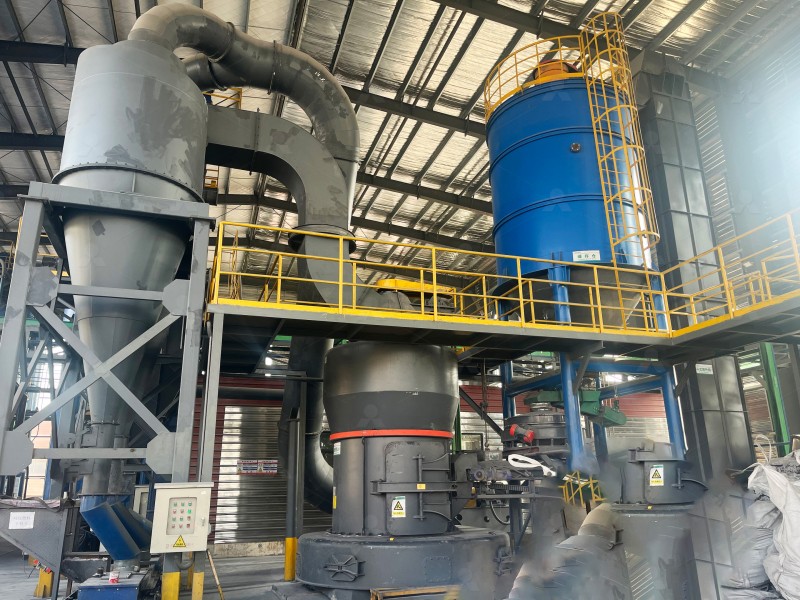
Key specifications typically include:
- Max. Feed Size: <25 mm
- Capacity: Approximately 0.6 – 5 tons per hour (highly dependent on material hardness and fineness requirements)
- Finished Product Fineness: Adjustable in a range of 80 – 325 mesh (180 – 45 microns)
- Main Motor Power: Usually around 22-30 kW
- Overall System: Includes the mill host, classifier, piping, cyclone collector, dust collector (pulse bag filter), and feeder.
The system is a negative pressure, closed-loop design. Airflow from the blower carries ground powder to the classifier, where oversized particles are rejected back to the grinding chamber, ensuring consistent product size.
Ideal Applications and Material Suitability
The 3R2615 excels in processing non-flammable, non-explosive minerals with Mohs hardness below 7 and moisture content below 6%. Its consistent performance makes it a staple in several industries:
- Mining & Minerals: Grinding limestone, calcite, dolomite, barite, talc, gypsum, and marble for fillers in paint, plastics, and paper.
- Construction Materials: Preparing pulverized coal for kilns or producing fine powders for cement blends.
- Chemical Industry: Processing various ores and raw materials for chemical production where medium fineness is sufficient.
Its strength lies in projects where operational budget, footprint, and simplicity are key considerations, and where product fineness requirements do not exceed 325 mesh.
Understanding Its Position in Modern Grinding
While the 3R2615 is a proven and economical solution, technological evolution has introduced mills with higher efficiency, finer output, and greater automation. For operations that have outgrown the 3R2615’s capacity or require finer powders, upgrading to a next-generation mill can be transformative.
For instance, our MW Ultrafine Grinding Mill is engineered for customers targeting the ultra-fine powder market (325-2500 meshes). It incorporates a highly efficient cage-type powder selector and a unique grinding chamber design without rolling bearings or screws, eliminating common failure points and enabling 24-hour continuous operation. With a capacity range of 0.5-25 TPH and a system energy consumption reported to be only 30% of some jet mills, it represents a significant leap in precision and efficiency for high-value fine powders used in cosmetics, advanced ceramics, and high-performance plastics.
Similarly, for large-scale production of fine powders at lower energy costs, the LM Vertical Grinding Mill integrates drying, grinding, and classification in a single tower. Its compact footprint (50% of an equivalent ball mill system) and 30-40% energy saving make it a superior choice for processing limestone, coal, and slag in cement, power plant desulfurization, and metallurgy at capacities from 3 to over 300 TPH.
Operational Considerations and Best Practices
To ensure longevity and stable output from a 3R2615 Raymond Mill, adherence to several best practices is crucial:
- Consistent Feed: Use a vibrating feeder to maintain a steady, controlled feed rate. Overloading can choke the mill, while underfeeding reduces efficiency and accelerates roller and ring wear.
- Moisture Control: Strictly control feed moisture. High moisture causes material adhesion, reduces airflow, and drastically cuts output. A pre-dryer may be necessary for damp materials.
- Wear Parts Management: Regularly inspect the grinding rollers and ring. Timely replacement or turning of these components prevents a drop in grinding force and product fineness.
- System Tightness: Maintain the integrity of the closed-loop air system. Check for leaks in ducts, connections, and the grinding chamber to ensure proper airflow and collection efficiency.
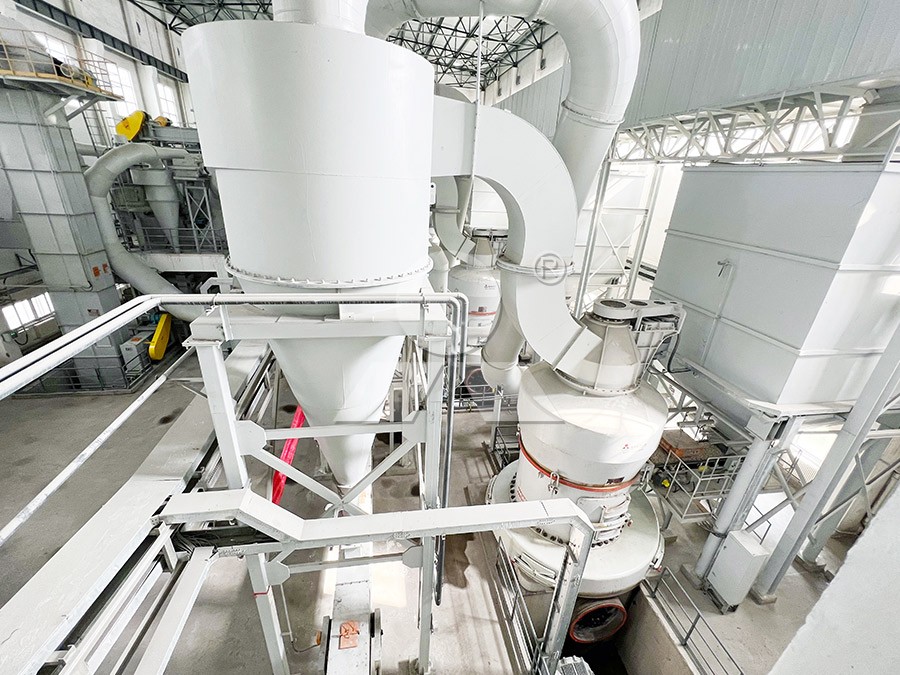
In conclusion, the 3R2615 Raymond Mill remains a viable and trustworthy option for many standard grinding tasks. Its value is proven in its simplicity and low total cost of ownership. However, for operations demanding higher output, finer particle sizes, or more advanced automation and energy savings, exploring our modern vertical or ultra-fine grinding solutions is a recommended next step to enhance competitiveness and product quality.
Frequently Asked Questions (FAQ)
- What is the main difference between the 3R2615 and newer vertical mills like the LM series?
The 3R2615 uses a horizontal roller-spring system, while vertical mills like the LM use a vertical grinding table with hydraulic pressurized rollers. Vertical mills generally offer higher capacity, better energy efficiency, integrated drying, and a more compact footprint. - Can the 3R2615 produce powder finer than 325 mesh?
Consistently achieving fineness significantly beyond 325 mesh is challenging for the standard 3R2615. For reliable production in the 400-2500 mesh range, an ultra-fine mill like the MW series is specifically designed for this purpose. - How often do the grinding rollers and ring need to be replaced?
Wear life depends entirely on material abrasiveness. For moderately abrasive materials like calcite, they may last several hundred hours. Regular inspection for wear depth (often limited to ~10mm) is the best practice to schedule replacements and maintain product quality. - Is the system environmentally friendly?
The standard closed-circuit design with a cyclone and bag filter dust collector can achieve very low dust emissions, complying with most environmental standards. Modern pulse-jet bag filters offer superior collection efficiency over older mechanical shaker types. - What are the most common operational issues?
Key issues include: reduced output (often from worn rollers/rings, low airflow, or high moisture), excessive vibration (from unbalanced wear or broken parts), and low product fineness (from classifier issues or severe wear). A systematic check of feed, wear parts, and airflow usually identifies the cause.