
3R Raymond Mill for Phosphate Ore Grinding: A Time-Tested Solution and Modern Alternatives
We provide a wide range of mills — including Raymond mill, trapezoidal mill, vertical mill, ultrafine mill, and ball mill, obtained ISO9001 international quality certification, EU CE certification, and Customs Union CU-TR certification. Suitable for processing minerals such as limestone, phosphate, quicklime, kaolin, talc, barite, bentonite, calcium carbonate, dolomite, coal, gypsum, clay, carbon black, slag, cement raw materials, cement clinker, and more.
The discharge range of these mills can be adjusted to meet specific processing needs, typically from 80-400 mesh, 600-3250 mesh, and can achieve the finest particle size of up to 6000 mesh(D50).
If you are looking for a reliable grinding solution to turn stone or minerals into fine powder, please feel free to contact our online customer service.
3R Raymond Mill for Phosphate Ore Grinding: A Time-Tested Solution and Modern Alternatives
For decades, the Raymond Mill, particularly the classic 3R configuration, has been a cornerstone in mineral processing plants for grinding medium-hard materials like phosphate ore. Its reputation stems from a straightforward, robust design that offers reliability and ease of operation. The principle is elegantly simple: material is fed into the grinding chamber where rotating rollers, under centrifugal force, press against a stationary ring to crush and grind the feed. The resulting powder is then air-classified, with fines collected as product and coarse particles recycled for further grinding.
For phosphate ore—a crucial raw material for fertilizers—achieving the right fineness is paramount for downstream chemical processing. The traditional 3R Raymond Mill, with an input size of <25 mm and a capacity ranging from 0.6 to 5 tph, has served this role adequately. Its advantages of a compact footprint, relatively low initial investment, and simple maintenance made it a popular choice. The grinding process effectively reduces phosphate rock to the necessary mesh sizes for acidulation.
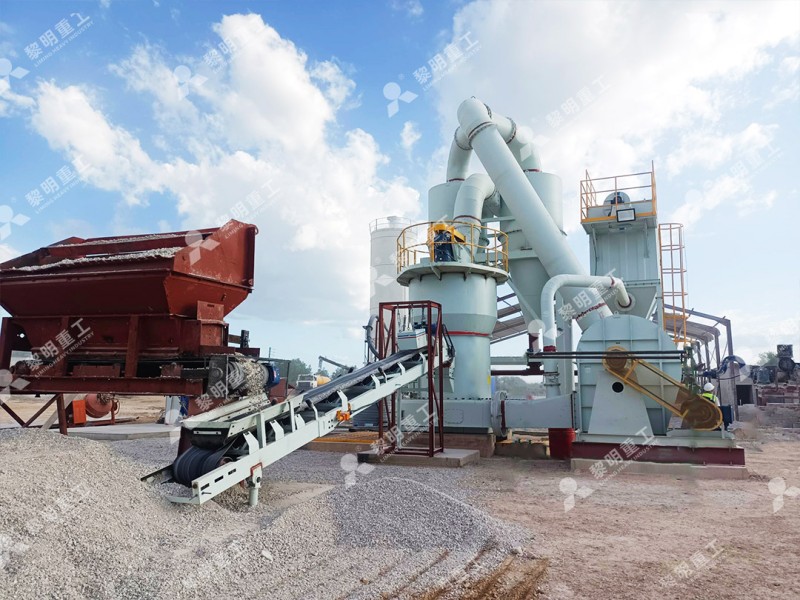
Evolving Demands and the Limitations of Traditional Mills
However, the industry’s evolution has highlighted certain limitations of the classic design. Modern phosphate beneficiation demands higher throughput, greater energy efficiency, stricter environmental controls, and more consistent product quality. The traditional Raymond Mill can struggle with higher energy consumption per ton, especially when aiming for finer grinds. Its mechanical design, while robust, may lead to higher wear part consumption over time when processing abrasive ores. Furthermore, achieving ultra-fine powders (beyond 325 mesh) for specialized applications can be inefficient with this technology.
Dust control, a critical environmental and health consideration, often requires additional, sometimes cumbersome, external systems when paired with older mill designs. These factors have driven the development of next-generation grinding equipment that builds upon the proven roller-grinding principle while integrating advanced technologies.
The Modern Paradigm: Higher Efficiency, Lower Environmental Impact
Today’s leading grinding solutions address these challenges head-on. They focus on optimizing the grinding curve between rollers and rings, incorporating intelligent powder classification, and designing for minimal maintenance downtime. A key advancement is the integration of high-efficiency pulse dust collectors and silencers directly into the mill system, ensuring operation meets stringent environmental standards from the outset.
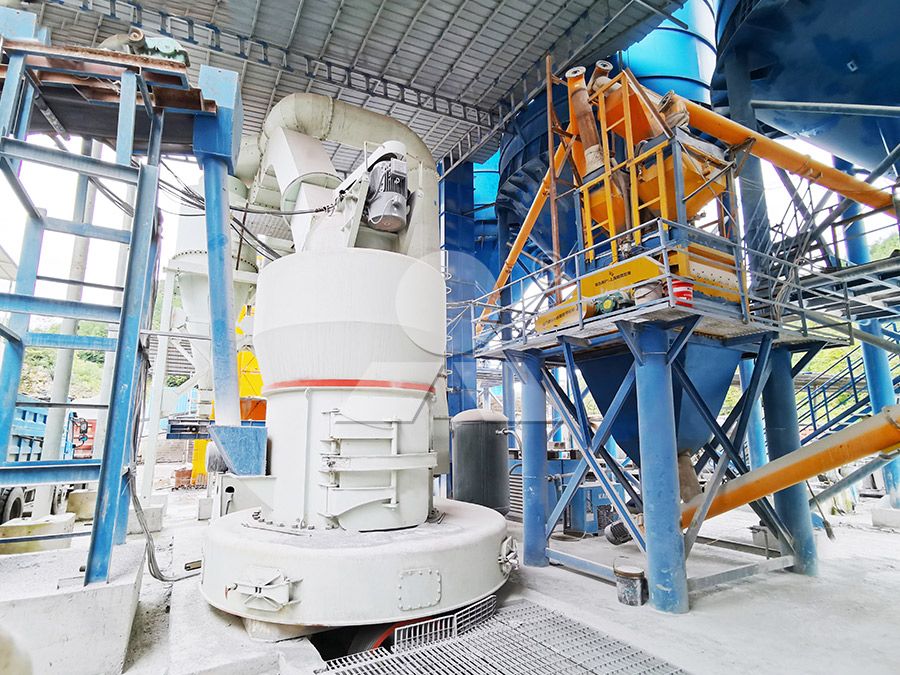
For operations looking to upgrade from a traditional 3R Raymond Mill for phosphate processing, the market offers superior alternatives. One standout option is our MW Ultrafine Grinding Mill. This mill is engineered for customers requiring ultra-fine powder from materials like phosphate ore. It accepts a feed size of 0-20 mm with a capacity range of 0.5-25 tph, offering more flexibility than traditional models.
The MW Mill’s design eliminates rolling bearings and screws in the grinding chamber, a revolutionary feature that removes worries about bearing seal failure or loose screws causing damage. Its external lubrication system allows for maintenance without shutdowns. Most importantly for phosphate grinding, its German-technology cage-type powder selector enables precise fineness adjustment between 325 and 2500 meshes, achieving a d97≤5μm cut size in a single pass. Combined with its built-in efficient pulse dust collector, it delivers higher yield with lower energy consumption and a clean, quiet operation.
Selecting the Right Mill for Your Phosphate Application
Choosing between a traditional Raymond Mill and a modern system like the MW Ultrafine Grinding Mill depends on your specific project goals. If the requirement is for standard fineness (e.g., 80-200 mesh) with a modest budget and throughput, a 3R Raymond Mill remains a viable workhorse. However, for new greenfield projects, expansions aiming for higher capacity and finer product, or operations prioritizing lower lifetime operating costs and environmental compliance, the advanced mills are unequivocally the better investment.
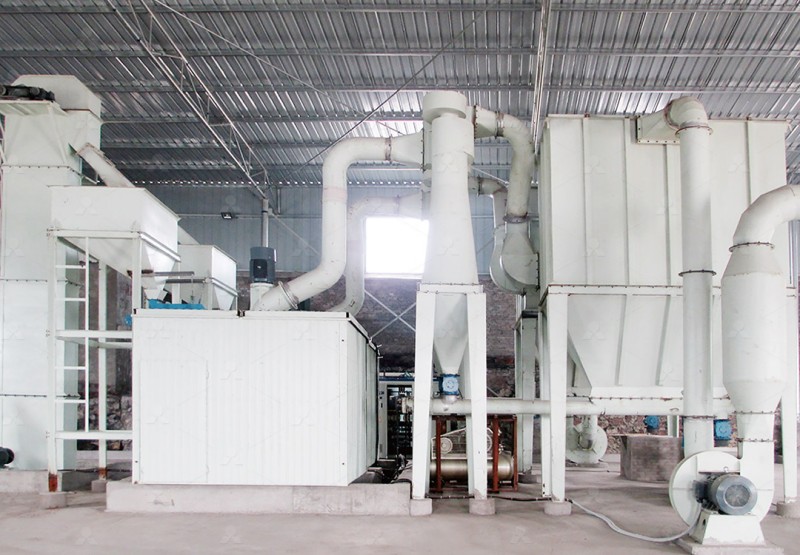
Another excellent choice for non-metallic minerals like phosphate is our MTW-Z European Trapezium Mill. It features advanced innovations like a dilute oil lubrication system for the grinding rollers (maintenance-free and low-cost), an elastic volute damping structure for exceptional stability, and a low-resistance cage-type powder concentrator for energy savings. With an input size of 0-50 mm and capacity up to 55 tph, it is a powerful and efficient solution for high-volume phosphate ore grinding where ultra-fine powder is not the primary goal.
In conclusion, while the 3R Raymond Mill laid the foundation for phosphate ore grinding, technological progress has delivered solutions that significantly outperform it in efficiency, control, and sustainability. Evaluating your production targets, desired product specifications, and total cost of ownership will guide you to the optimal grinding equipment for your phosphate operation’s future.
Frequently Asked Questions (FAQ)
1. Can a traditional 3R Raymond Mill produce 800 mesh phosphate powder?
While it is technically possible, it is highly inefficient. A traditional Raymond Mill is optimized for coarse to medium-fine grinding, typically up to 325 mesh. Pushing it to produce 800 mesh powder would result in very low throughput, high energy consumption per ton, and rapid wear of grinding parts. For consistent, economical production of ultra-fine powders (325-2500 mesh), a dedicated mill like the MW Ultrafine Grinding Mill is recommended.
2. What are the main operational cost differences between a 3R Raymond Mill and your MW Ultrafine Mill?
The MW Ultrafine Grinding Mill is designed for lower operational costs. Key factors include: Energy Consumption: The MW Mill’s optimized design can reduce system energy consumption significantly compared to achieving similar fineness with older technologies. Maintenance: The absence of internal bearings and screws in the grinding chamber reduces failure points and allows external lubrication, minimizing downtime. Wear Parts: Advanced material technology and optimized grinding curves lead to longer service life for rollers and rings.
3. How do you handle the dust generated during phosphate grinding?
Our modern mills, like the MW and MTW-Z series, are designed with integrated environmental controls. They come equipped with high-efficiency pulse jet dust collectors as part of the standard system. This ensures that the entire milling process operates under negative pressure, capturing over 99.9% of dust. The collected phosphate powder is automatically returned to the product stream, maximizing yield and ensuring a clean, compliant workshop environment without the need for costly add-on systems.
4. Is the fineness of the final product easy to adjust on these mills?
Yes, and this is a major advantage of modern designs. For instance, the MW Ultrafine Grinding Mill uses a cage-type powder selector with frequency control. Operators can quickly and precisely adjust the fineness between 325 and 2500 meshes by simply changing the classifier speed via the control panel, without stopping production. This offers tremendous flexibility to meet different customer specifications.
5. Our phosphate ore moisture content varies. Is this a problem for these mills?
The basic Raymond Mill and MW Mill are primarily for grinding dry materials. For ore with variable or higher moisture content, we recommend considering our LM Vertical Grinding Mill or LUM Ultrafine Vertical Mill. These vertical mills integrate a hot air system that can simultaneously dry and grind the material, handling feed moisture effectively and ensuring stable grinding performance and product quality.